

Who would win in a fight between a great white shark and a blue whale?
- Written by The Conversation

This article is part of the “Who would win?” series, where wildlife experts dream up hypothetical battles between predators (all in the name of science).
One is the largest animal known to have ever existed. The other is a revered predator at the top of its food chain. But would a blue whale and a great white shark ever find themselves at odds with each other in the wild?
While such observations of sharks attacking whales are few, we know it does occur. The scars many whales bear throughout their lives resulting from shark attacks are more than sufficient evidence sharks will have a go if an opportunity arises.
Their fight is about survival – a potentially much longed-for next meal for a shark, and the whale’s desperate defence to ensure the next generation’s survival. So, which of these impressive marine giants would win?
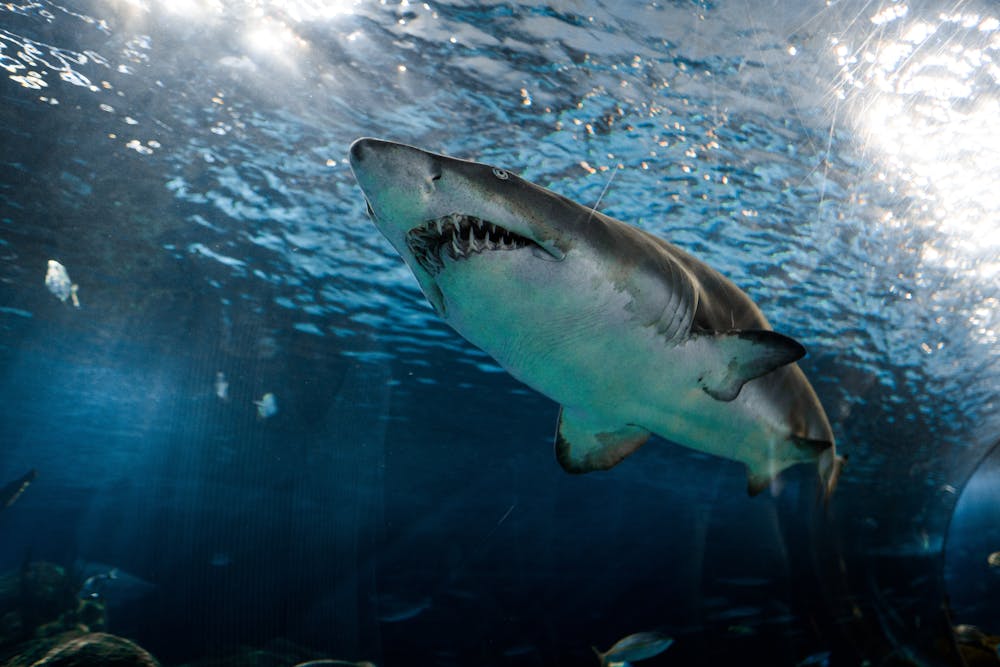
A grand banquet
At up to 30 metres long and weighing over 100 tonnes, a blue whale easily outsizes a white shark, which can measure perhaps over 6m and weigh less than a tonne.
But the blue whale didn’t get so big from killing and eating other large animals such as sharks. Rather, they evolved an efficient way of consuming very large amounts of tiny prey: krill.
They lunge through dense patches of thousands, if not millions, of krill, with large, gaping jaws that can open up to around 80 degrees.
The lunge builds enormous water pressure against their mouth, inflating the pleat-like grooved blubber around their mouth cavity to balloon like an accordion’s bellows. With this remarkable device, blue whales can engulf thousands of litres of water in one go.
Instead of teeth, blue whales (along with humpbacks, and many other whale species) have bristle-like baleen, which strain the small organisms from the water when their mouth cavity is compressed. This is how blue whales maximise their energy intake while minimising effort.
A blue whale lunging for krill | National Geographic.Sharks, on the other hand, are highly specialised apex predators that hunt and capture large animals, such as large fish, seals and sea lions, and sometimes even dolphins.
They are well designed for this, with streamlined bodies designed for ambush-and-chase style hunting. They also have flexible and extensible jaws and sharp teeth designed to grab and rip flesh.
If a shark could successfully capture a large whale, the winnings would be one of a grand banquet. After all, what better meal than the massive source of high energy of the meat and thick, fatty blubber a whale brings!
Indeed, media reports often capture images of sharks lurking around large whale carcasses.
So, have these carcasses resulted from shark predation? Or have these whales died from an otherwise unknown ailment, or human impacts such as fishing gear entanglement?
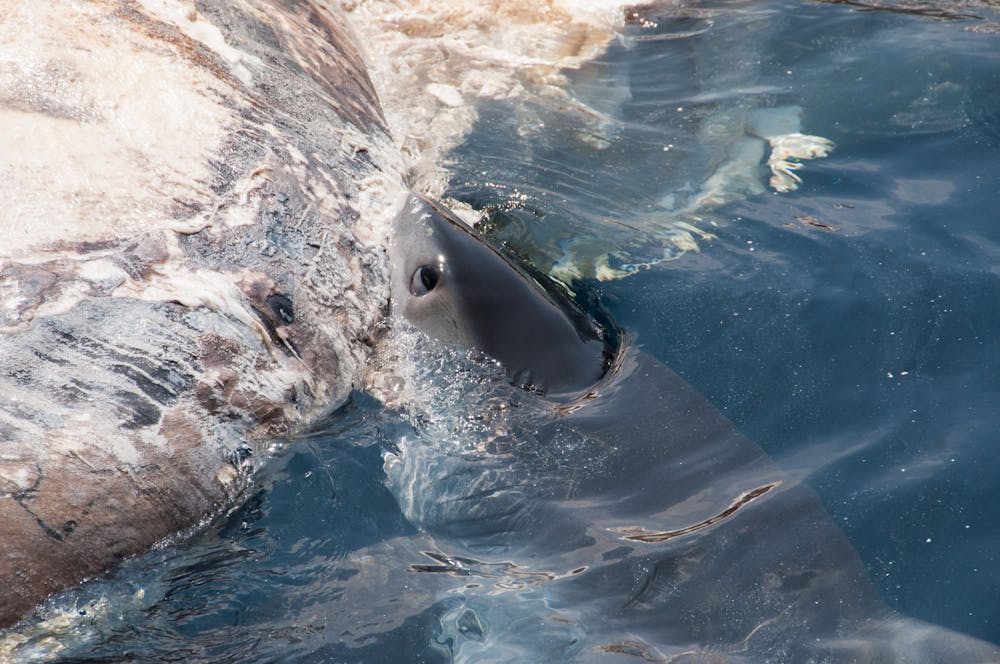 A white shark taking a bite out of a dead whale.
Shutterstock
A formidable defender
Large sharks are not only hunters, but also scavengers. Growing evidence suggests whale carcasses are an important part of the diets of large sharks. In fact, the fat in whale blubber can significantly increase a shark’s metabolism.
With whale meat and blubber an important food for sharks, why might they not also hunt whales while they’re alive? It turns out whales can indeed become a large and highspeed target.
Blue whales’ highly streamlined bodies, however, have evolved to travel as fast as 40 kilometres per hour, for as much as an hour or more. Their speed and endurance make them difficult prey to catch for sharks.
Sharks employ more of a sit and wait strategy to conserve energy, and pursue prey over short, fast bursts of speed of up to at least 11 metres per second.
 Blue whales can unhinge their jaw and take in thousands of litres of water.
AAP Image, Mike Johnson/Australian Antarctic Division
But the difficulties for a shark in capturing a blue whale don’t end with their limited endurance at high speed. Unless you’re a large shark, say, over several meters long, you simply may not have sufficient power in your jaws to effectively tear off the meat, even if you could keep up with a blue whale.
Some other baleen whales, such as southern right whales that can reach over 16m-long, are less streamlined than blue whales due to their chunkier, but more flexible, bodies. For them, a fight rather than flight defence strategy against predators may be taken.
To defend against killer whales, for example, such whales have been reported to group together and defend themselves with powerful tail, pectoral fin or head blows at their attackers.
Right whales have also been observed taking these strong stances to protect their vulnerable calves. A well-calculated and well-timed tail slap or body slam may be life threatening to a predator.
Orcas attack a blue whale, and the blue whale flees | National Geographic.But when do the advantages of the predator defence mechanisms that whales have evolved start to wane? The answer is: when the odds are stacked against them.
When a whale is vulnerable – perhaps it’s no older than a few weeks or months, or perhaps it’s unwell or otherwise compromised – it doesn’t have the same speed and defences of a healthy adult whale.
So which species would win?
As true for all things, it is situational. A whale threatened by a white shark could cause damage to its attacker. A blue whale also has the added advantage of high-speed endurance to flee if it prefers.
But if the whale is already vulnerable – such as a worn-out and debilitated whale entangled in fishing nets – then persistent and well-calculated attacks that cause the whale to bleed out can result in the shark winning and whale losing.
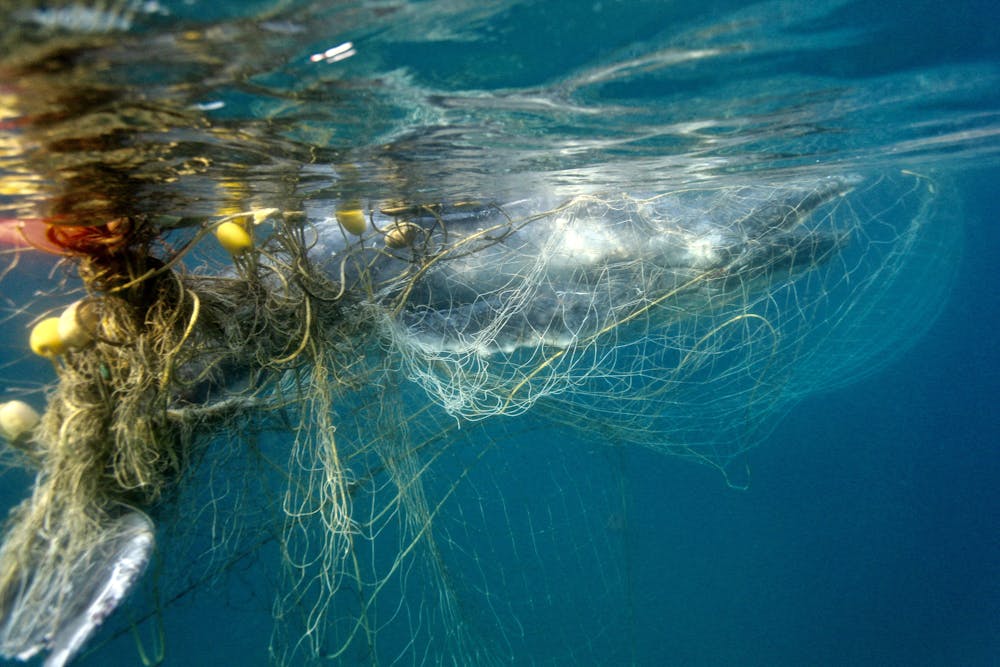 A humpback whale calf caught in a shark net off the Gold Coast in 2018.
AAP Image/Supplied by Humane Society International
There was an interesting case off Massachusetts Bay in the United States in July 2015, when this almost certain destiny was reversed. The brave Marine Animal Entanglement Response team managed to free a severely entangled humpback whale that had sustained injuries from a 5m white shark.
The fact the entanglement made the whale vulnerable leaves food for thought on our own role in putting many whales at greater, unnatural risk of death – including many in endangered populations already struggling under human pressures.
I take this story as testament to the compassionate nature of humanity. But it’s also a sobering reminder of the urgent need for us to transition our current harmful practices to ones that are sustainable.


