

More than a murder mystery, Savage River is a gripping new take on the Australian Gothic
- Written by The Conversation
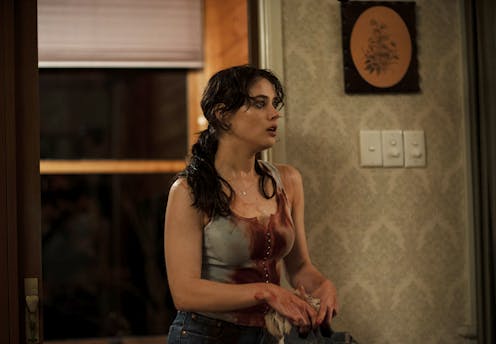
Review: Savage River, directed by Jocelyn Moorhouse.
Newly released from prison for a murder she committed in her teens, Miki Anderson (Katherine Langford) has returned to her home town Savage River. She is determined to leave the past behind her, but when another murder occurs just days after Miki returns, the town’s mistrust deepens.
Determined to find out the truth and clear her name, Miki decides to uncover the real killer, unearthing long-hidden secrets along the way.
It might be tempting to assume you know how this story goes, but this new six-part drama from the ABC is not your typical murder mystery.
Savage River explores complex social territory as the town’s class and race tensions emerge as key to the narrative.
Miki is a riveting portrayal of complex, conflicted femininity. Langford is brilliant, bringing a moving combination of toughness and vulnerability to the role, serving up scathing glares and a back-off attitude that belies both Miki’s experience of prison and the way this character remains partially stuck in her teenage identity.
Shiny pink nail polish and sun-drenched memories of bike rides clash against the drab fluorescent dejection of a local pub, and blood pooling on an abattoir floor.
The Australian Gothic
The score (composition by Bryony Marks) creates a haunting, atmospheric quality, and the series works in classic Gothic tropes: a ghostly landscape, an isolated rural setting marked by decay, themes of entrapment and claustrophobia, and an unresolved past intruding on the present.
It represents a contemporary take on the Australian Gothic.
Australian Gothic has been associated with a colonial gaze that sees horror in the “uncivilised” Australian bush or outback, evocatively rendered in Wake in Fright (1971) and Picnic at Hanging Rock (1975).
In the colonial imagination, the Australian landscape has been figured as a source of terror hiding any number of unknown threats to colonisers. In Australian Gothic works, they grapple with alienation, melancholy and isolation, mirroring fears inspired by the colonial experience.
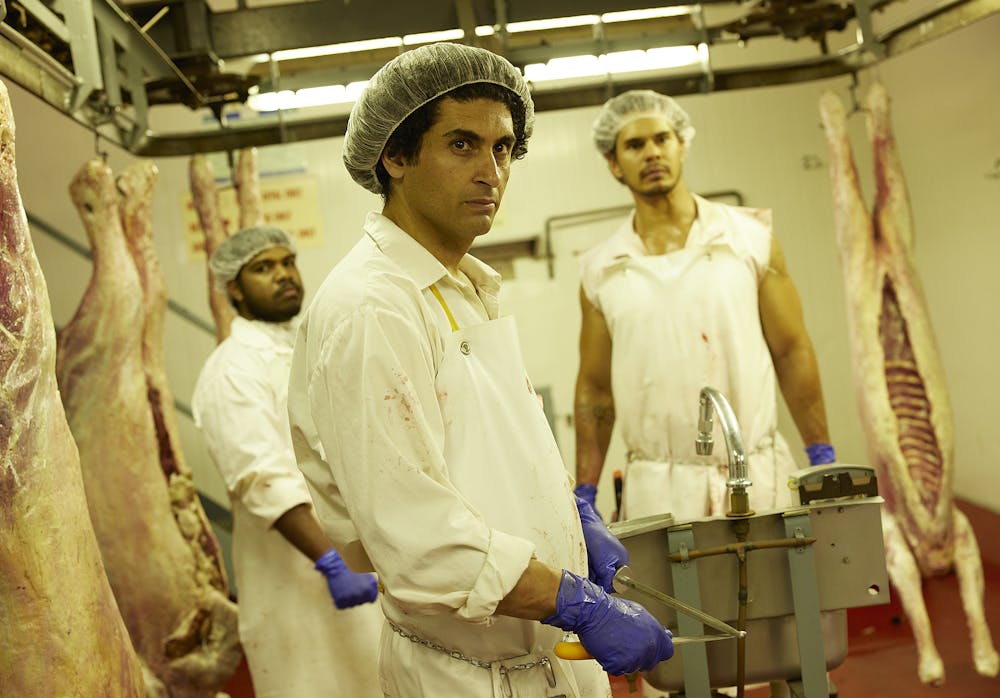
This white, colonial gaze is interrogated rather than replicated in Savage River. While the regional Victorian bush provides an atmospheric setting, the sense of threat and violence centres instead on the town’s abattoir.
Facing secret financial difficulties, long past its zenith as the economic saviour of the town, the meat works is a site of white patriarchy. It was founded by the ageing mayor’s father, and is owned by the mayor’s son Kevin (Daniel Hensall), keeping the place afloat by exploiting refugees with precarious visa conditions.
When Miki gets a job at the abattoir we see a brutal reality: Savage River is a town built on blood and slaughter, a truth that references the colonial violence at the foundation of modern Australia.
Read more: Australian Gothic: from Hanging Rock to Nick Cave and Kylie, this genre explores our dark side
Who is acknowledged as missing?
Australian Gothic is not the only genre Savage River plays with. The plot is driven by a murder mystery when, just days after Miki returns home, a white man goes missing and is then found dead.
Parallel to this man’s disappearance, a refugee woman named Laila (Haya Abbas) has been missing for days. As Laila’s sister Jamila (Maia Abbas) tries in vain to get the men around her to take Laila’s disappearance seriously, the show draws attention to the town’s uneven attitudes to the two missing people.
 Savage River considers how different lives are valued.
ABC TV
In one scene the town’s resident copper and typical “mediocre white man” - Bill Kirby (Robert Grubb), is setting up for the town’s annual celebration.
As Bill sets traffic cones on the grass he is on the phone, reporting the white man missing with a tone of concern in his voice. Jamila approaches him and appeals to him to help her find Laila, who she says is gone, like the man who is missing. Bill is wilfully confused, asking, “Gone where?”.
When Jamila implores him to please look for Laila, Bill gestures around at the preparations with exasperation, and fobs her off saying, “Well I can’t do anything today,” as if his hands are tied.
The town festivities take precedence over Laila’s disappearance.
Attributed to journalist Gwen Ifill, the term “missing white woman syndrome” is used to describe this deeply unequal media coverage and public attention, along racial lines.
Murder mysteries often replicate this syndrome, in blonde screen icons like Laura Palmer in Twin Peaks (1990), as well as more recent adaptations Gone Girl (2014) and The Girl on the Train (2016).
Savage River refuses racist, misogynist and classist tropes. Here, the sense of menace emanates from the town’s patriarchal, capitalist leaders who have made their fortune by slaughtering animals. The apathy and racism of police is problematised, and white, male power is explored as a corrupting influence.
The show has a whole lot of heart, too, with some truly endearing characters. With a ripping plot, the story will sweep you away.
Savage River is on ABC TV and ABC iView from September 4.
Read more: Friday essay: beyond 'girl gone mad melodrama' — reframing female anger in psychological thrillers


