

Seahorse fathers give birth in a unique way, new research shows
- Written by The Conversation
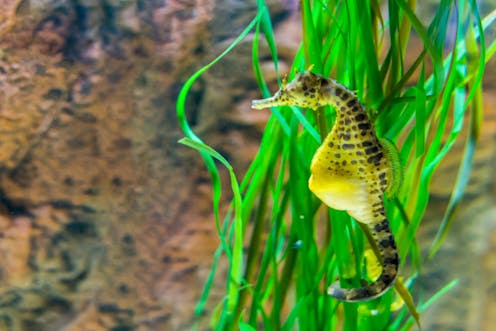
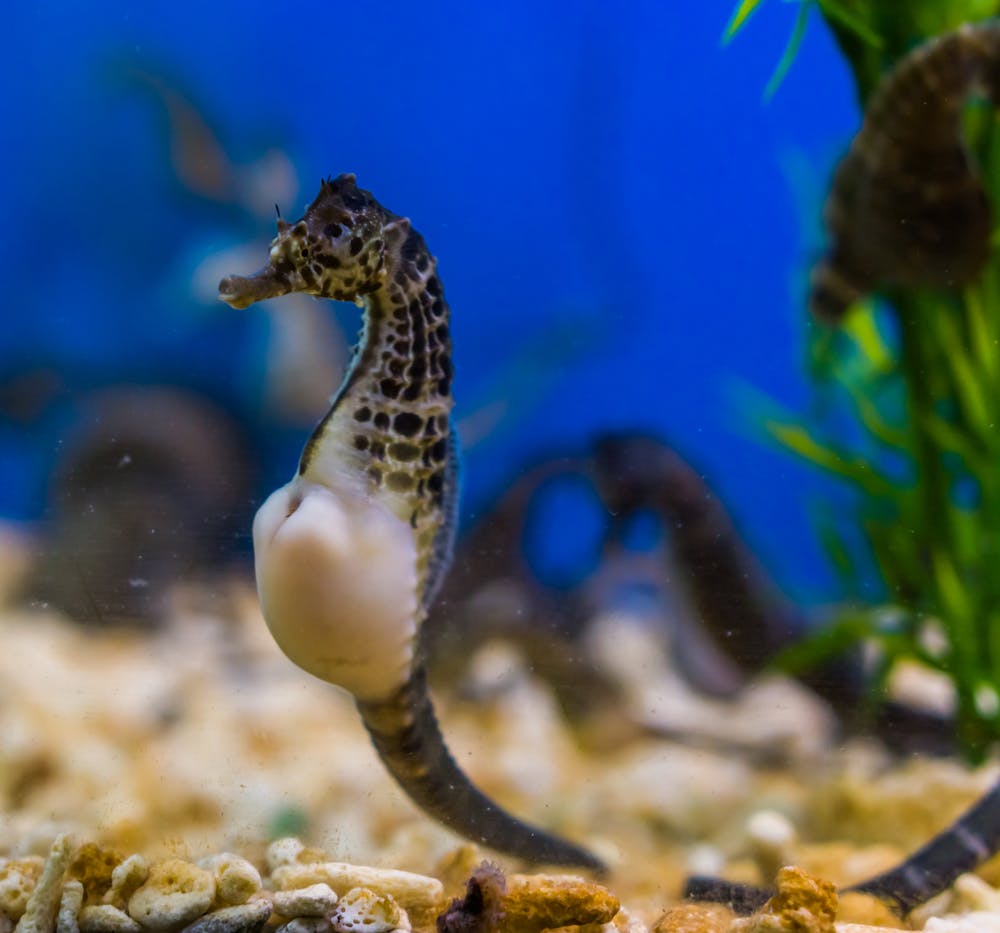
In seahorses and pipefish, it is the male that gets pregnant and gives birth. Seahorse fathers incubate their developing embryos in a pouch located on their tail.
The pouch is the equivalent of the uterus of female mammals. It contains a placenta, supporting the growth and development of baby seahorses.
Read more: The secret sex life and pregnancy of a seahorse dad
Seahorse dads provide nutrients and oxygen to their babies during pregnancy, using some of the same genetic instructions as mammalian pregnancy.
However, when it comes to giving birth, our research shows male seahorses seem to rely on elaborate behaviours and their unique body structure to facilitate labour.
How animals give birth
Labour is a complex biological process that in female pregnant animals is controlled by hormones including oxytocin. In mammals and reptiles, oxytocin induces contractions in the smooth muscles of the uterus.
There are three main types of muscle: smooth muscle, skeletal muscle and cardiac muscle.
Smooth muscle is found in the walls of most internal organs and blood vessels. This muscle type is not under conscious control. For example, your intestines are lined with smooth muscle, which rhythmically contracts to move food through your gut without you having to consciously control it.
Skeletal muscle is found throughout your body and attaches to bones via tendons, allowing body movement. This type of muscle is under conscious control. For example, your bicep muscles when contracted allow you to consciously bend your arm.
Cardiac muscle is specific to the heart and is also under involuntary control.
In female mammals the uterine wall contains abundant smooth muscle. Oxytocin stimulates this smooth muscle to contract, helping bring about labour.
These uterine contractions are spontaneous and involuntary. We can measure these uterine contractions in response to oxytocin, and the results are consistent in both mammals and reptiles.
How do male seahorses give birth?
Our team of researchers from the University of Sydney and the University of Newcastle set out to determine how labour works in male seahorses.
Our genetic data suggested seahorse labour might involve a similar process to labour in female mammals. A study in 1970 also showed that when non-pregnant male seahorses were exposed to the fish version of oxytocin (called isotocin), they expressed labour-like behaviours.
Therefore, we predicted seahorse males would use oxytocin-family hormones to control the process of giving birth via contracting smooth muscles inside the brood pouch.
What we found
First, we exposed pieces of seahorse pouch to isotocin. While isotocin caused our control tissues (intestine) to contract, surprisingly this hormone produced no contractions in the brood pouch.
The result led us to wonder about the anatomy of the pouch. When we examined the pouch under a microscope, we found it contains only scattered small bundles of smooth muscle, far less than the uterus of female mammals. This explained why the pouch did not contract in our experiments.
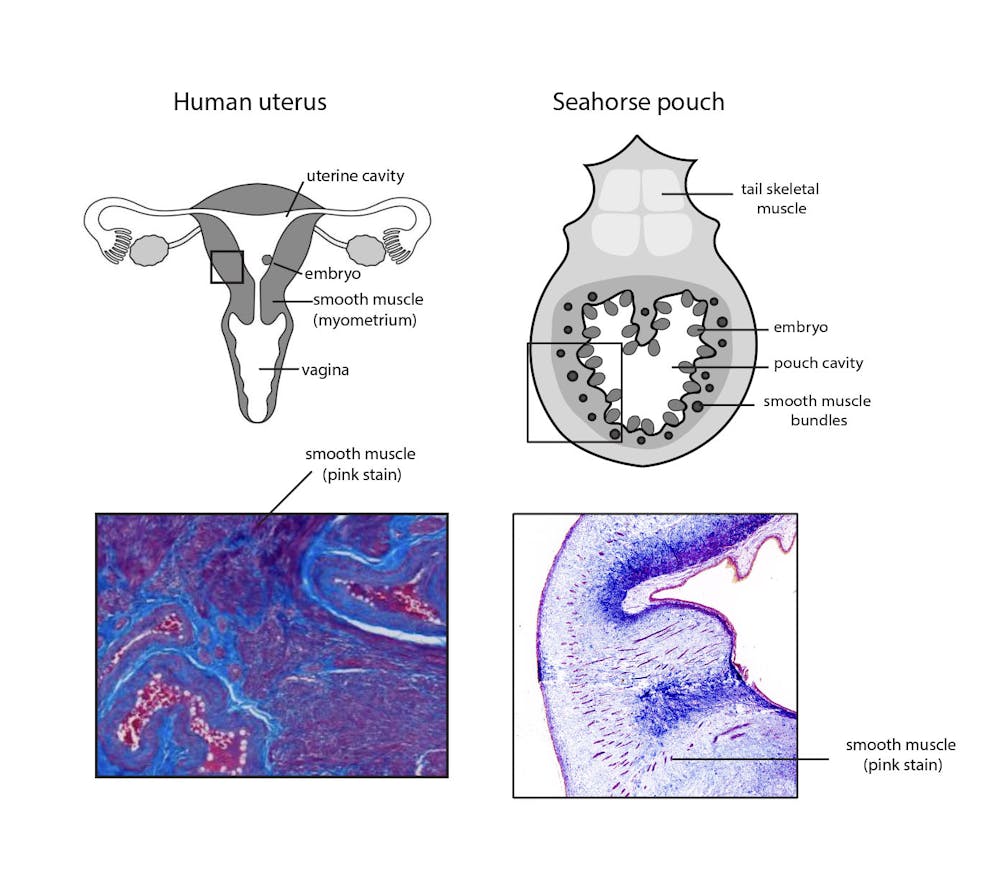 In the human uterus (left), the entire outer layer is comprised of smooth muscle. The seahorse pouch (right) only has small smooth muscle bundles scattered throughout the outer layers of the pouch.
Jessica Suzanne Dudley / VWR, Author provided
In the human uterus (left), the entire outer layer is comprised of smooth muscle. The seahorse pouch (right) only has small smooth muscle bundles scattered throughout the outer layers of the pouch.
Jessica Suzanne Dudley / VWR, Author provided
Using 3D imaging techniques combined with microscopy, we then compared the body structure of male and female pot-bellied seahorses.
In males, we found three bones positioned near the pouch opening, associated with large skeletal muscles. These types of bones and muscles control the anal fin in other fish species. In seahorses, the anal fin is miniscule and has little or no function in swimming.
So, the large muscles associated with the tiny seahorse fin are surprising. The anal fin muscles and bones are much larger in male seahorses than in female seahorses, and their orientation suggests they could control the opening of the pouch.
Seahorse courtship behaviour provides a clue
Seahorse courtship is an elaborate process. Males open and fill their pouch with water by bending forward and contracting their bodies to force water into the pouch, before “dancing” with the female.
Similarly, during labour, male seahorses bend their body towards the tail, pressing and then relaxing. This “pressing” behaviour is accompanied by brief gaping of the pouch opening, with a series of whole-body jerks. This movement combined with pouch opening allows seawater to flush through the pouch.
Jerking and pressing continues, the pouch opening gets gradually bigger, and groups of seahorse babies are ejected with each movement. Many hundreds of babies are ejected in a short time.
A seahorse father undergoing labour.Our findings suggest the opening of the pouch for courtship and birth is facilitated by contractions of the large skeletal muscles located near the pouch opening. We propose that these muscles control the opening of the seahorse pouch, allowing seahorse fathers to consciously control the expulsion of their young at the end of pregnancy.
Future biomechanical and electrophysiological studies are needed to examine the force required to contract these muscles and test whether they do control the opening of the pouch.
Different ways to solve a problem
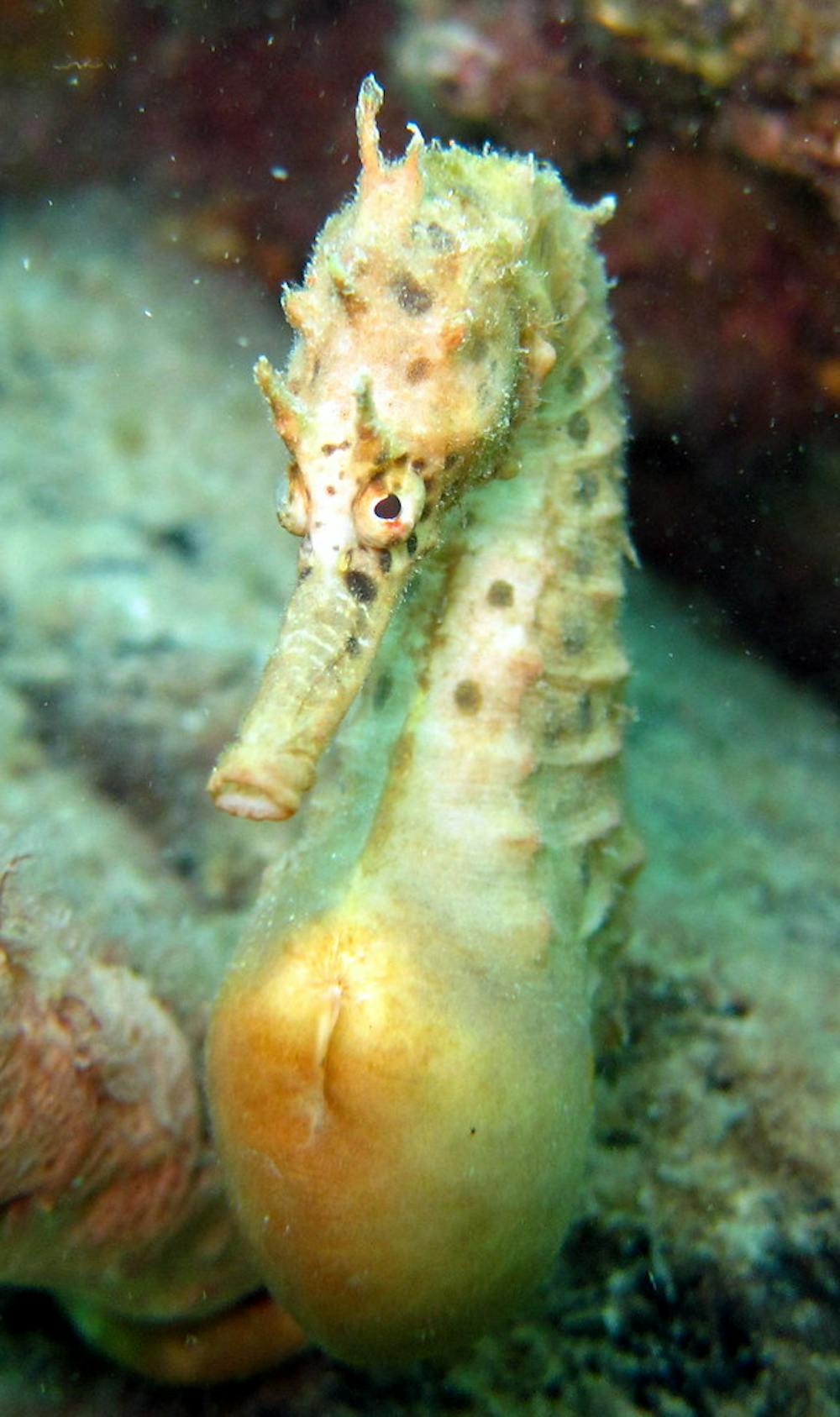 A male seahorse with his pouch tightly closed.
Anthony Pearson, CC BY
A male seahorse with his pouch tightly closed.
Anthony Pearson, CC BY
Our unexpected results suggest male seahorses use different mechanisms to give birth compared to female pregnant animals.
We speculate that oxytocin-family hormones, instead of primarily producing smooth muscle contractions, trigger the cascade of seahorse behaviours that lead to birth.
Despite the similarities that male seahorses share with female mammals and reptiles during pregnancy, it seems seahorse fathers have a unique way of giving birth to their young.
Read more: Pregnant male seahorses support up to 1,000 growing babies by forming a placenta
Read more https://theconversation.com/seahorse-fathers-give-birth-in-a-unique-way-new-research-shows-188644


