News Daily

The Times

Australia

  • Written by The Conversation
The Whitewash is a scathing, hilarious satire of Asian misrepresentation in Hollywood

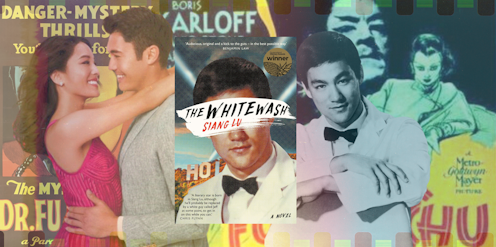
Siang Lu’s debut novel The Whitewash is a scathing satire of the big-budget film industry’s ethnic and racial myopia. Original, critical and hilarious, the book is a product of the Glendower Award for an Emerging Queensland Writer, which this manuscript won in 2021.

Review: The Whitewash - Siang Lu (UQP)

Lu innovatively blends features of oral history and mockumentary into a fast-paced multi-vocal exposé. The story recounts the sad fate of a Hollywood spy thriller, “Brood Empire”, which crashes during production. Adapted from a popular novel written by an influential Hong Kong writer, Brood Empire is expected to be a box-office success. It has a top production team, coupled with a sizeable budget. And for the first time in history, a Hong Kong actor takes the lead in a Hollywood movie. How can it fail? Whitewash takes the form of an oral history: the novel is compiled of interviews with people involved with “Brood Empire”. The editor-in-chief of a scurrilous rag, “Click Bae”, drives the story. His aim is to get the dirt on the production, expose its failure – and publish a lucrative book … which will be entitled “The Whitewash”. Fiction and reality wittily converge. Read more: From Bruce Lee to Shang-Chi: a short history of the kung fu film in cinema Orientalism retold Almost half a century has passed since Edward Said traced an inevitable connection between simplistic views of races (or ethnicities) and racism. His term “Orientalism” sums up the attitudes of those who adopt an essentialist conception of the countries, nations and peoples of the Orient under study, a conception which expresses itself through a characterized ethnist typology […] and will soon proceed with it towards racism. Edward Said on Orientalism. The urgency of Said’s critique is palpable in Lu’s energetic framing of current views of Asia. Lu’s novel shows how politics and the economics of big-screen productions contribute to racial stereotyping and racism towards Asians. Lu departs from Said only in revealing how unintentionally risible this form of present-day Orientalism is. An academic perspective comes via an “Adjunct Professor of Chinese Cultural Studies” who’s enlisted by “Click Bae”. For a fee, he agrees to ventriloquise another academic (who refused to be involved in the project). So, a bottom-feeding journal enlists an academic in need of money to lend credibility to a story about the venality of the film industry. There is no end to the unscrupulousness. Read more: From Breakfast at Tiffany's to Hellboy: the ongoing problem of Hollywood 'whitewashing' Stereotypes and market Apart from the link between politics and what we get to see on the big screen, Lu reveals that whitewashing Asians is profitable. People pay to see foreignness repackaged as stereotypes – and thus rendered virtually invisible. This has been going on since the early days of cinema. In the 1930s, it was Boris Karloff who played the evil genius Fu Manchu. And Swedish actor Warner Oland played the self-righteous detective Charlie Chan, with his tongue-in-cheek Confucianism. Later, even celebrated Asians like martial arts prodigy Bruce Lee and action-movie star Jackie Chan ended up in supporting roles. (Though Lee starred in his films, his character was demoted in the much-criticised 2016 biopic, Birth of the Dragon, which centralised a fictional white character in a film ostensibly about Lee.) Whitewashing caters to audiences who want “Asians” on the screen to match the “Asians” of their preconceptions. The only way to change this, as Lu’s professor explains, is money: You want to see rapid and progressive shifts in societal attitudes towards minorities in the mass media, in the Hollywood industrial complex? No problem, as long as it makes money. Lamentably, if any change of cultural framing of Asians still depends on the market, this is no real change at all. We already have stock Asian elements on the screen such as kung fu and wuxia (martial arts heroes). Bringing more to the mix – just as long it turns a profit – means adding one stereotype after another. Bruce Lee in Way of the Dragon. Read more: Butt plug duels and fanny pack stunts: how Everything Everywhere All At Once fits into the canon of comedy-martial arts films Where to from now? Lu reminds us that a lack of multi-dimensional representation on the screen is harmful. JK Jr, the actor cast as Brood Empire’s initial lead, reflects on the shared experience of Asian people in Western countries: Our grandparents grew up with the Yellow Peril. Our parents grew up with yellow discomfort. Our generation grew up with yellow invisibility. I genuinely believe that representation is the key to cultural acceptance. If your heroes on the screen, in the world, look like you, that can change everything! So if what I’m doing is able to shift the needle even an inch towards mainstream cultural acceptance of Asians in film and TV, then there could be a whole new group of kids out there who mightn’t have the baggage that I had growing up. All the wasted energy I spent trying to fit in and act white. I hope Siang Lu’s novel will spark readers to reject stereotypes – to instead discover an interest in the countless different ways of being Asian. This might allow, as Whitewash’s professor hopes, “a new generation of Asian kids to see themselves reflected on the screen”. This novel’s relevance is not confined to Asia. The more people from diverse cultural backgrounds are visible on screen, the more we can authentically encounter each other in the world. Lu’s The Whitewash succeeds in helping us to properly see one another, on the road towards a more inclusive society.

Read more https://theconversation.com/the-whitewash-is-a-scathing-hilarious-satire-of-asian-misrepresentation-in-hollywood-188466

Split Corrugated Conduit for Flexible Cable Protection

For wiring assemblies in vehicles, machinery and equipment, choosing suitable cable protection helps keep cables organised and reduces direct contact with surrounding parts. Mojak Plastics supplies plastic tubing and conduit options for different installation needs, and split corrugated conduit can... Read more

Trailers Melbourne Buyers Can Compare: When Box Trailers Make Sense

For many homeowners, businesses and tradespeople, trailers Melbourne customers use every week need to be versatile enough for changing loads. A box trailer can be particularly useful because its enclosed sides help contain cargo while providing a straightforward loading area... Read more

Bottle Label Printing That Balances Design and Readability

Product labels need to attract attention while making information easy to find and understand. On a bottle, the available space may be limited by the container’s shape, so every design decision matters. Bottle label printing should account for visual hierarchy... Read more

Office Cleaning Melbourne: Planning a Consistent Workplace Routine

Businesses looking for office cleaning Melbourne need a plan that reflects the way their workplace operates. A clean office supports day-to-day organisation, helps shared spaces remain presentable and gives employees and visitors a more orderly environment. Eco Green Cleaning Management... Read more

Pinboard Solutions for Offices, Schools and Shared Information Spaces

Why a Pinboard Remains Useful A pinboard provides a simple way to display information that needs to remain visible without being rewritten. Lawdex supplies fabric and cork options for offices, schools, staff areas and other environments. A pinboard can be used... Read more

Retractable Hose Reel: A Practical Guide To Choosing The Right Hose Storage

A retractable hose reel can make hose storage more organised, accessible and practical in workshops, commercial facilities, service areas and other working environments. Instead of leaving a hose coiled across the floor or requiring staff to manually wind it after... Read more