News Daily

The Times

Australia

  • Written by The Conversation
Shantaram – the Black white man's burden

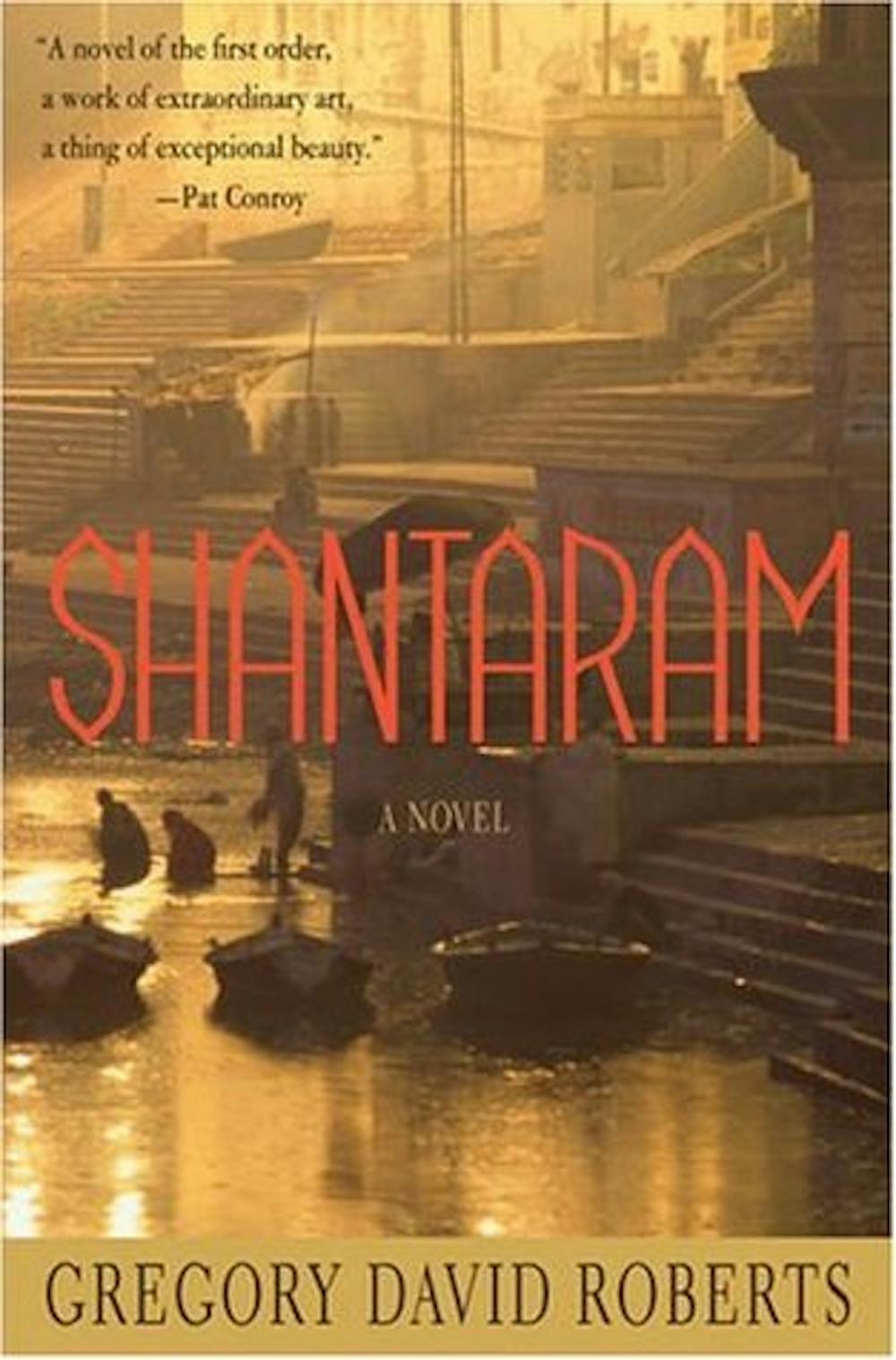
There are only two things you’re likely to encounter in India as much as Delhi belly: ubiquitous copies of Gregory David Roberts’ best-selling 2003 novel Shantaram in hostel lobbies and Swiss bakeries and, as noted in the book, constantly “being stared at with the […] almost accusatory censure of those who’ve convinced themselves they’ve found the one true path”.

Based on Roberts’ own life, Shantaram tells the story of Lin, an armed robber on the run with a false passport. Lin ends up in a Bombay slum and is adopted “like a son” by a mystic Afghan mafia boss before becoming a gun runner to Africa and a mujahedeen (guerrilla fighter) in Afghanistan.

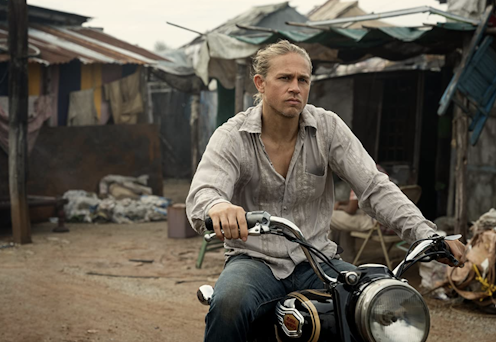
Having sold over six million copies since publication, there have been numerous attempts to adapt the book for film. It’s now a TV series made for streaming service Apple TV+ starring British actor Charlie Hunnam. Production was stop-start due to COVID, but after a long wait the series will premiere on October 14.

The cult of authenticity

Roberts’ semi-autobiographical character Lin calls himself “gora chierra, kala maan”: white on the outside, but full Hindustani on the inside. Despite this, Shantaram perpetuates the Orientalist fantasies that much of Western art does when depicting India and Indians.

The “Indies” have long exerted a powerful pull over the Western imagination. Operas and ballets such as Lakmé, La Bayadere, The Pearl Fishers and others portrayed Indian stories and people as exotic curiosities in stereotypical, Orientalist spectacles. These productions served to excite both fascination and revulsion – as did Indiana Jones and the Temple of Doom or The Best Exotic Marigold Hotel decades later. Shantaram raises important questions about what author Vikram Chandra called the “cult of authenticity” in which too often, representations of India are artefacts of heightened or caricatured “Indianness” – designed to appeal to Western audiences. It’s what I’ve called in the past the “mango novel”: increasingly familiar mirages of magical-realist wonders and colourful terrors in places at once enticingly and reassuringly distant (think of David Davidar’s novel The House of Blue Mangoes or Arundhati Roy’s The God of Small Things, set in a mango pickle factory.) The Indians in Shantaram don’t vary much from the stereotypes, constantly needing Lin’s help and “revealing” the true nature of India through their simplicity, generosity and poverty. Like Elizabeth Gilbert’s Eat Pray Love or Liam Pieper’s recent Sweetness and Light, featuring similarly troubled spiritual tourists, the “natives” exist in the background or through the tour bus windows, India and its people merely a set and props for Lin’s journey to enlightment. On the bus from the airport, Lin sees only what he wants to see, prefiguring other “poverty porn” like the execrable Slumdog Millionaire: What had seemed unimaginably strange and remote […] suddenly became […] comprehensible and fascinating […] the flare of shame I’d felt when I first saw the slums and street beggars dissolved in the understanding that they were free […] the city was free. I loved it. Quality not quantity Defenders of white privilege aside, many authors and audiences are questioning telling other people’s stories, even as literature allows us to empathetically imagine another person’s experience. As Salman Rushdie pointed out in his seminal essay, Imaginary Homelands, Literature is self-validating […] a book is not justified by its author’s worthiness to write it, but by the quality of what has been done. There are terrible books that arise directly out of experience, and extraordinary imaginative feats dealing with themes which the author has been obliged to approach from the outside. Ontological questions about whether it’s fact or fiction, or who wrote it or where they’re from, shouldn’t matter as long as the writing’s good, such as in American author Katherine Boo’s profoundly affecting 2012 account of Mumbai’s slums, Behind The Beautiful Forevers. Shantaram, however, is burdened by self-indulgent writing, cluttered with unrealistic, extraneous, often forgettable characters, strangled by meandering digressions, and addled with expository dialogue and perplexingly obvious aphorisms on the nature of life, or love, or – of course – India itself. “This is not like any other place,” Roberts writes. “This is India.” Gregory David Roberts, right, speaks with a reader during a book signing session in Bombay in 2006. Aijaz Rahi/AAP As reviewer Cameron Woodhead wrote of its sequel, The Mountain Shadow: [It has] more in common with Oprah than Proust, and most readers with a shred of intellect or self-respect […] will cringe at [how] large chunks […] resemble the snake oil of the self-help industry. According to Roberts, in the decade between Shantaram and its sequel, he “offered [his] writer’s perspective and writer’s skills to several NGOs, and worked in human rights, social justice, the environment and health issues.” After The Mountain Shadow achieved neither the commercial success or critical acclaim of its predecessor, Roberts stepped back from public life, and embarked on what he calls “the spiritual path,” shaving his head, applying Hindu spiritual markings, foregoing shoes and donning Indian hermetic robes. Making notes on his guru’s teachings, Roberts wrote an eponymous book, The Spiritual Path, featuring florid, cod-philosophical epigrams similar to those that choked his novels, such as “honesty is the river flowing into the sea of Trust” or “success is the full expression of personal fulfilment”. He recorded a reggae album, Love&Faith in Jamaica (featuring collaborations with Jamaican artists), released in December 2020, and has increased his focus on music since. A plethora of releases with titles such as Good Morning Morning and Deep SurRender (music to play while your project is rendering); a playlist called Shantaram House, and featured artists on his website including Scantana, “the man with the most grammar”, suggest literature’s loss is music’s loss too. Fixing the novel Great literary fiction is often unfilmable because the kinetic range of the camera can’t capture the affective tone of the narrator’s voice or the author’s use of language. But in Shantaram’s case, it’s possible being transposed to the screen and focusing on the action, rather than the cod-philosophy and over-description, might actually address the inherent vices in Roberts’ book. As Indian reviewer Sandipan Deb wrote of The Mountain Shadow, skim the pages rapidly, and you will get a fine thriller… Read it sincerely, and you will find a man trying so hard to be, if not the Buddha, at least a rock ‘n’ roll Jesus figure, that it is irritating. Open the book randomly, and you will find a Paulo Coelho with a snub-nosed automatic … The new TV series is co-created, written and executive produced by showrunner Steve Lightfoot, with Bharat Nalluri directing and executive producing. Two initial episodes directed by Australian Justin Kurzel (Snowtown, Nitram) were reportedly considered too dark. One hopes it will interrogate and subvert those persistent Orientalist, white saviour tropes, although with a trailer focusing on the white characters, who enjoy moody close ups as faceless Indians swarm in the slummy background, and with dialogue that’s as forced and wooden as the book – including Hunnam’s unconvincing Australian accent – it doesn’t promise any great improvement. For as Deb writes, a jailbird troubled by B-grade questions about life and the universe found India —in a very limited sense — in south and central Bombay. Then he found spirituality, with two knives hidden up the back of his shirt. And then he asks: What do you want from me, India? Mr Roberts, India doesn’t want anything from you. Write books, make money, get stoned, babble about nirvana, love the debauched expat life. India accepts you. We are not one, but we are us. The first three episodes of Shantaram’s 12-episode first season will air on Apple TV on Friday, 14 October, 2022.

Read more https://theconversation.com/shantaram-the-black-white-mans-burden-132173

Split Corrugated Conduit for Flexible Cable Protection

For wiring assemblies in vehicles, machinery and equipment, choosing suitable cable protection helps keep cables organised and reduces direct contact with surrounding parts. Mojak Plastics supplies plastic tubing and conduit options for different installation needs, and split corrugated conduit can... Read more

Trailers Melbourne Buyers Can Compare: When Box Trailers Make Sense

For many homeowners, businesses and tradespeople, trailers Melbourne customers use every week need to be versatile enough for changing loads. A box trailer can be particularly useful because its enclosed sides help contain cargo while providing a straightforward loading area... Read more

Bottle Label Printing That Balances Design and Readability

Product labels need to attract attention while making information easy to find and understand. On a bottle, the available space may be limited by the container’s shape, so every design decision matters. Bottle label printing should account for visual hierarchy... Read more

Office Cleaning Melbourne: Planning a Consistent Workplace Routine

Businesses looking for office cleaning Melbourne need a plan that reflects the way their workplace operates. A clean office supports day-to-day organisation, helps shared spaces remain presentable and gives employees and visitors a more orderly environment. Eco Green Cleaning Management... Read more

Pinboard Solutions for Offices, Schools and Shared Information Spaces

Why a Pinboard Remains Useful A pinboard provides a simple way to display information that needs to remain visible without being rewritten. Lawdex supplies fabric and cork options for offices, schools, staff areas and other environments. A pinboard can be used... Read more

Retractable Hose Reel: A Practical Guide To Choosing The Right Hose Storage

A retractable hose reel can make hose storage more organised, accessible and practical in workshops, commercial facilities, service areas and other working environments. Instead of leaving a hose coiled across the floor or requiring staff to manually wind it after... Read more