

What should rich countries do with spare masks and gloves? It's the opposite of what the WHO recommends
- Written by The Conversation
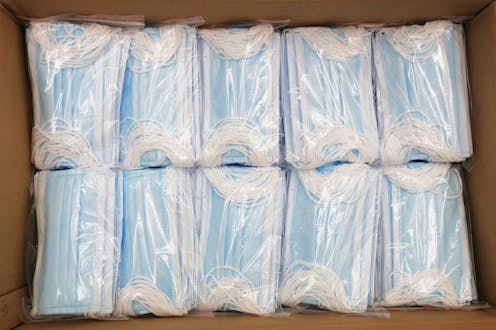
Most developed countries hold significant quantities of medical supplies in reserve to respond in an emergency.
For example, Australia has its National Medical Stockpile, which stocks personal protective equipment, such as masks and gloves, among other items. New Zealand has its national reserve supplies.
If these supplies are not used in an emergency, such as a pandemic, they typically stay in the stockpile until their use-by date, then are sent to landfill.
Surely there’s a better way, especially with some developing nations short of medical supplies. Donating surplus stock to developing countries seems an obvious solution.
Our study looked at the likely impact of donating excess stock to developing countries – dated items close to or past their labelled use-by date. We found this a viable option, even better than donating fresh items.
What’s in the stockpile?
In 2011, Australia’s stockpile contained about 3,000 pallets of expired stock, the bulk of which was personal protective equipment, including 98 million latex gloves.
While some of the reserves have been used during COVID, items are being restocked. So these too will likely expire if not used. For instance, we know surgical masks in the stockpile are already expiring.
Similar issues have been seen in other developed countries such as the United States, New Zealand and Canada, before and during the current pandemic.
Why not donate surplus stock?
This expiration and waste is in sharp contrast to the situation in some developing countries. Some are forced to reuse normally disposable items, such as surgical gloves, masks and syringes.
While donation of surplus stock seems an obvious solution, donations of dated medical supplies are typically discouraged.
The World Health Organization (WHO) recommends against it. It expects donations to arrive in another country with an expiry date of:
at least one year, or half the shelf life if the expiry date is less than one year.
The idea is to protect recipients from degraded or faulty stock.
Read more: Wealthy nations starved the developing world of vaccines. Omicron shows the cost of this greed
We found a pragmatic option
Our study modelled the impact of donating stock, in particular personal protective equipment and similar low-risk products. We did not look at donating dated vaccines or medicines, which come with higher safety risks.
We found dated donations close to or recently past their use-by date was the best option. This benefited the recipient country the most, as it was least likely to push local suppliers out of business.
The next best option was donating fresh stock. The least preferable option was donating very dated stock, such as items out of date by more than a year.
How could old stock be better?
It’s easy to assume that donating large volumes of fresh, excess stock, still within its use-by date, would be the best option. But we showed how this can distort the local market.
Flooding the local market with free, fresh products can force local suppliers to lower their products’ market price, and make them potentially stop making or supplying these products.
This discourages any further attempts to develop local supply capacity, and makes the recipient country more reliant on donations.
This may be compounded by corruption. If corrupt officials siphon donated products and sell them on the black market, this too may force local suppliers out of business. This may also drive prices up on the black market, putting an extra strain on already stretched health-care systems.
Whether or not such corruption is involved, somewhat dated supplies could enable the local supplier to stay in business and supply the country’s health-care system.
Read more: To get more people to pay taxes, Indonesia should stamp out corruption by officials at the top
What should happen next?
Some surplus medical supplies are being donated. But these programs are small scale and face many restrictions and challenges. These include a limited and unpredictable supply of donated items and relying heavily on volunteers and community partners to distribute donated stock.
So donating surplus stock could be better coordinated at a larger scale.
Our evidence calls us to rethink what we do with dated donations of low-risk medical supplies.
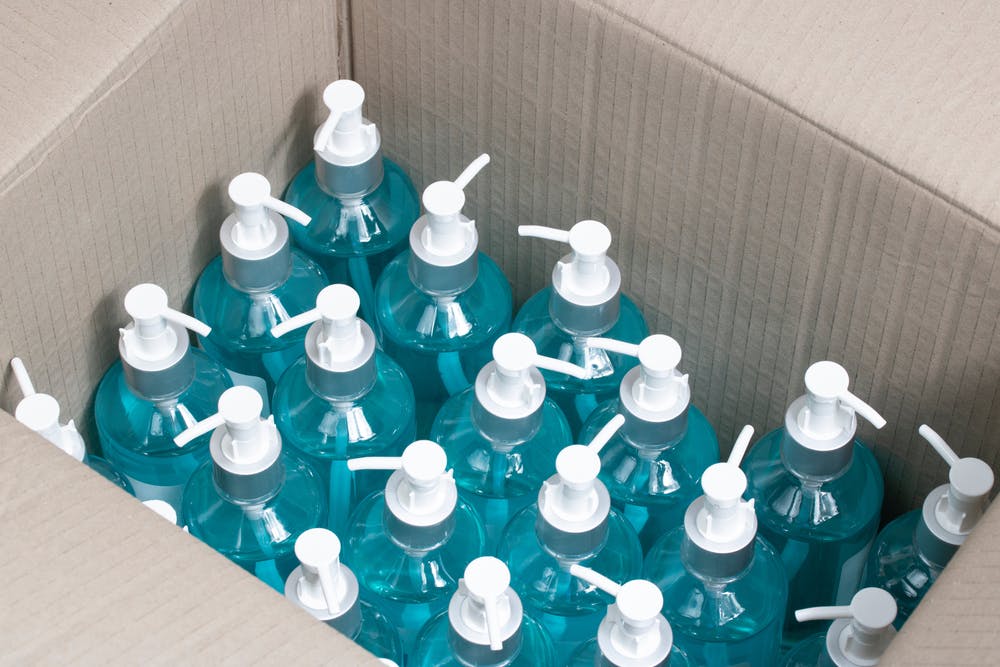
Masks, respirators, syringes and hand sanitisers from national stockpiles would be a good start. Such products can continue to be useful even when dated, especially if the products are stored well.
Indeed, even in developed countries, personal protective equipment has been distributed past its expiration date when needed during the pandemic.
It would be prudent to run a pilot program to donate dated, surplus stock, possibly with a single product.
Medical suppliers could also get on board. They may be willing to pay the costs of such a donation program if it allows them to regularly restock national stockpiles and similar reserves with fresh items.
Many countries were surprised at the start of the pandemic to find how much expired stock was in their reserves. A donation program would prevent this happening again and help us better prepare for the next pandemic.


