

The foot scene in House of the Dragon was upsetting, but it's nothing compared to the real history of the fetish
- Written by The Conversation
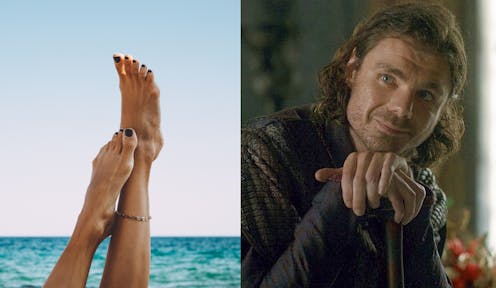
From the day it first graced our screens, the Game of Thrones franchise became infamous for depicting rather shocking and taboo sexual proclivities. From incest and necrophilia, to sadism and borderline-cannibalism, viewers have truly been exposed to (an often disturbing) range of erotic desires. Yet, even after a decade on our screens, the lasciviousness of the Seven Kingdoms still holds the power to shock us.
The most recent episode of House of the Dragon, the prequel set 200 years before the main events of Game of Thrones, depicted a fetish which caused some fans to declare the show-runners had finally gone “too far.”
In exchange for information which may secure her son’s reign, Queen Alicent must appease the sexual appetite of Lord Larys Strong – by removing her socks and shoes, displaying her bare, naked feet for him to strenuously admire.
Feet throughout history
Foot fetishes are no new feat. In fact, we find evidence of this desire throughout the ancient world.
At least three of the love letters of the great philosopher Philostratus evidence a particular interest in feet. In To A Barefoot Boy, Philostratus worships the shape of his lover’s feet and implores them to always walk barefoot so he may kiss the footprints left behind:
O perfect lines of feet most dearly loved! O flowers new and strange! O plants sprung from earth! O kiss left lying on the ground!
Things take a turn for the slightly kinkier once we get to his 37th letter. Philostratus describes the feet of a woman even better than those of Aphrodite (who, according to Hesiod’s origin story, had feet so perfect the grass grew beneath them) and wishes he could be dominated by these feet:
O thrice charmed would I be and blessed, if you [feet] would tread on me.
Starting on the right foot
Worship of feet wasn’t solely linked to the bedroom. It sometimes played quite a prominent role in public life.
The emergence of foot-washing as a custom is a prime example of this, intimately tied to displays of reverence and love. During his reign as Pope in the 9th century, Eugene II began the custom of kissing the feet of the Pope, which still continues today.
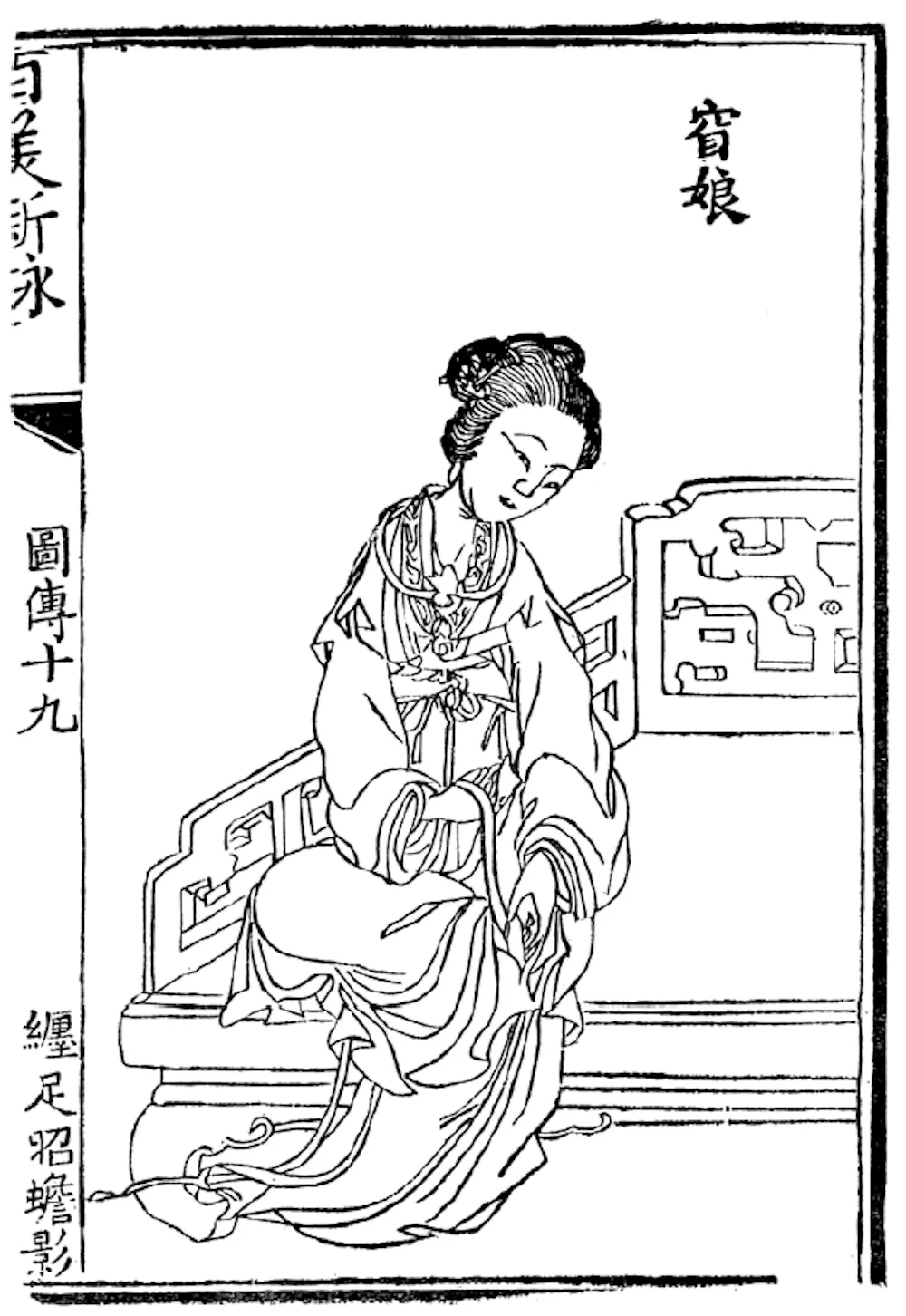
In the century following this, the torturous practice of foot-binding was brought to life in 10th century China during the reign of Emperor Li Yu. He was said to have been entranced by a court dancer, Yao Niang, who bound her feet into the shape of a moon, and danced on her toes inside a six-foot golden lotus.
This obsession was linked to sexual desire from the very beginning. It was quickly taken up as a fashion by ladies of the court, and became a symbol of high status feminine refinement. The last shoe factory only ceased to make “lotus” shoes in 1999.
By the 13th century, troubadour poets began singing praise of the beautiful feminine foot, desiring arches that were high, and toes that were slender and long. One group of researchers have suggested feet surged in erotic interest during this time as a result of the 13th century gonorrhoea epidemic. Their 1998 study found erotic literature about feet rises exponentially during major sexually transmitted epidemics in history.
For instance, during the syphilis epidemic of the 16th century, a movement in popular fashion began to draw eroticised attention to women’s feet. The term “toe-cleavage” became used to describe shoes which displayed the base of the first two toes. Similarly, by the 19th century epidemic, brothels began to specialise in foot-eroticisation.
When genital-contact proves to dangerous, feet are (historically) the next most-likely body part to be eroticised.
Tickling your fancy
F. Scott Fitzgerald (or, Feet-zgerld, if you will) is believed to have been one patron of this new specialisation. Fitzgerald repeatedly visited one sex-worker because of her feet, and was even described by her as a “foot fetishist”.
While he loved feet (at least the feet of this particular woman), he detested his own and refused to let anyone see them naked. He admitted he was plagued by a “Freudian shame about his feet”.
Sigmund Freud, of course, had a very insightful take on foot fetishes. As with all things Freud, it all had to do with the penis – lusting after feet was so common because the feet and toes resemble the shape of the penis. (I honestly believe it would be harder to find a part of the body that Freud does not think looks like the penis.)
 F. Scott Fitzgerald, potentially looking at a pair of beautiful feet.
Wikimedia Commons
It wasn’t until the 1980s, however, that the connection between foot fetishes and the contemporary epidemic was explicitly recognised. As foot-pornography emerged in magazines, some editorials advertised “foot-sex” could be regarded as a pleasurable, safe alternative to penetrative sex, which ran the risk of sexually transmitted diseases.
After completing their review of historical literature, the researchers of the 1998 study went on to review issues from eight of the largest pornographic magazines in the United States, released between 1965 to 1994.
Their investigation proved the number of foot-orientated pictures in pornographic magazines rose exponentially over the course of the AIDS epidemic.
If you’re thinking of getting into this fetish, don’t get cold feet
If this is true, it may explain why queer men are most likely to have fantasised about feet. According to data collected by social psychologist Justin Lehmiller, one in seven people today have had a sexual fantasy in which feet or toes played a prominent role.
The fantasy was most common amongst gay and bisexual men (21%), followed by heterosexual men (18%), lesbian and bisexual women (15%), and finally heterosexual women (5%).
With such a prevalent amount of the population having fantasised about feet, it is perhaps surprising the representation of this fetish-interest in The House of the Dragon was met with such shock.
Despite its pervasiveness, both today and throughout history, this erotic desire has rarely found itself feet-ured by many historical accounts. The decision for show is perhaps radical for this reason – a decision which may well have left one in every seventh viewer very happy.


