

Diverting children away from the criminal justice system gives them a chance to 'grow out' of crime
- Written by The Conversation
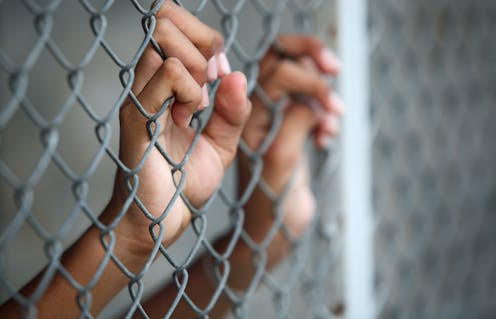
Prison is no place for a child. Putting children in youth justice facilities can have long-lasting consequences for their physical, psychological and emotional health, wellbeing and development.
Prison can aggravate existing health conditions and result in new ones, such as depression, suicidal thoughts, and post-traumatic stress disorder.
We heard this firsthand from children interviewed by ABC’s Four Corners this week.
The United Nations Convention on the Rights of the Child, to which Australia became a signatory in 1990, states detention should only be used as a “last resort” and, if required, should only be for the least possible time (Article 37). Yet this is not what we see in Australia.
Rather than imprisoning children who come into conflict with the law, the evidence suggests diverting them away from the criminal justice system and providing appropriate supports gives children the best chance to “grow out” of the behaviours that are being criminalised.
A time of rapid brain development
Neuroscience shows children and young people undergo rapid brain development. This can affect risk-taking, particular kinds of decision-making, and the ability to control impulses.
As previous research has shown, many children and young people desist or stop involvement in crime and in effect “grow out” or “age out” of it as they get older.
Reports demonstrate there is typically a peak in involvement in crime in the mid-teens and a decline at the beginning of adulthood.
Read more: One year on from Royal Commission findings on Northern Territory child detention: what has changed?
How do other countries compare with Australia?
Australia has a very low minimum age of criminal responsibility compared to other parts of the world. Children as young as ten can be searched, arrested, detained and held criminally responsible.
Other countries have a much higher age of criminal responsibility. In Luxembourg and South America, it’s 18, Poland is 17 (with some exceptions from 15), Portugal is 16, and Denmark is 15.
In contrast to Australia’s heavy reliance on the police, courts and prisons, other countries prioritise diversion for children who come into conflict with the law and promote alternative, community-based and social care-focused responses, which have much better outcomes for children and for communities.
One example is the public health model approach to address violence in communities, which has been successful in Scotland.
This is where diverse sectors such as health, social services, education, justice and policy work together to solve problems that contribute to violence and criminality including homelessness, addiction and family violence.
Scotland’s homicide rate halved between 2008 and 2018 after the approach was implemented and the number of hospital admissions due to assault with a sharp object fell by 62% in Glasgow (knife crime has been a significant issue in the United Kingdom).
In other countries that have a much higher age of criminal responsibility, such as Norway (where it’s 15), children under 15 do not interact with courts, are not punished but rather supported by child protection services, and their identities are not released in the media.
For those over 15, suspended sentences and probation, as well as support from child protection services, are prioritised.
Norway’s approach appears to be effective with an overall rate of recidivism (the number of people who return to prison after release) of 20%. This is in stark contrast with Australia’s overall recidivism rate of 45.2%, with states and territories as high as 58.9% (Northern Territory).
No benefits, only losses
There is no credible evidence imprisoning children decreases levels of crime or improves community safety.
Yet there is a wealth of established evidence demonstrating interactions with formal criminal justice institutions negatively impact children and are counterproductive. As the data demonstrates, children who are first sentenced between the ages of ten and 12 are more likely to re-offend than those first sentenced when they are older.
Read more: Don Dale royal commission demands sweeping change – is there political will to make it happen?
So what needs to happen?
We need to change our mindset about children who come into conflict with the law. We need a complete overhaul in our systems, with decarceration not incarceration.
Decarceration is a process of reducing the number of people in prison by diverting people away from the criminal justice system and reducing the focus on prison as a solution to crime.
In Australia this would mean detaining children as a last resort and prioritising other methods of diversion, such as fixing the social determinants of criminality, as described above.
We need to see youth justice facilities closing, not plans and financial resources being allocated to building more.
A major UN human rights review and longstanding national campaigns have called for the minimum age of criminal responsibility to urgently change nationally. The UN recommends 14 as the minimum age. Raising the age will prevent the criminalisation of younger children.
Children with neurodevelopmental disorders, disabilities or developmental delays should not be in the youth justice system, no matter their age.
The harsh bail laws in a number of states and territories also need to be amended, as they are resulting in large numbers of children spending periods in prison on remand.
Due to the bail laws, in Victoria in the decade to 2020 the number of children on remand doubled. Two-thirds spent time in detention but did not go on to receive a custodial sentence.
Justice reinvestment redirects resources from traditional criminal justice and related systems to communities, to instead invest those resources into programs that prioritise early intervention and prevention. Its core aim is to give communities back decision-making powers, allowing them to self-determine their own futures.
Community-designed and community-based diversion programs are much more effective than formal criminal justice system responses and evaluations show positive outcomes and reductions in reoffending.
National Children’s Commissioner, Anne Hollonds has called for a national taskforce to urgently address the crisis in youth justice in Australia. However, this needs to be coupled with action from the federal government, in full cooperation with the states and territories.
If there are further delays or a lack of political will to bring about such change, it’s the most vulnerable children and young people who will continue to pay the price. Their wellbeing and futures are at stake.


