

How physios and occupational therapists are helping long COVID sufferers
- Written by The Conversation
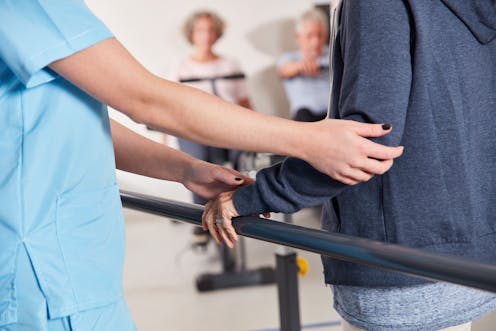
Treating people for long COVID – that is, symptoms that last longer than four weeks after COVID infection – can be extremely complex due to the wide variety of problems associated with the condition.
While there is no “one size fits all” treatment, there is increasing recognition of the importance of allied health professionals such as physiotherapists and occupational therapists in providing treatment for people throughout various stages of COVID.
We are still learning about long COVID, but these experts can tailor exercise training, breathing techniques and ways to manage fatigue safely, to help people get back to their normal roles and routines.
Long COVID and the body
While the exact mechanism of why people develop long COVID remains unclear, current evidence suggest lingering COVID virus may trigger a cascade of ongoing inflammatory and immune responses in the body.
This results in signs and symptoms across multiple body systems, including the respiratory and autonomic system, which regulates functions such as heart rate, breathing and digestion. This could explain common symptoms of long COVID such as brain fog, fatigue, headaches, breathing difficulties and changes in taste and smell.
Estimates suggest somewhere between 5% and 50% of those infected with COVID go on to develop long COVID.
Allied health professionals – who are not doctors, dentists, nurses or midwives but provide specialised care – such as physiotherapists and occupational therapists can be particularly effective at managing the signs and symptoms of long COVID.
This might be partly because they are used to working with patients to develop strategies and work towards functional goals.
Exercise training
Exercise training is the most common treatment prescribed by physiotherapists to assist people with long COVID. Studies have found exercise programs can help people with long COVID to reverse the effects of fatigue, muscle weakness, shortness of breath and exercise intolerance.
Pulmonary rehabilitation is an exercise and education program often led by physiotherapist and designed to help people with ongoing lung diseases. Such programs have been shown to be effective for people with long COVID.
However, not all exercise programs are suitable for everyone with long COVID. For some people with ongoing fatigue issues, commencing with a graded exercise program that progresses through different positions can also be effective in improving exercise fitness and reducing levels of fatigue.
Repetitive movement exercises such as range of motion exercises may be prescribed for joint and/or muscle pain and stiffness. Other therapies such as falls prevention, muscle strengthening and balance training are also suitable for people with reduced mobility, deconditioning and muscle wastage due to long COVID.
It is important to seek advice from a physiotherapist before commencing exercises as over-exertion can set your recovery back. Thorough assessment of your heart function and fatigue symptoms before returning to exercise – and close monitoring during exercise – are essential because symptoms can fluctuate over time.
Breathing techniques and inspiratory muscle training
Apart from prescribing an exercise program, physiotherapists can provide strategies on how to manage shortness of breath, a common symptom of long COVID. For example, physiotherapists often teach people how to do relaxed controlled breathing to recover from episodes of breathlessness.
People with long COVID may also feel the ongoing need to cough or clear their chest. Secretion clearance techniques such as active cycle breathing technique can be useful.
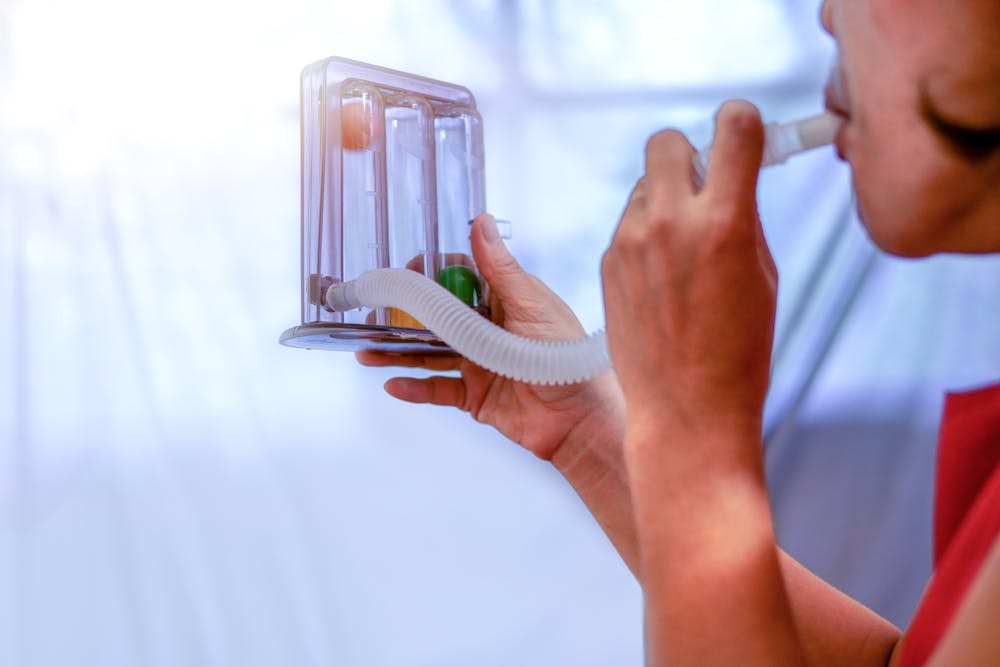
Inspiratory muscle training involves specific exercises prescribed to strengthen respiratory (breathing) muscles. This often involves taking deep breathes through a device that provides resistance.
This form of training has proven useful to some people with long COVID, but is not beneficial to all sufferers.
It is important to consult a physiotherapist regarding the best breathing technique for your symptoms, as therapies for people with long COVID work best when they are tailored to the person.
Fatigue management and other treatments
As well as rehabilitation exercises, both physiotherapists and occupational therapists can provide personalised strategies to manage symptoms and enhance participation in work and daily life for people with long COVID.
For example, they might develop strategies to enhance or compensate for poor attention and memory, or help plan a daily routine to deal with fatigue so people can re-engage in their usual roles and routines.
Other health professionals can also provide individualised treatment to assist with recovery. Psychologists may offer non-drug treatments to improve anxiety and depression. Speech pathologists may help someone who has an ongoing hoarse voice.
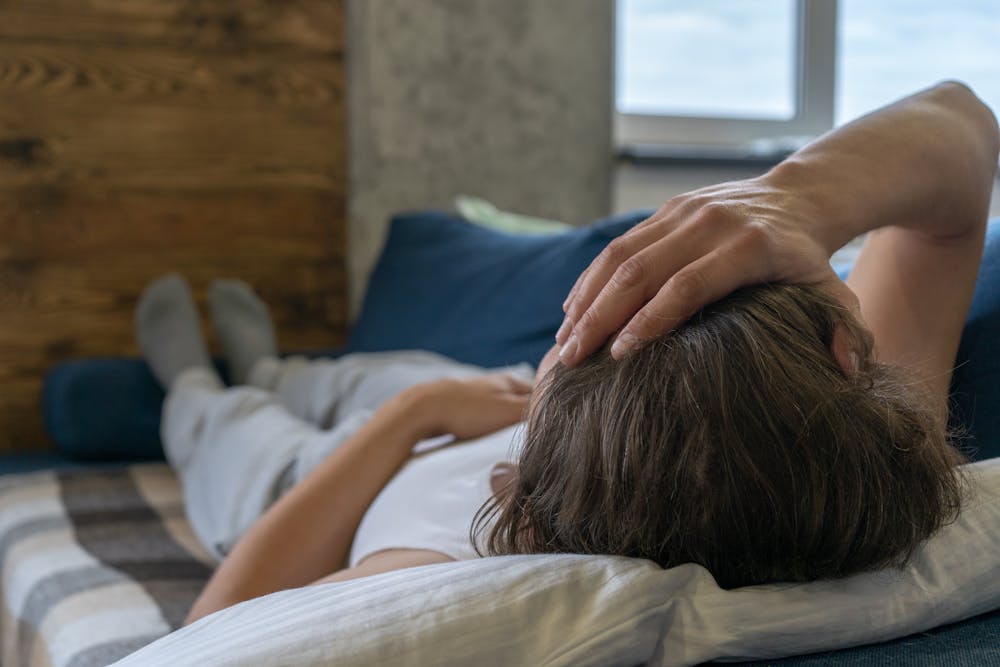 Functional goals and strategies might help people with long COVID get back to their usual routines.
Shutterstock
Functional goals and strategies might help people with long COVID get back to their usual routines.
Shutterstock
How to get help for long COVID?
If you have long COVID, ask your doctor to refer you either to a multidisciplinary long COVID program where different types of health professionals work together, or to specific health professionals depending on your symptoms.
Multidisciplinary based programs have been found to be the most effective in managing people with long COVID. In Australia, there are some long COVID clinics providing monitoring and treatment. However, there is an urgent need to establish more of them across the nation.
While long COVID symptoms can be debilitating, it appears many symptoms improve with time. That said, you may be able to recover more quickly with the help of a physiotherapist or an occupational therapist.
The authors wish to acknowledge the contribution of Kerrie Saliba, who is a senior physiotherapist in the intensive care unit at Liverpool Hospital, South Western Sydney Local Health District and a Western Sydney University masters student, to this article.


