

Artworks are more than just plot clues in The White Lotus season 2 – they are the show’s silent witnesses
- Written by The Conversation
In Western art history, a mise en abyme is a technique of placing one image inside another, or a story inside a story. It serves the purpose of illuminating the hidden meaning in an image. This can also be thought of as an allegory.
To say this technique is being used in The White Lotus, season 2 would be an understatement.
Everything in the show from painting and sculpture to film and literary references, to fashion, and even an erupting Mount Etna in the distance, function as allegorical clues to the show’s unfolding drama.
The White Lotus serves as a criticism of the rich and the entanglement of money, power, and sex against the backdrop of a luxury hotel adorned with art historical artefacts.
Fans of the show will be familiar with the widespread phenomenon on social and popular media of interpreting the meaning of the books read by characters in season 1. In season 2, it’s the artworks that have drawn attention.
Read more: Freud, Nietzsche, Paglia, Fanon: our expert guide to the books of The White Lotus
Renaissance art and film
The placement of art in the show is both masterful and purposeful. Fans spent much of the season using visual interpretations of the artwork to try and solve the mystery of who died in the opening minutes of a flashback in episode 1.
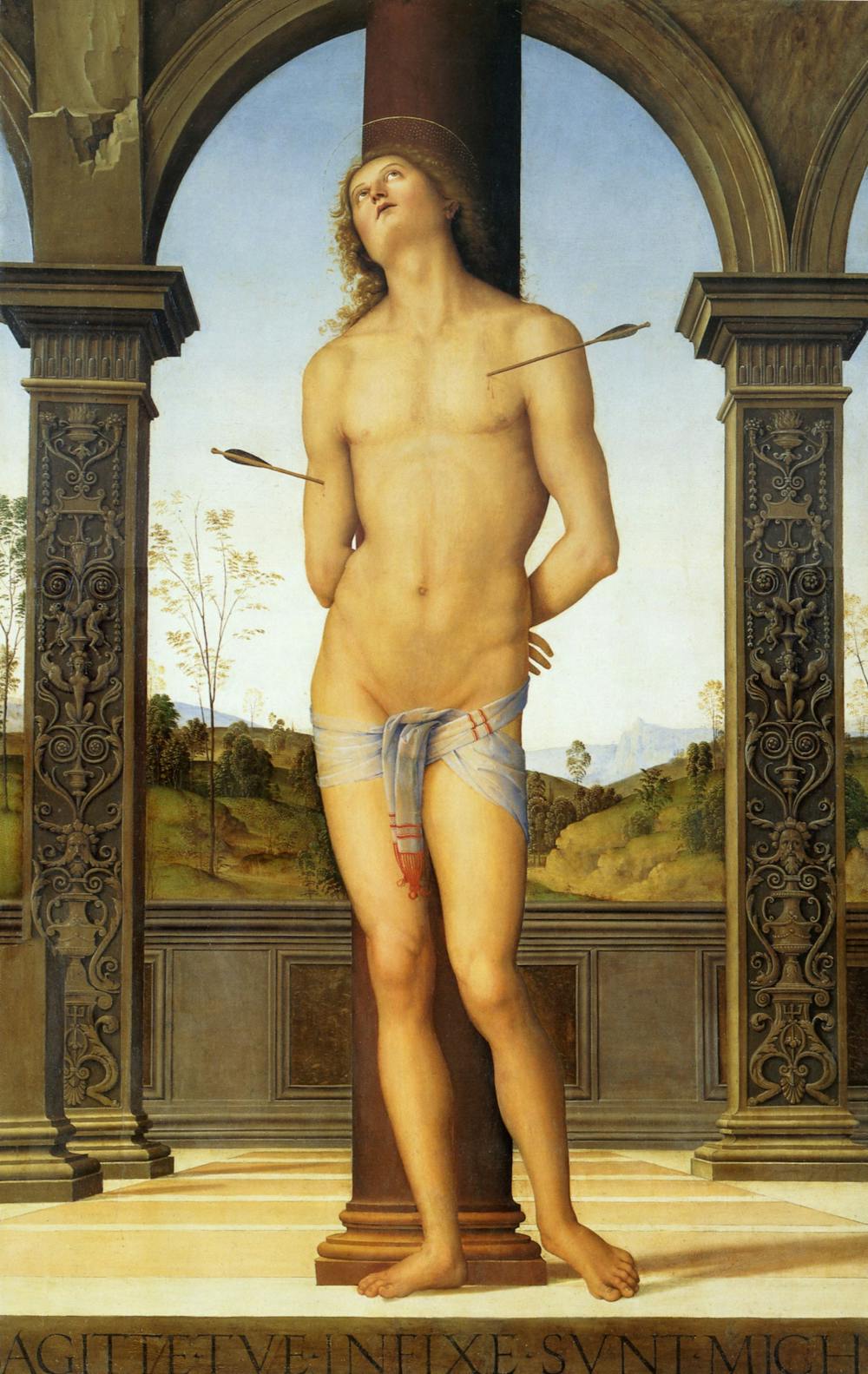
Videos on social media show fans performing the role of a quasi-art historian in a mock BBC documentary to interpret the allegories in key paintings featured in each episode. For example, one such fan has pointed to the visual resonance between the character Albie Di Grasso (Adam DiMarco) and the painting Saint Sebastian by Pietro Perugino (1495).
In the painting, Saint Sebastian is tied to a column and his flesh pierced by arrows. We see the painting in the background of a scene where Albie is being brought to orgasm by a woman, Lucia, who he doesn’t know is a sex worker. It’s hard to ignore the ironic symbolism of the bleeding martyr next to the love-struck, innocent and clueless Albie. The painting gives us a clue to his own potential martyrdom: rescuing Lucia from her occupation.
In another scene, Lucia (Simona Tabasco) the sex worker, sneaks into Albie’s grandfather’s room to shower after an all night orgy with other guests. While packing her bag to leave, she notices her namesake, Saint Lucy in a painting by Domenico Beccafumi (1521). Seeing the painting, Lucia pauses and superstitiously performs the sign of the cross, as though she were asking for the saint’s forgiveness.
While there has been intense focus on the Renaissance art in the show, there are also filmic and literary references. The script plays with themes of the patriarchy, hetereosexual dynamics and the male gaze directly from Michelangelo Antonioni’s l’Avventura (1960) and Francis Ford Copolla’s The Godfather (1972). There are also references to Elena Ferrante’s novels adapted to television show, My Brilliant Friend (2018), through the “escorts” Lucia and Mia (Beatrice Grannò) who bear striking resemblance to the “good” and “bad” girl characters, Lenù and Lila.
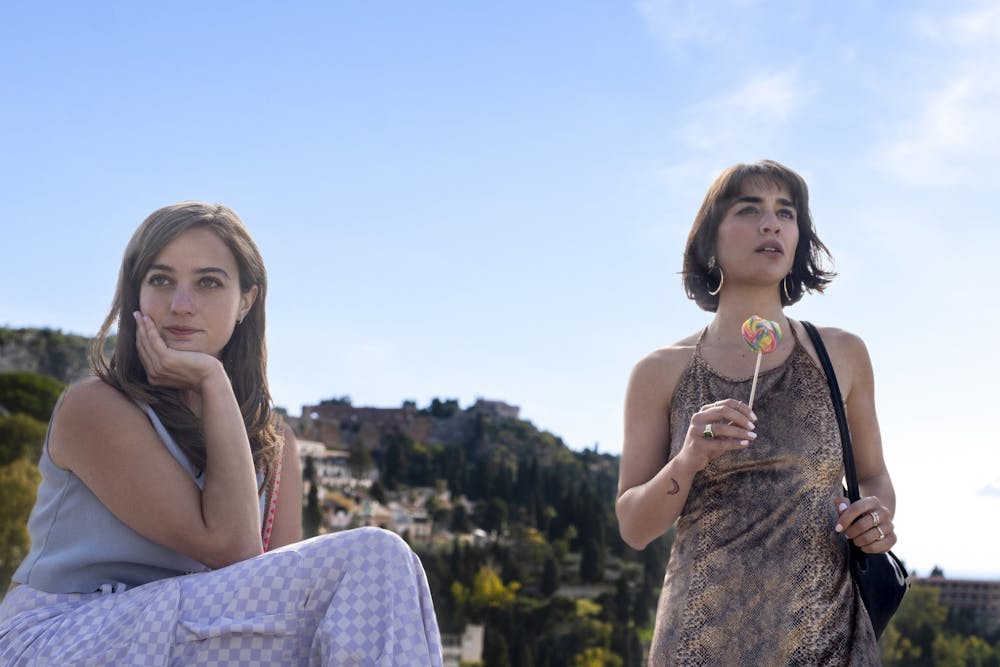 Beatrice Granno and Simona Tabasco as Mia and Lucia.
Warner
Beatrice Granno and Simona Tabasco as Mia and Lucia.
Warner
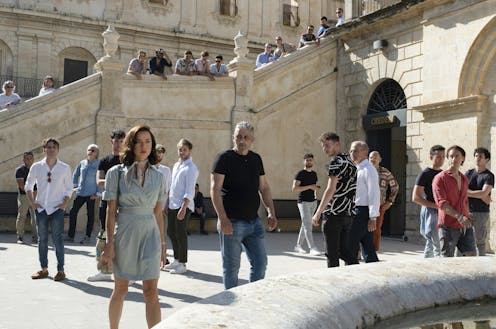
The most iconic film reference is to Antonioni’s l'Avventura, where Harper retraces Monica Vitti’s footsteps as she is objectified by countless men who look at her lustfully under the steps of Noto Cathedral, Sicily.
For those with prior knowledge to the above references, the appropriation of iconic scenes and characters from cult films extends the viewer’s cultural investment in the television show, showing how art imitates art.
Art as a commodity of the rich
While these novel forms of interpretation are entertaining, they gloss over one of the show’s critiques: the role of art in the lives of the rich.
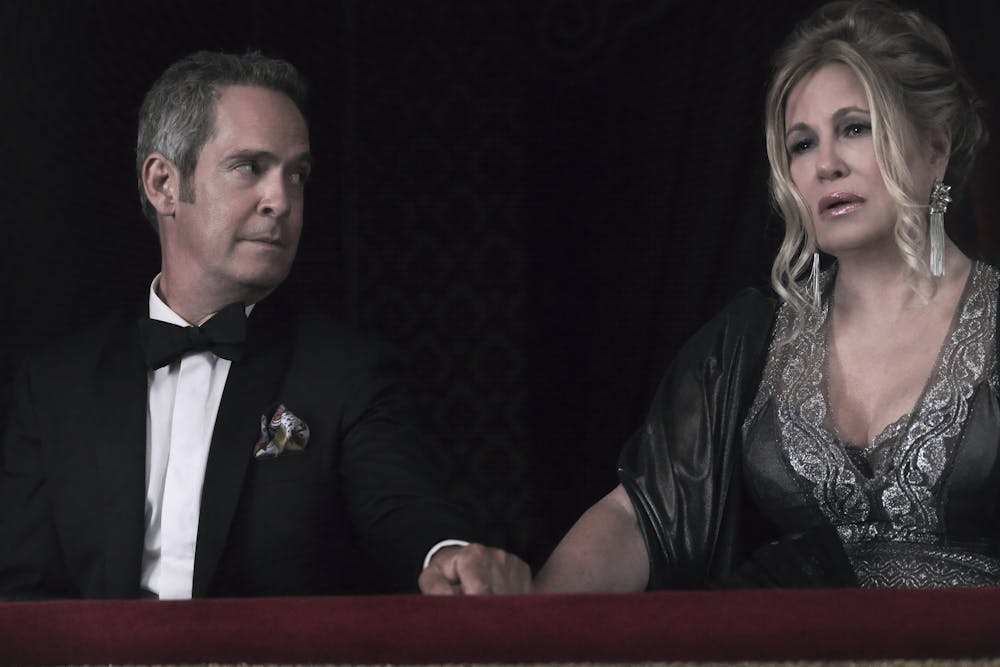 Tom Hollander and Jennifer Coolidge enjoying the opera in The White Lotus season 2.
Warner
Tom Hollander and Jennifer Coolidge enjoying the opera in The White Lotus season 2.
Warner
This critique offers us a clue to understanding the role that art plays in the show – as decoration, art signifies luxury and taste, it offers a veneer of culture that is bought rather than learnt or made.
Like a vase bought from IKEA for a holiday rental, in this luxury hotel, art serves the ubiquitous purpose of furnishing a tourist attraction and reinforcing wealth and status.
As Tanya (Jennifer Coolidge) says to Quentin in the final arresting episode, “What a life you have. I mean, this boat, your villa. Oh, my God, everything you have is a work of art.”
Art: a way into a character’s inner world
One of the more interesting functions of art in the show are the interactions between the characters and artworks at pivotal moments of psychological turmoil.
There is the infidelity warning of the Testa di Moro legend. These vases decorate the hotel. The legend is amplified in a scene when Harper’s husband, Ethan believes his wife to have cheated on him in revenge for his own close encounter with sex workers. He looks ominously at the decapitated head of the Testa di Moro in his hotel room, a colourful ceramic vase of a Moorish-appearing man who wears a crown adorned by fruits and flowers.
 The Testa di Moro.
Wikimedia
The Testa di Moro.
Wikimedia
The scenes that feature Tanya are packed with the most symbolism. She is the drama’s ultimate tragedy and her vulnerability and mortality connect most powerfully with art historical references.
Her tears are symbolised in the painting of a hunched over weeping woman grasping a dagger. By interpretation, the pathos of the figure in the painting is transferred to Tanya who is always crying.
This pathos (as well as the dagger) also connect to the scene of Tanya at the opera. Clues to her fate are linked to the tragedy of Madame Butterfly.
It’s clear the artworks personify the characters in the show, serving as an entry point into their inner turbulent worlds. The scenes connecting the art to the characters suggests an alternative reading to the empty, lost, or insidious sociopathy that is central to the critique in The White Lotus.
The artworks are the show’s silent witnesses, observing the characters’ moral compasses, looking upon them beneath the world of luxury, class, taste, sex and wealth.
In this world of appearances and resort wear, art and allegory grant us access to what sits below the visible surface of shiny things, and as the climax reveals, below the Mediterranean sea.


