

The rich history of our love affair with luxury
- Written by The Conversation
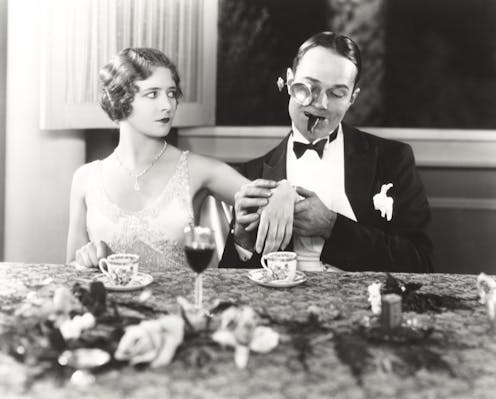
In today’s world it could be said, to a certain degree, that even a relatively impoverished person engages with luxury, in some way.
If you enjoy regulated heating or cooling at home, regular lighting, chicken meat, or eat chocolates, you are engaging with formats that once indicated luxury.
But what is, and is not, considered to be a luxury, changes with the times.
Decadence and luxury
When we describe a dessert as “decadent” today, we must remember it really means decaying, a concept related to the “Romans of the decadence” whose lavish lifestyles are held up as proof of why the Empire had to fail.
The Romans saw luxury as quintessentially foreign and therefore alien to the true and olden spirit of the Roman polis. This is why luxury was often represented as coming from “the Orient”, the source of rare scents, spices, gems, ivories and enslaved peoples.
As a result, the Romans introduced sumptuary laws, which were prescriptions to manage conspicuous consumption of things like expensive clothing and jewellery worn by social groups, but also the amount spent on banquets and even funerals.
This was necessary, because the ancient Romans enjoyed conspicuous luxury. They liked to eat food whose ingredients resembled another. They enjoyed delicacies such as fattened fowls, peacock, oysters, ham, wild boar and fig-peckers, the latter eaten whole, sometimes all combined together in a crusted paté, even though this was forbidden by the new laws. There were even luxuries in enslaved peoples. The poet Juvenal commented satirically that clearly it was better to have a bevy of pretty pageboys (exoleti) arranged according to their nationality, size and hair colour serving the drinks rather than coarse household help.
There is a long continuity in this type of consumption. In the 19th century, for example, there was a premium on tall footmen matching in size and the Victorians loved elaborate feasts with multiple courses.

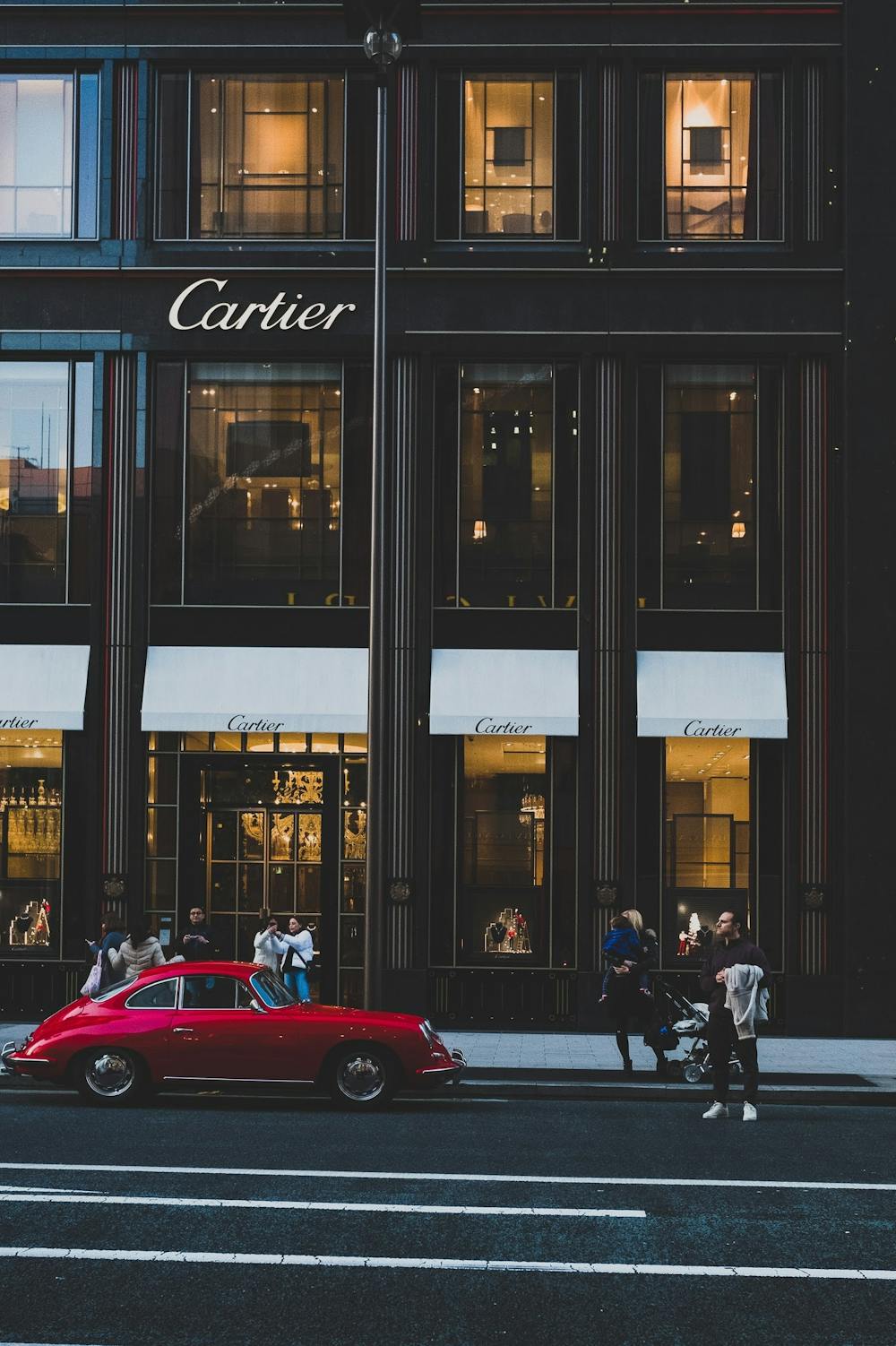 Simon Launay/ Unsplash
The Queen Mother wore all Mrs Greville’s jewels at her 80th Birthday party – and the owner of them now is Camilla, the Queen Consort. As Camilla is the grand-daughter of Edward VII’s mistress Mrs Keppel, the story comes full circle.
Mrs Greville left an estate in the 1940s worth approximately £39 million or 67 million AUD.
This is not much money if we compare it to the fortunes held by global billionaires today.
Gina Reinhart has between A$28.8 and A$31.4 billion. She lives discreetly part of the year in Dalkeith Perth in her late father’s home, in Singapore at a gated community, and on an ocean liner.
Luxury today
Today, luxury is seen as the embodiment of growing income inequality within states and communities, and also between different nations in the world. This is not new, although in the past luxury and inequality were seen as part of how a hierarchical society was structured: acknowledged, rather than seen as a problem.
Luxury is not the cause of inequality, though it might be one of its effects. When societies aims towards income and social equality (as some postwar societies did), luxury – or at least the public discussion of luxury – seems to disappear. By contrast, societies like the present, in which 1% of the population owns 49% of the world’s wealth, lead luxury to the fore.
Simon Launay/ Unsplash
The Queen Mother wore all Mrs Greville’s jewels at her 80th Birthday party – and the owner of them now is Camilla, the Queen Consort. As Camilla is the grand-daughter of Edward VII’s mistress Mrs Keppel, the story comes full circle.
Mrs Greville left an estate in the 1940s worth approximately £39 million or 67 million AUD.
This is not much money if we compare it to the fortunes held by global billionaires today.
Gina Reinhart has between A$28.8 and A$31.4 billion. She lives discreetly part of the year in Dalkeith Perth in her late father’s home, in Singapore at a gated community, and on an ocean liner.
Luxury today
Today, luxury is seen as the embodiment of growing income inequality within states and communities, and also between different nations in the world. This is not new, although in the past luxury and inequality were seen as part of how a hierarchical society was structured: acknowledged, rather than seen as a problem.
Luxury is not the cause of inequality, though it might be one of its effects. When societies aims towards income and social equality (as some postwar societies did), luxury – or at least the public discussion of luxury – seems to disappear. By contrast, societies like the present, in which 1% of the population owns 49% of the world’s wealth, lead luxury to the fore.
Read more https://theconversation.com/the-rich-history-of-our-love-affair-with-luxury-192732


