

Enough with the koala cakes – the government’s annual Threatened Species Bake Off seriously neglects fish, plants and other lesser-loved species
- Written by The Conversation
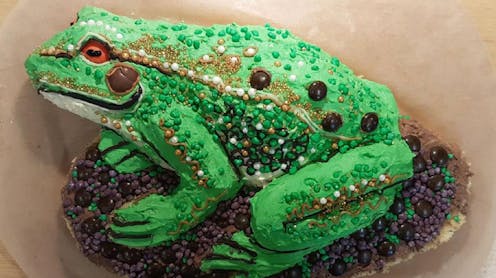
Almost 2,000 native species are officially listed as “threatened” in Australia – but how many have you actually heard of?
Each year, the federal government holds the Threatened Species Bake Off, a social media competition where entrants represent a threatened species in cake form. It aims to build awareness of Australia’s vast diversity of wildlife facing extinction – but our new research found a serious problem with bias towards cute and cuddly animals.
We trawled over 700 entries between 2017 and 2021, and found koalas, echidnas, and wombats consistently depicted. These are the typical poster children of conservation.
Koalas, for example, are frequently allocated large sums of money for conservation. Compare this to many lesser known, more impactful and at-risk species including the grey nurse shark and foundation species such as seaweeds.
Australia is a world leader in extinctions and, indeed, many at-risk plants and animals aren’t even on the official threatened species list, but should be. While the bake off is well-intentioned, our results highlight a massive gap in conservation messaging.
Unless we build the profile of our lesser-loved plants, invertebrates, frogs and fish, we’ll certainly see more species vanish.
What species do people like to bake?
The Threatened Species Bake off begins on September 7, when Facebook, Instagram, and Twitter get flooded with photos of baked goods with elaborate animal or plant designs. Since its inception in 2017, the competition has become increasingly popular and has even garnered celebrity judges including Dawn French, Costa Georgiadis and Kat Sabbath.
It reflects the urgent need to explore creative and novel ways to engage with diverse audiences about Australia’s extinction crisis. But whether it can actually makes a difference to wildlife depends on what people choose to depict.
The charts below show the top ten most popular species baked in the Threatened Species Bake Off on Instagram and Twitter since 2017. Birds and mammals have proven most popular – koalas, echidnas, orange-bellied parrots and other iconic species come out on top. The corroboree frog is the exception to this trend, topping popularity on Twitter and in the top five on Instagram.
Most of the nearly 2,000 species listed as threatened by the federal government are plants – 1,411 plants compared to 562 animals. But very few contestants depict plants in the Threatened Species Bake Off. Just 3% of the listed threatened plants have been depicted, compared to 40% of the listed mammals and 30% of the listed birds.
This highlights a global issue with “plant blindness” – a phenomenon where plants are frequently forgotten when considering the nature in an area, leading to limited interest and funding for their conservation.
In fact, many of the species in the Albanese government’s 2022-2032 Threatened Species Action Plan are birds and mammals – species considered much more charismatic than a plant or invertebrate. The action plan includes 14% of threatened mammals and 13% of threatened birds – and just 2% of threatened plants.
What the bake off revealed about conservation gaps
This brings us to Australia’s invertebrates – the bedrock of ecosystems. We found 50% of invertebrates on the official threatened species list were featured in bake offs (that’s 34 of 68 listed species).
This prevalence, however, is misleading. It masks one of the most significant deficiencies in threatened species management: the lack of invertebrates on threatened species lists. In fact, invertebrates are simply classified as “other animals” under Australia’s threatened species legislation.
Their relative absence from lists of protected groups highlights two major gaps in our knowledge:
many invertebrates are yet to be scientifically described and named – the key entry point to being included on these lists
we know very little about most invertebrates that have been scientifically described and named – we know only where they were found.
To adequately conserve Australia’s biodiversity, we need to urgently prioritise research on such crucial animals.
Social media can help and hamper conservation
The bake off’s popularity shows social media can be powerful conservation messaging tool. But promoting conservation via social media walks a fine line between protecting and endangering threatened species.
For example, a social media post of a scenic location inhabited by threatened species may drive increased tourism to the location, adding more pressure to the species and its habitat. Indeed, a study in 2019 drew potential links between the rise in videos posted to YouTube of otters as pets with an increase in illegal otter trade.
On the other hand, the use of social media has led to great success in controlling populations of the invasive Indo-Pacific lionfish in the Western Atlantic and Caribbean.
To reduce populations, the Florida Fish and Wildlife Conservation Commission has held fishing tournaments since 2014, advertising via social media. The event has evolved into a multi-day festival with art booths, lionfish tastings, and filet demonstration.
What these examples and the bake off shows is the need for a tailored approach for each conservation message.
But so far, the conservation message of the bake off is not clear given people have baked species that aren’t even listed as threatened such as the platypus, brolga, and Mount Lewis spiny crawfish, as well as species that aren’t even Australian, such as tigers and pandas.
Try something different this bake off
We need to find ways to ensure all species, not just koalas, are on the receiving end of conservation action. Here are some ways we can encourage this.
First is to increase their visibility by providing images of threatened species. For example, researchers and nature enthusiasts could make their images free to use on websites such as Wikimedia Commons. Or, they could upload images to iNaturalist or Atlas of Living Australia, two websites that catalogue the sightings of species submitted by researchers and the public.
Giving newly discovered species interesting or funny names can also create emotional connections, encouraging people to care more about them – like the Amazonian Agra beetle species, which include names such as Agra vation and Agra cadabra, or the Australian wasp species Aha ha.
Previous bake offs have incorporated themes including “species I’ve seen” and “ecosystem engineers”. Organisers should introduce a new theme: “species I’ve never heard of”, or “the species under my feet”.
So next bake off, how about baking a small-flowered snottygobble , a Kangaroo Island Assassin Spider, a red handfish, or a cauliflower soft coral?
Read more: From superheroes to the clitoris: 5 scientists tell the stories behind these species names


