

Ozempic helps weight loss by making you feel full. But certain foods can do the same thing – without the side-effects
- Written by The Conversation
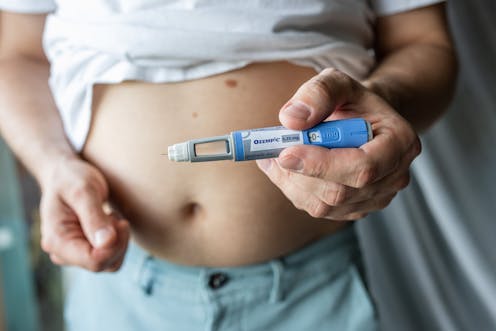
You’ve probably heard about the medication Ozempic, used to manage type 2 diabetes and as a weight loss drug.
Ozempic (and the similar drug Wegovy) has had more than its fair share of headlines and controversies. A global supply shortage, tweets about using it from Elon Musk, approval for adolescent weight loss in the United States. Oscars host Jimmy Kimmel even joked about it on film’s night of nights last week.
But how much do we really need drugs like Ozempic? Can we use food as medicine to replace them?
How does Ozempic work?
The active ingredient in Ozempic is semaglutide, which works by inducing satiety. This feeling of being satisfied or “full”, suppresses appetite. This is why it works for weight loss.
Semaglutide also helps the pancreas produce insulin, which is how it helps manage type 2 diabetes. Our body needs insulin to move the glucose (or blood sugar) we get from food inside cells, so we can use it as energy.
Semaglutide works by mimicking the role of a natural hormone, called GLP-1 (glucagon like peptide-1) normally produced in response to detecting nutrients when we eat. GLP-1 is part of the signalling pathway that tells your body you have eaten, and prepare it to use the energy that comes from your food.
Read more: Ozempic helps people lose weight. But who should be able to use it?
Can food do that?
The nutrients that trigger GLP-1 secretion are macronutrients – simple sugars (monosaccharides), peptides and amino acids (from proteins) and short chain fatty acids (from fats and also produced by good gut bacteria). There are lots of these macronutrients in energy-dense foods, which tend to be foods high in fat or sugars with a low water content. There is evidence that by choosing foods high in these nutrients, GLP-1 levels can be increased.
This means a healthy diet, high in GLP-1 stimulating nutrients can increase GLP-1 levels. This could be foods with good fats, like avocado or nuts, or lean protein sources like eggs. And foods high in fermentable fibres, like vegetables and whole grains, feed our gut bacteria, which then produce short chain fatty acids able to trigger GLP-1 secretion.
This is why high fat, high fibre and high protein diets can all help you feel fuller for longer. It’s also why diet change is part of both weight and type 2 diabetes management.
Read more: Thinking about bariatric surgery for weight loss? Here's what to consider
Not so fast …
However, it’s not necessarily that simple for everyone. This system also means that when we diet, and restrict energy intake, we get more hungry. And for some people that “set point” for weight and hunger might be different.
Some studies have shown GLP-1 levels, particularly after meals, are lower in people with obesity. This could be from reduced production of GLP-1, or increased breakdown. The receptors that detect it might also be less sensitive or there might be fewer receptors. This could be because of differences in the genes that code for GLP-1, the receptors or parts of the pathways that regulate production. These genetic differences are things we can’t change.

So, are injections the easier fix?
While diet and drugs can both work, both have their challenges.
Medications like Ozempic can have side effects including nausea, vomiting, diarrhoea, and issues in other organs. Plus, when you stop taking it the feelings of suppressed appetite will start to go away, and people will start to feel hungry at their old levels. If you’ve lost lots of weight quickly, you may feel even hungrier than before.
Dietary changes have much fewer risks in terms of side effects, but the responses will take more time and effort.
In our busy modern society, costs, times, skills, accessibility and other pressures can also be barriers to healthy eating, feeling full and insulin levels.
Dietary and medication solutions often put the focus on the individual making changes to improve health outcomes, but systemic changes, that reduce the pressures and barriers that make healthy eating hard (like shortening work weeks or raising the minimum wage) are much more likely to make a difference.
It’s also important to remember weight is only one part of the health equation. If you suppress your appetite but maintain a diet high in ultra-processed foods low in micronutrients, you could lose weight but not increase your actual nourishment. So support to improve dietary choices is needed, regardless of medication use or weight loss, for true health improvements.
Read more: Stop hating on pasta – it actually has a healthy ratio of carbs, protein and fat
The bottom line
The old quote: “Let food be thy medicine” is catchy and often based on science, especially when drugs are deliberately chosen or designed to mimic hormones and compounds already naturally occurring in the body. Changing diet is a way to modify our health and our biological responses. But these effects occur on a background of our personal biology and our unique life circumstances.
For some people, medication will be a tool to improve weight and insulin-related outcomes. For others, food alone is a reasonable pathway to success.
While the science is for populations, health care is individual and decisions around food and/or medicine should be made with the considered advice of health care professionals. GPs and dietitians can work with your individual situation and needs.


