

Why can't we just establish the Voice to Parliament through legislation? A constitutional law expert explains
- Written by The Conversation
We asked our readers what they would like to know about the proposed Indigenous Voice to Parliament. In the lead-up to the referendum, our expert authors will answer those questions. You can read the other questions and answers here.
It would be possible for the federal parliament to establish an Indigenous Voice by passing ordinary legislation. But such a body would be fundamentally different from the constitutionally enshrined Voice we are being asked to approve at a referendum later this year.
First, only a constitutional Voice responds to the call for reform set out in the Uluru Statement from the Heart. That document was endorsed at the 2017 National Constitutional Convention at Uluru, which was the culmination of a grassroots process comprising 13 regional dialogues and involving more than 1,200 First Nations people.
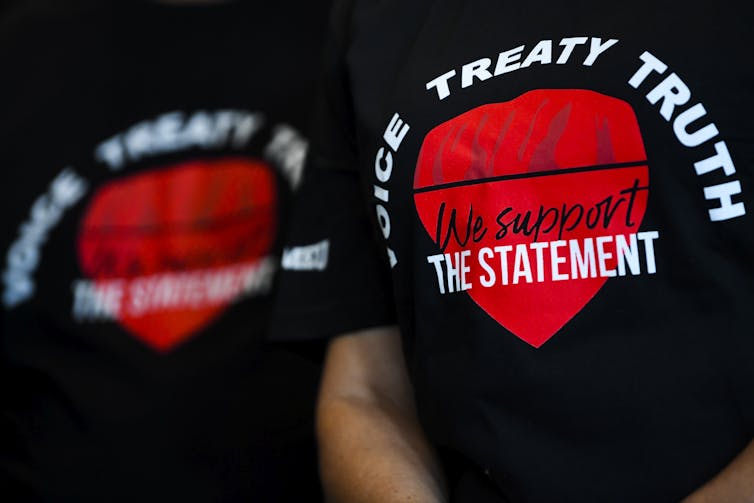
The Uluru Statement calls for “the establishment of a First Nations Voice enshrined in the Constitution” as the first step of a reform process that also encompasses treaty-making and truth-telling.
Second, the act of establishing a Voice in the Constitution provides Aboriginal and Torres Strait Islander peoples with a form of constitutional recognition. This is explicit in the proposed amendment released by the government. Currently, the Australian Constitution makes no mention of the continent’s first peoples.
Third, constitutional change gives the Voice security and certainty. Once established, the Voice could only be abolished if Australians agreed to that at another referendum. By contrast, a legislative Voice would be far more vulnerable. A future government could get rid of it by passing an ordinary law. To do that, it would only need to win the support of a majority of members in the House of Representatives and the Senate.
Fourth, constitutional change will confer on the Voice a strong popular legitimacy that is not achievable through ordinary legislative change. The direct approval of the people at a referendum would bestow on the Voice a special credibility and authority. That would give additional political force to the representations of the Voice, even as the parliament and government would be free to ignore them. And the presence of the Voice in the nation’s highest law would speak to its standing.
Finally, constitutional change gives the Voice the best chance of being effective. A body that has been endorsed by First Nations people and the wider public, and enjoys the security and legitimacy that constitutional amendment provides, promises to have the most lasting and meaningful impact.
Why can’t the Voice be legislated and piloted for a few years, then put to a referendum?
It would be possible to establish an Indigenous consultative body by legislation and then subsequently hold a referendum to enshrine it in the Constitution. We could imagine this might help to familiarise some Australians with the idea of an Indigenous Voice before voting on it.
However, there are shortcomings to this approach that arguably outweigh any benefits it might bring. As the Uluru Statement makes clear, First Nations people have called for a Voice that is enshrined in the Constitution. That demand is not met by a legislated body.
Even if a sincere government pledged to put a legislated Voice to a vote after a trial period, there would be no guarantee the referendum would go ahead. After all, the priorities and composition of our governments and parliament change rapidly. There would be a risk that Indigenous people would be stuck with another representative body that, like ATSIC before it, could be dissolved with the stroke of a pen.
The lessons of any pilot period would also be limited. A statutory Voice would have a relatively weak standing and legitimacy. It could not be expected to speak as loudly as a constitutional body. As such, Australians could come to the end of the pilot period without a clear idea of the impact that a constitutional Voice might have on laws and policies.
Moreover, a pilot period would not necessarily provide Australians with greater certainty about the details of the Voice’s operation. The fact remains that parliament would retain the power to alter the Voice’s composition, functions, powers and procedures. The people might vote at the referendum with the “pilot” Voice in their mind, only to find the subsequent constitutional version takes a different shape.
Read more: What happens if the government goes against the advice of the Voice to Parliament?
What legislation is ever debated in parliament that does NOT affect indigenous people?
The proposed Voice covers a broad range of policy areas. It would be able to make representations to the parliament and the executive government “on matters relating to Aboriginal and Torres Strait Islander peoples”.
As the Explanatory Memorandum to the Constitution Alteration Bill explains, this wording captures both matters specific to Indigenous peoples (such as native title) as well as more general matters “which affect Aboriginal and Torres Strait Islander peoples differently to other members of the Australian community”. For instance, general election laws would fall within the scope of the Voice because of the disproportionately low enrolment and participation rates of First Nations people.
Some have argued this remit is too broad, potentially allowing the Voice to give advice on almost any issue. The opposition has said the Voice could present its views, for example, on the setting of interest rates or the formulation of climate policy.
Supporters of the government’s proposal argue it is both necessary and appropriate for the Voice to be able to speak on a wide range of matters. It is said that a broad remit will ensure that the Voice facilitates the participation of Indigenous peoples in the making of laws and policies that affect them.
Proponents say it is impossible to know in advance the sorts of issues that First Nations people will see as being of interest or concern, and that those issues are likely to evolve over time. They also argue that a narrow remit could prompt legal challenges as disputes arise over what matters fall within scope.
In practical terms, the proposed Voice will not be able to make representations on all matters that fall within its remit. It will need to decide which matters deserve priority and focus its attention and resources on them.
And if the Voice wishes to be heard, and not just to speak, it may find that it can have most impact by focusing on matters that have specific significance for Indigenous peoples. Under the government’s proposal, it will be up to the Voice to make that calculation. As Robert French, former Chief Justice of the High Court of Australia, has observed: “[The Voice’s] limits are likely to be defined by common sense and political realities”.


