

Safety vests and helmets make cyclists look ‘less human’ to other road users
- Written by The Conversation
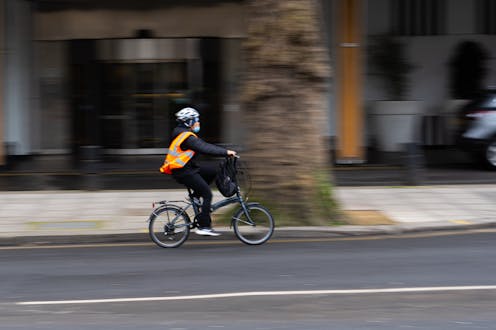
Getting more people to ride bikes has been flagged as a simple and effective way to improve public health while tackling climate change. However, research has repeatedly found safety concerns deter people from cycling.
Australia’s limited cycling infrastructure often forces cyclists to share the road with motor vehicles. This puts them in a vulnerable position as, unlike motorists, they have little to protect their flesh and bones from the road or the vehicles on it.
To reduce their vulnerability, cyclists wear safety gear such as helmets to protect their heads and high-vis safety vests to make them more visible to other road users. However, our study found cyclists wearing helmets or safety vests are more likely to be perceived as “less human” than those not wearing safety gear. Around 30% of respondents also perceived cyclists to be less than fully human.
This finding is consistent with previous research showing that perceiving cyclists as “less human” (known as dehumanisation) was associated with more aggression towards cyclists. Dehumanisation is the denial of attributes, such as complex emotions, intelligence, rationality and individuality, that differentiate humans from other animals and inanimate objects. To dehumanise is to perceive a person or group as having lesser value and worth, which can lead to their mistreatment.
Read more: Cycling and walking are short-changed when it comes to transport funding in Australia
What did our study find?
In our study, 563 participants were shown a series of photographs of models holding a bicycle. The models wore different attire in each photo, including: no headwear, a cap, a helmet, and a bright orange safety vest. Participants were asked to select the person in each pair who looked “less human”.
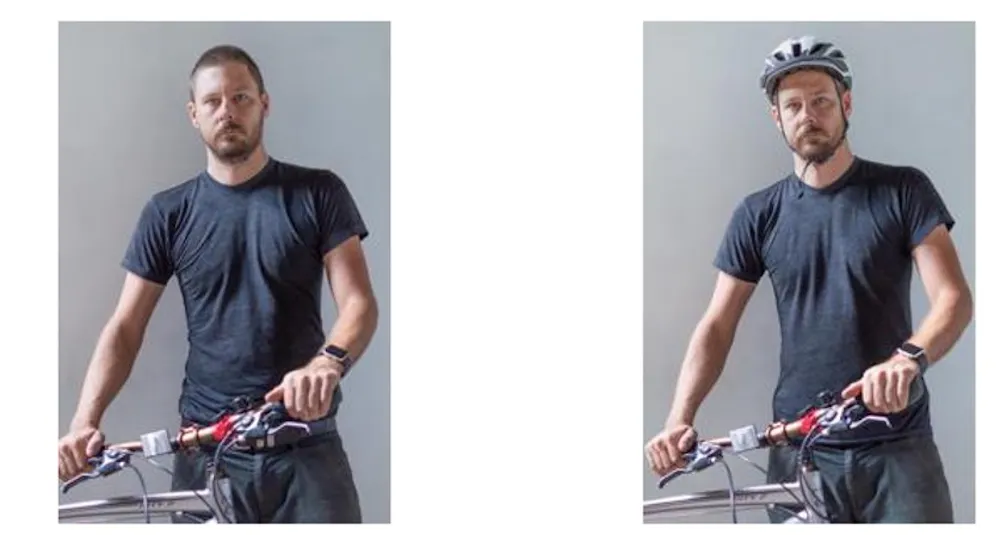
The results showed a clear difference between attire types. People were more likely to select images where the model wore “overt” safety gear as “less human”.
The photos of bicycle riders with helmets were 2.5 times more likely to be selected as “less human” than those with no helmets. Those wearing safety vests were 3.7 times more likely to be selected.
The study participants also provided anecdotes about their experiences cycling on Australian roads. Some reported other road users treated them differently depending on what they wore. Full lycra cycling gear attracted more abuse than casual wear.
Female bicycle riders reported receiving less abuse from motorists than their male counterparts. This observation led some to accentuate their femininity to increase their perceived safety when riding on roads. One said:
As a female I don’t get treated as badly as my male friends (who have had things thrown at them). I actually purposely have my long hair showing to help.
Our finding that riders in safety vests are seen as “less human” than those without adds to the debate on the actual versus perceived benefit of safety vests. Safety vests do not necessarily make a rider safer or more visible. Instead, they reinforce the idea that bicycle riding is a dangerous activity – further deterring its uptake.
So how can we keep riders safe?
With cyclists dehumanised and unwelcome on Australian roads, and also not welcome on footpaths, it seems the best solution is to “keep them separated” as US rock band The Offspring sang back in ’94. Australia needs separate infrastructure for bicycle riding, especially if we want more people to take up this active, carbon-neutral form of transport.
It’s time for Australia to follow the lead of countries like the Netherlands and provide safe facilities for people to ride on. When the Dutch promote cycling culture, they show people dressed for the destination, not the ride. They highlight everyday folks, in everyday clothing, unhindered by special equipment, enjoying a safe and social experience.
Read more: 3 in 4 people want to ride a bike but are put off by lack of safe lanes
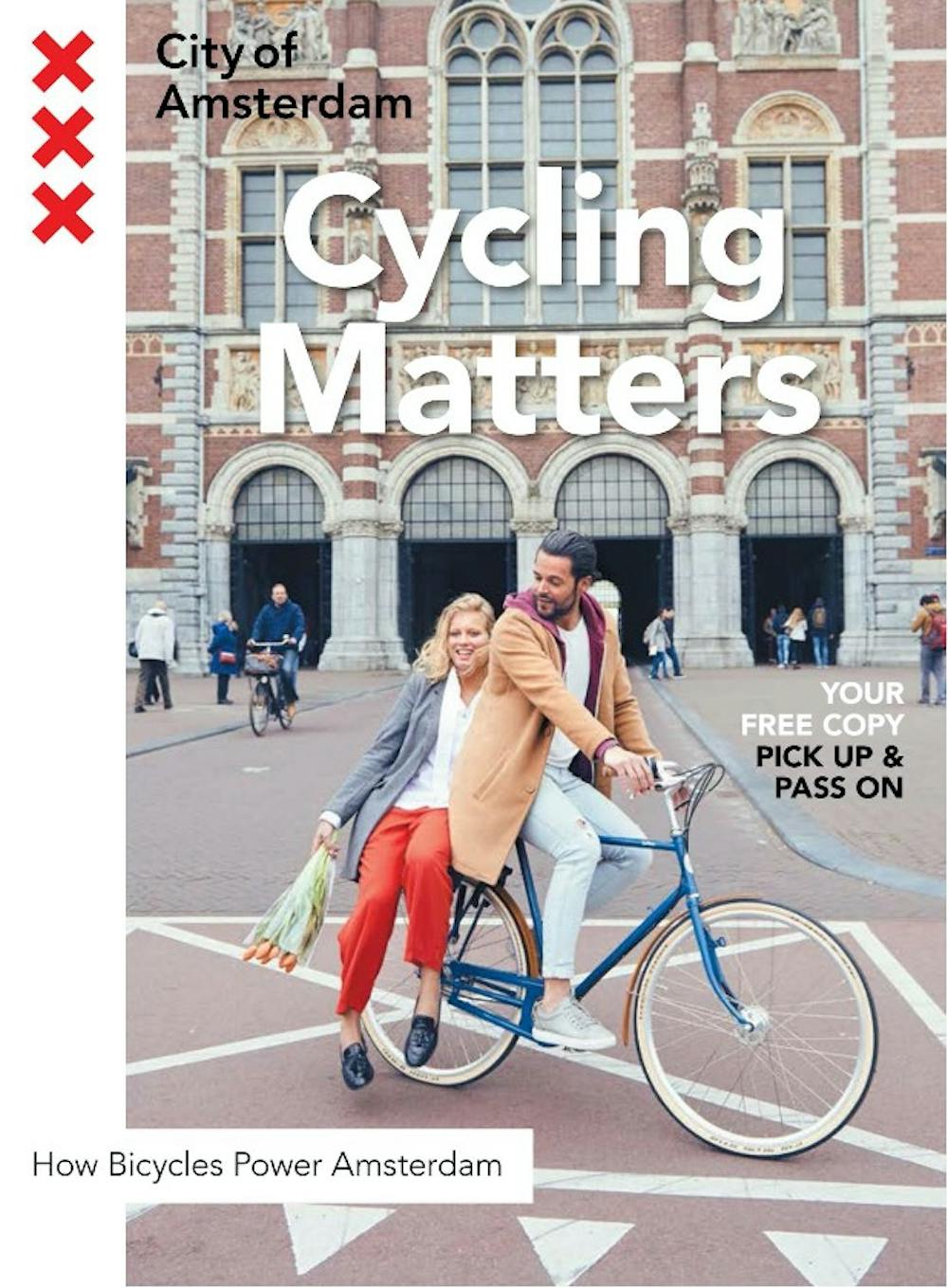 Dutch cycling promotional material.
Cycling Matters magazine, City of Amsterdam
Dutch cycling promotional material.
Cycling Matters magazine, City of Amsterdam
A city that has active transport is safer, healthier, quieter and more environmentally friendly. The lesson is clear: we need to prioritise people over cars.
Blaming cyclists for not being “visible enough” is an ill-considered response. Most cyclists would prefer not to travel on the same roads as motor vehicles. But, until we can achieve complete separation, efforts to counteract the dehumanisation of those who ride bicycles are needed.
While investigations are informing campaigns to “humanise” bicycle riders, change can begin at an individual level. We can ask ourselves: what goes through our minds when we see a cyclist when we are driving? Do we think of them as someone like us who is just trying to get to work or home, or do we see them differently? Are we dehumanising them?
Read more: Ride to work? You'll need a bike barrier for that


