

Australia is awash with dirty money – here's how to close the money-laundering loopholes
- Written by The Conversation
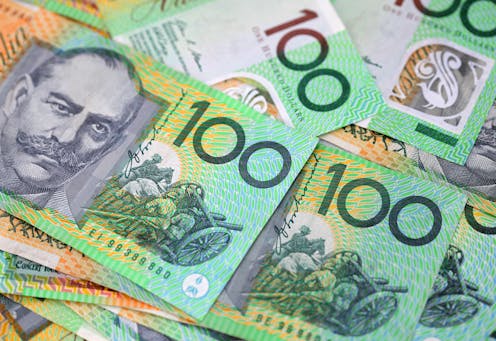
Australia’s financial crime laws are unfit for purpose. The problem: there are many professionals currently facilitating money laundering within the country who are exempt from the laws and regulations set up to stop it.
To illustrate the extent of the problem, nine people were arrested on money laundering charges this year. They were allegedly involved in a Chinese-Australian syndicate that moved around A$10 billion offshore and amassed at least $150 million in luxury assets and properties.
The suspects allegedly relied on lawyers, accountants and real estate professionals to launder such large sums of money. These are the industries currently not regulated by our anti-money laundering and counter-terrorism financing laws.
But there is a ray of hope: the Albanese government recently invited public consultation on proposed reforms of these laws. If the government lives up to its commitments, the draft reforms will go through the legislative process and be passed into law.
What is money laundering?
Australia has seen its fair share of alleged money laundering cases in recent years. Banks, casinos and organised crime groups have all been at the centre of recent allegations. Record fines have been handed down and reputations have been tarnished.
Money laundering is the process of “cleaning” dirty money to give its source a legitimate appearance. The dirty money is generated from illicit activities such as fraud, bribery, corruption and drug trafficking – either within Australia or internationally.
On the surface, money laundering may initially appear to be a victimless financial crime. Large corporations get fined and syndicates are interrupted, and we move on.
The reality is money laundering results in serious harm: socially, politically and economically. Dirty money inflates the cost of housing, fuels gang violence, exacerbates foreign interference in our politics, and enables human and wildlife trafficking. It finances nuclear weapons proliferation and helps countries evade international sanctions, such as those currently imposed against Russia for its war on Ukraine.
Money laundering also results in reduced revenue for the government that could be used for the benefit of Australians. Our tax dollars are also being spent on fighting the organised crime rings that are behind these activities.
In short, money laundering is a global problem and affects all of us. Still, the federal government has long failed to act. For 16 years, it has been shirking the implementation of crucial reforms to strengthen our regulations.
Read more: Crown Sydney casino opens – another beacon for criminals looking to launder dirty money
Key weakness in the current law
In 2006, the Howard government passed the Anti-Money Laundering and Counter-Terrorism Financing Act in response to the global concern around money laundering and terrorism financing.
The act addressed “high-risk” sectors: financial institutions, cash-carrying services, bullion dealers, casinos, remittance service providers and stored value card providers. However, soon after it passed, numerous weaknesses were identified.
One major weakness was the fact that a wide range of professionals operating outside the traditional financial system were not included under the law. This includes real estate professionals, lawyers, accountants, dealers in precious metals and stones, and trust and company service providers. Collectively, they are known as “designated non-financial businesses and professions”.
These professionals are vulnerable to exploitation for a number of reasons. They may have extensive networks to facilitate high-value, cross-border transactions. They often handle large amounts of cash. They also have insider knowledge on how to conceal or integrate large amounts of funds into the financial system.
Several multi-agency investigations in Australia have revealed the use of such professionals in concealing the source of illicit funds, financing criminal activities and disguising the true ownership of companies and trusts through the use of associates or fake identities.
Similarly, in a joint investigation last year, the Australian Federal Police and the US Federal Bureau of Investigations identified the involvement of lawyers, accountants and other professionals in organised crime activities across Australia and abroad.
Australia remains vulnerable to financial crime
To overcome this problem, the Howard government started to talk about reforming the Anti-Money Laundering and Counter-Terrorism Financing Act in 2007. But these reforms have still not been implemented.
As a result, Australia is currently failing to meet international commitments on cracking down on money laundering and terrorist financing set by the global financial crime watchdog, the Financial Action Task Force. The Paris-based task force was established in 1989. It currently has 39 members, including Australia, and 205 jurisdictions committed to meeting its standards.
Read more: How Westpac is alleged to have broken anti-money laundering laws 23 million times
Astonishingly, Australia is one of the only three countries that have not extended or promised to extend its money laundering laws to cover professionals like lawyers and real estate agents. Haiti and Madagascar are the other two.
This regulatory gap opens Australia up to potentially grave consequences. It has made the country an attractive destination for financial crimes and leaves us ill-equipped to deal with evolving threats.
Extending the law to include these professionals would give Australia a more robust framework to combat illicit activities in line with international standards. Better reporting, due diligence and oversight of these individuals must be a priority.
The need for implementing these reforms cannot be overstated. By seizing this opportunity, Australia can demonstrate its dedication to safeguarding its financial system. While it may just be the tip of the iceberg, it is a necessary step that can no longer be neglected.


