

Why shouldn't I pour oil or paint down the sink? And what should I do instead?
- Written by The Conversation
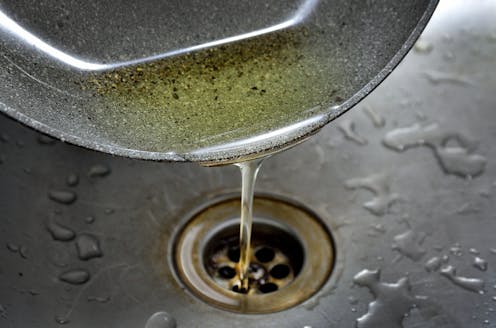
Are you ever tempted to pour used cooking oil down the sink? Just turn on the tap and flush it all away. What about that half-used tin of paint in the cupboard? It would be so easy just to wash it down the drain, wouldn’t it?
Well, please don’t! Not just because these bad habits cause problems in your house, backyard, apartment block or neighbourhood (and these products do lead to huge blockages and other issues for household pipes).
It’s also because pouring these things down the sink triggers society-wide problems for the entire sewerage system and the workers who maintain it.
For the sake of all of us, please dispose of these liquids properly. Here’s what you need to know.
Read more: Curious Kids: Where does my poo go when I flush the toilet? Does it go into the ocean?
A disaster for our sewerage systems
The smooth day-to-day operation of our wastewater collection, treatment and disposal relies on the cooperation of people to “do the right thing”.
I’ve contacted many of our water utilities across Australia for this article. They are in broad agreement: please don’t put oil, fats, grease or paint or other chemicals down the sink.
They all offer advice on far better alternatives. But the water industry has no control over what we do in the privacy of our homes. It really is up to us.
The worst culprits
Canberra’s water utility, Icon Water, gives advice on what you can and can’t flush down the sink. They rate “fats, oils and grease” as the worst culprits.
When still hot, oils are often liquid and easily pour. But down in the sewer pipes they rapidly cool and solidify.
This is a serious and common problem. Western Australia’s Water Corporation estimates 30% of sewer blockages are due to fats, oils and grease.
All sewerage systems are vulnerable to blockages from unsafe materials tipped down the sink, or flushed down the toilet.
Oils, fats and grease can combine with other materials flushed down the toilet. These particularly include hair and so-called “flushable wipes” (which, despite the name, should not be flushed down the loo).
These can build up over time, creating giant monstrosities known as “fatbergs”: horrible clumps of wipes, hair, hardened oils and other waste.
Fats and oils act as the glue that helps fatbergs build up at choke points in sewer systems.
Thames Water engineers in the United Kingdom worked in underground sewers for two weeks during 2021 to remove one the size of a small house. I’m claustrophobic and cannot imagine a more horrible job.
Uncontrolled release of raw sewage
Blocked sewers are not just a smelly problem for the water industry; they are bad for all of us. They can trigger the uncontrolled release of raw and untreated sewage into the environment.
As Sydney Water explains, these can be health and environmental nightmares.
I have seen raw sewage flowing in public places, parks, people’s backyards, shopping centres, thanks to blocked pipes. Raw sewage is a serious public and environmental health hazard.
So what am I supposed to do instead with oils?
Cooking oils can actually be recycled and used to make stockfeeds, cosmetics and biofuels.
With some careful preparations diesel engines can run on cooking oil.
It is particularly important the food industry carefully manage their waste as it can generate very large volumes of fats, oil and grease.
Small amounts of cooking oil can safely be composted. But be careful; too much can disrupt the flow of oxygen. This can trigger anaerobic decomposition of compost, which smells unpleasant and can also attract unwanted pests.
Even just disposing of fats, oils and grease into the rubbish and landfill is much better than tipping it down the sink. Remember, you may need to cool hot oil down before putting it in the bin.
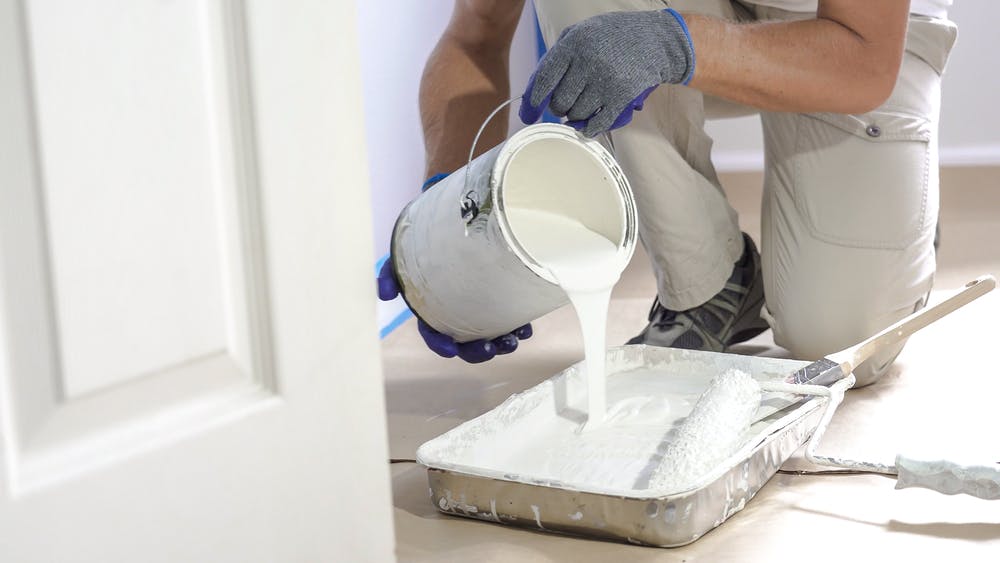
What about tipping that old paint down the sink?
Many people are unsure what to do with unused housepaint.
GWM Water, the water service for regional western Victoria, says paint, oils, lubricants, pesticides and thinners should not go down the sink. They can damage sewer pipes, cause pollution and create fumes which can be dangerous for maintenance workers.
Sewer maintenance workers have to work underground in incredibly demanding environment; squeezing into tight, enclosed spaces in sewerage system is part of the job.
The quality of air that they breathe reflects what people flush down the sink. Some chemicals can even create explosive conditions in sewer pipes. Sadly, sewer workers have even been killed from dangerous fumes.
What should I do instead with old paint?
Contact your local council or refer to this helpful guide from the ACT government.
The paint industry encourages all people to take unwanted paints to a “Paintback” dropoff centre. This industry-funded scheme aims to reduce the risks of unsafe disposal of unwanted paint products and maximise recycling.
Please try to thoughtfully dispose of all waste products. And please try to resist the temptation to quickly flush away oils or paint that could damage or block the sewerage system.
Read more: I've always wondered: can I flush cat poo down the toilet?


