

Why is extreme 'frontier travel' booming despite the risks?
- Written by The Conversation
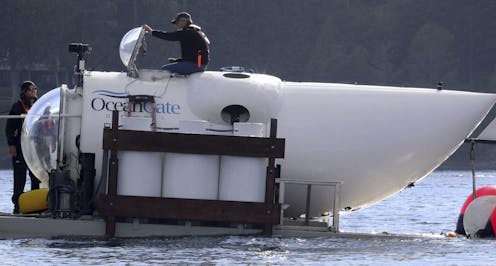
The world has watched in shock as rescue crews feverishly search for the Titan submersible vehicle, which disappeared while attempting to take tourists to view the wreckage of the Titanic in the North Atlantic.
The horror of the incident raises questions as to why people engage in risky tourism activities in remote locations and whether there should be more restrictions to what adrenaline-seeking tourists can do.
What is frontier tourism?
This type of travel, known as “frontier tourism”, is becoming big business.
The wider adventure tourism industry is already worth billions of dollars – and is growing quickly. Frontier tourism is an exclusive and extreme form of adventure travel. The trips are very expensive, aim to overstimulate the senses and go to the outer limits of our planet – the deep oceans, high mountains, polar areas – and even space.
Frontier tourism is not new; humans have explored remote locations for millennia. Pasifika people used the stars to navigate the oceans for migration and trade. Europeans sailed to the edges of what they believed to be a flat Earth.
In recent years, however, frontier tourism has attracted widespread attention thanks to the common occurrence of long queues on Mount Everest, the trending TikTok phenomenon of crossing the #DrakePassage in Antarctica and the rapid development of space tourism for the wealthy.
The rise of travel content sharing on social media and revenge travel following COVID-19 have contributed to the surge in its popularity.
Why are we so obsessed with extreme forms of tourism?
Risky activities release chemicals in the brain that can be addictive. Research suggests engaging in risky tourism activities, such as scaling a high mountain, can bring about feelings of accomplishment and euphoria. Travellers report feeling alive and experiencing a sense of transformation.
Some are also attracted to the pristine, untouched and remote aspects of the locations that they visit. Furthermore, the element of fantasy associated with imagining certain places or stories, like the movie Titanic, can be alluring.
Besides physical frontiers, there is also the thrill people get at pushing the human body to its limits and facing one’s fears. Base-jumping, skydiving, bungee jumping and polar plunges are common examples of this.
In a slightly more mundane way, even tasting “scary food” pushes tourists outside of their comfort zone and helps them feel alive.
Still others make extreme tourist journeys to follow in the footsteps of their heroes, such as those who travel to Antarctica to pay homage to explorer Ernest Shackleton.
Extreme and risky activities not only make participants feel euphoric, but they also convey status. When bucket lists are ticked off and experiences shared on social media, this brings bragging rights. Research suggests many travellers seek recognition for undertaking the first, longest or most extreme experiences possible.
But frontier tourism is clearly not for all. It is usually only accessible to a privileged few, as the tragic circumstances of the Titan highlight. Passengers onboard the vessel reportedly paid US$250,000 for the voyage.
Read more: 70 years after the first ascent of Everest, the impact of mass mountaineering must be confronted
What are the impacts of frontier tourism?
Beyond the unspeakable angst that friends and family must endure when things go wrong, there are many other impacts of this form of tourism.
This type of travel can create environmental harm and negatively impact local communities. For example, after decades of mass mountaineering, the environmental impact on Mount Everest must be addressed.
And when mishaps do occur, the cost of search and rescue efforts can be massive and put rescue teams at great risk. The plight of frontier tourists are usually the focus of media reports, while emergency responders are often overlooked.
Recent efforts by sherpas such as Nimsdai Purja are trying to overcome this issue. Through the Netflix documentary, 14 Peaks, he publicises the behind-the-scene preparations and heavy lifting work done by sherpas who guide and rescue tourists up Everest and other mountains.
Frontier tourism is not going away
Despite tragedies like the Titan disappearance, tourists remain attracted to the quest for the most unique experiences in the most remote, uncharted places.
Tourists also increasingly feel able to embark on trips once perceived as too dangerous because technology and other innovations have ostensibly made them safer and more accessible.
In many instances that danger remains, but the commercial transaction strips away the perceived risks involved. Marketing materials aim to sell “safe” adventures, with the risks are often listed in the fineprint. A polar plunge in Antarctica, for instance, is often marketed as safe because participants are attached to a tether and the swim time is limited to prevent hypothermia.
Two decades ago, in forecasting the growth of space tourism, anthropologist Valene Smith said what tourists want, the industry will provide. This has become a truism, as the Titan voyages demonstrate.
The massive growth of frontier tourism could lead to even greater problems if the industry doesn’t respond in the right way. If travellers are going to expose themselves to extreme risks, whose responsibility is it, then, to ensure their safety and recovery should accidents occur?
Many tourism businesses and travel insurance companies make risks known to their guests. But regulations on disclosing risks differ between countries. These means travellers may have to evaluate the risks themselves, and this is fraught with danger if company standards are low.
One solution is frontier tourism might be best experienced in controlled and safe environments through digital storytelling or augmented and mixed reality. However, this may not be enough to satisfy the adrenaline junkies out there.
As the Titan incident illustrates, the unpredictable nature and unintended consequences of frontier tourism are very real things. While money can allow us to travel almost anywhere, it’s worth considering whether some places should just remain untouched, sacred and off limits completely.
Read more https://theconversation.com/why-is-extreme-frontier-travel-booming-despite-the-risks-208201


