

Why red fire ants and yellow crazy ants have given themselves a green light to invade Australia
- Written by The Conversation
Two of the worst ant pests on the planet are invading Australia. Red imported fire ants have been detected for the first time on the western side of the Great Dividing Range in Toowoomba, Queensland. Yellow crazy ants recently reached the Whitsundays.
The yellow crazy ant (Anoplolepis gracilipes) ranks among the world’s 100 worst animal pests because of its impacts on agriculture and biodiversity. The red imported fire ant (Solenopsis invicta) poses similar threats, and is also one of the world’s most dangerous ants. Its intensely painful stings, which give the ant its name, can kill people.
The prospects of total eradication of these ants in Australia are poor. Both species are highly adaptable and colonies need to be detected and eradicated early to contain them. Eradication efforts face other several challenges, including:
- inadequate biosecurity resources for checking incoming cargo
- the need for the public to maintain constant vigilance
- spread from built-up urban areas into bushland that’s much harder to monitor
- other pressing issues, such as the housing crisis, demand attention and resources, crowding out threats from insects.
Read more: Eradicating fire ants is still possible, but we have to choose now
Where did the crazy ants come from?
The origin of yellow crazy ants is disputed but is likely in South-East Asia or Africa. Workers are yellowish orange, medium-sized (around 4-5mm) and have long legs and antennae. They run rapidly in a seemingly random fashion, hence their name.
Workers and queens have a small funnel on their gasters (the bulbous end of their bodies) from which they can spray formic acid. It can burn human skin and is lethal for other ants and many native arthropods. Small animals such as lizards and bird chicks are at risk of being blinded or eaten.
These ants have spread to much of South-East Asia, parts of central America and the United States. They can be found indoors in the United Kingdom and a handful of European nations.
Since reaching the Australian territory of Christmas Island, yellow crazy ants have devastated the native wildlife. They killed up to 20 million of the famous red land crabs, causing major changes in the rainforest.
On the mainland, this species has reached the Northern Territory and Queensland, where it is most entrenched, having been discovered in Cairns in 2001. As well as spreading to Hervey Bay, Townsville and other coastal sites, the ant is now in Brisbane.
Brisbane City launched an eradication plan in 2022. Control measures include baiting using a fishmeal-based ant attractant combined with an insecticide. However, recently reported infestations in the Whitsundays and elsewhere suggest eradication will be difficult.
Read more: Ant invasion: How pets become pests
Northern Territory authorities have had more success. Some 26 locations covering nearly 300 hectares of Indigenous land have been freed of the pest.
The prospects of total eradication of yellow crazy ants in Australia are not promising. Like other serious ant pests, this species can form “super-colonies” with multiple queens, eats a wide variety of foods and readily colonises both exotic and native environments.
Such species are often only eradicated if their presence is detected before they become established. For eradication programs to succeed, local councils need landholders’ full support, plus adequate federal and state funding. Late last year the federal government provided another A$24.8 million, so there is some hope.
Read more: Invasive ants: federal budget takes aim but will it be a lethal shot?
And what about the fire ants?
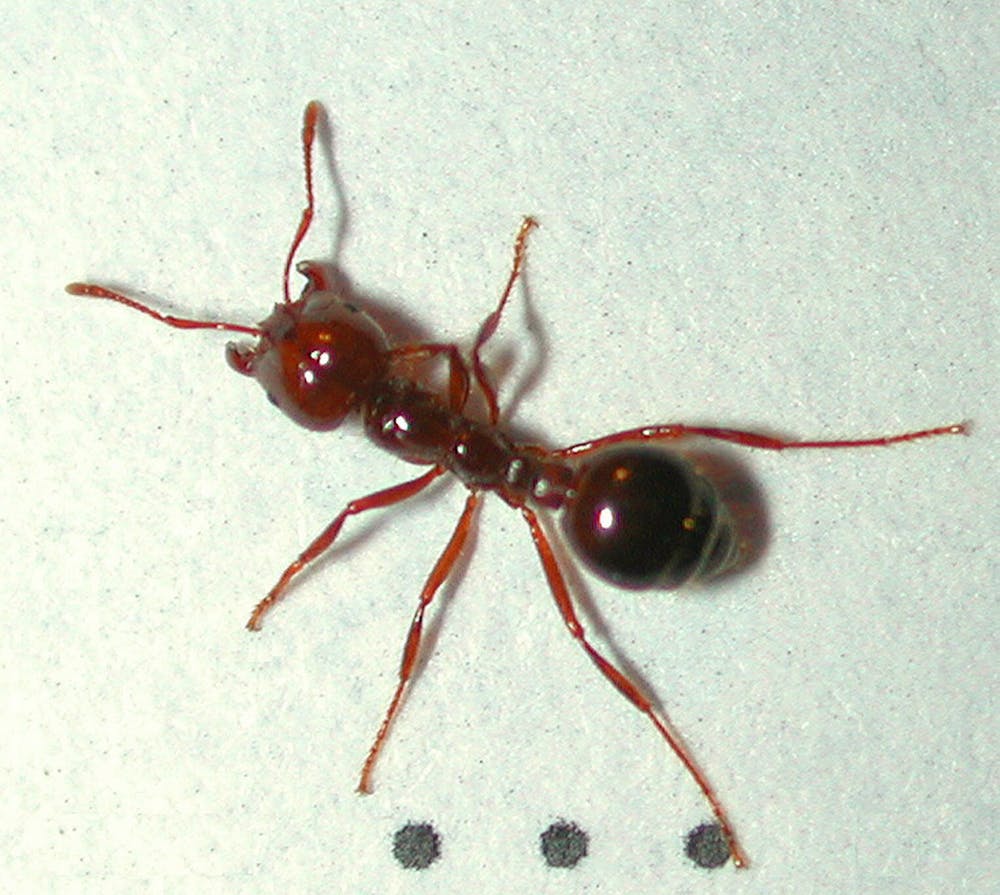
The red imported fire ant differs from the yellow crazy ant in having two waist segments (instead of one) and a powerful sting. The workers vary in size between 2.5mm and 6mm. They are reddish or yellowish with a darker gaster.
The fire ants are less distinctive than the crazy ants. They look like some small native ants in the genera Monomorium and Chelaner. However, their antennal clubs have two segments, while these native ants have three segments.
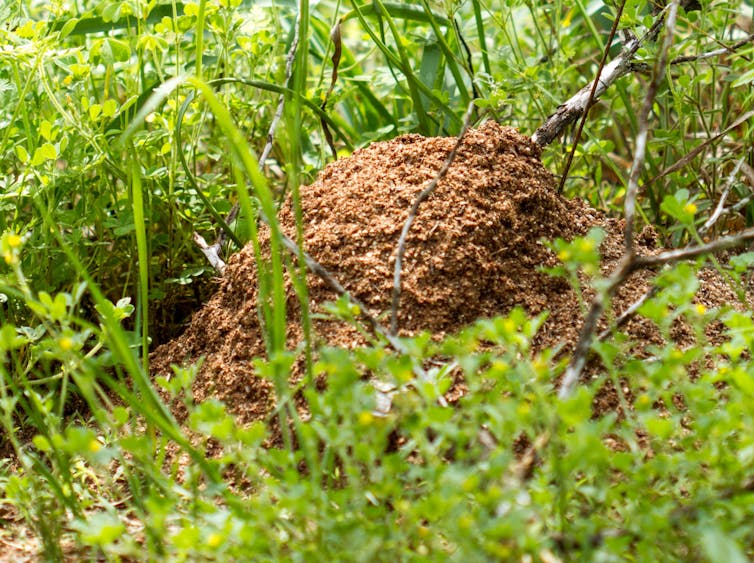
Another introduced Solenopsis species, S. geminata, looks even more similar. They are distinguished by the teeth on the mandible, or jaws: the red imported fire ant has four teeth and the other species has three. The nest mound of S. invicta is distinctive without any obvious nest entrance.
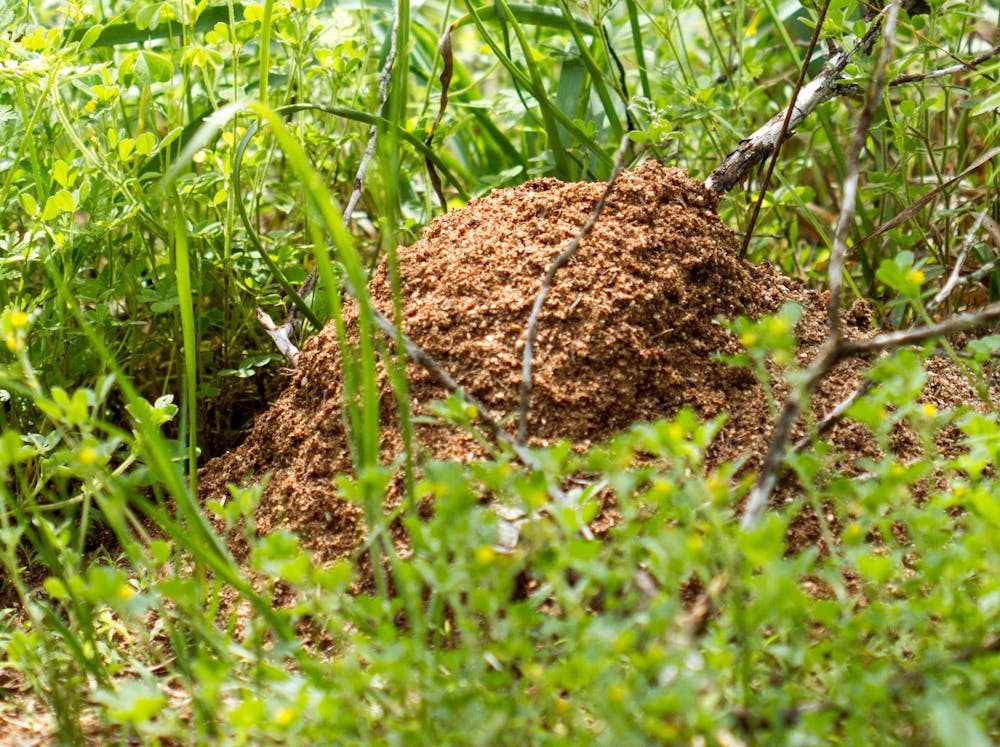 A red imported fire ant nest mound features no obvious entrance hole.
Alex Wild/University of Texas
A red imported fire ant nest mound features no obvious entrance hole.
Alex Wild/University of Texas
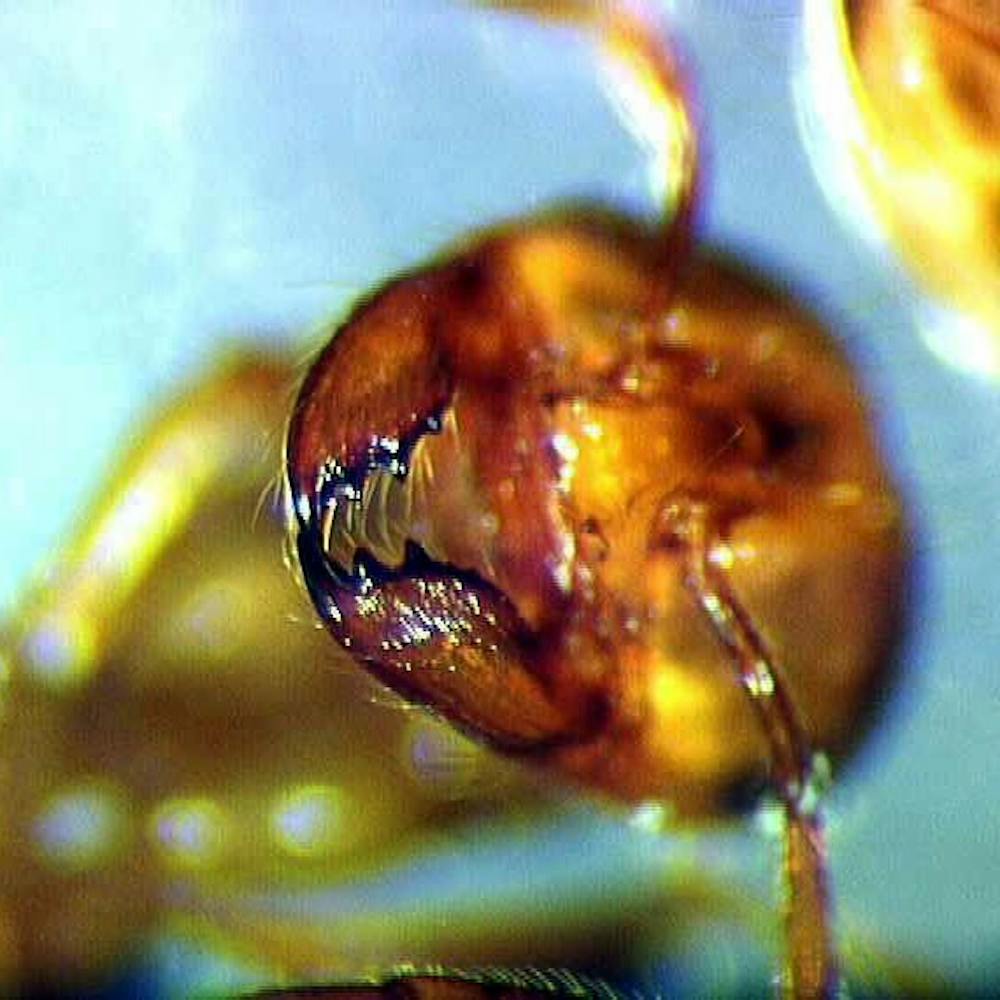 The red imported fire ant’s distinguishing features include four teeth on its mandibles.
AAP
The red imported fire ant’s distinguishing features include four teeth on its mandibles.
AAP
Native to South America, red imported fire ants have spread to the southern US, the South American tropics, the Caribbean, China and some Pacific Islands. Indoor infestations have been reported in Finland and Canada.
In Australia this species has become established in south-east Queensland. Small incursions have been eradicated in Port Botany, New South Wales, and, more recently, Fremantle, Western Australia.
In the US, fire ant stings have caused scores of human deaths due to anaphylaxis, or allergic shock. The stings cause small pustules on the skin, which can lead to infection or tissue death.
Fire ant stings also kill or injure domestic animals and livestock, and can cause serious economic loss. Like the yellow crazy ant, this species will protect disease-carrying plant bugs that produce honeydew. The ants will attack anything that threatens their food source and so help the bug population grow.
The ants also damage many crops themselves and destroy honey bees in their hives. They may nest in electrical utility boxes, causing outages.
Read more: Cannibalism helps fire ants invade new territory
Spreading corn bait laced with insecticide is the main means of control. Insecticide or steam can also be injected into nests.
Unfortunately, red imported fire ants were only identified in Brisbane in 2001, some years after the estimated date of the first arrivals. These ants likely came from the US. Despite successful eradications at sites including the Port of Brisbane and a separate incursion in central Queensland, the Brisbane outbreak has not been controlled.
The prognosis for controlling this pest is grim. It has super-colonies like the crazy ant and is equally adaptable in terms of food, nest sites and multiple queens (in some, but not all colonies). On top of that, identification and detection are more difficult.


