

The Murray-Darling Basin shows why the 'social cost of water' concept won't work
- Written by The Conversation
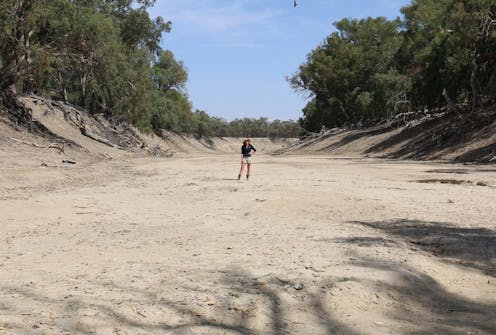
Access to safe, clean water is a basic human right. But water scarcity or barriers to access can cause conflict within and between countries.
Fights over water can be expected to intensify as the world warms, evaporation increases and rainfall becomes less predictable. So we’ll need to work even harder to resolve disputes and share this precious resource.
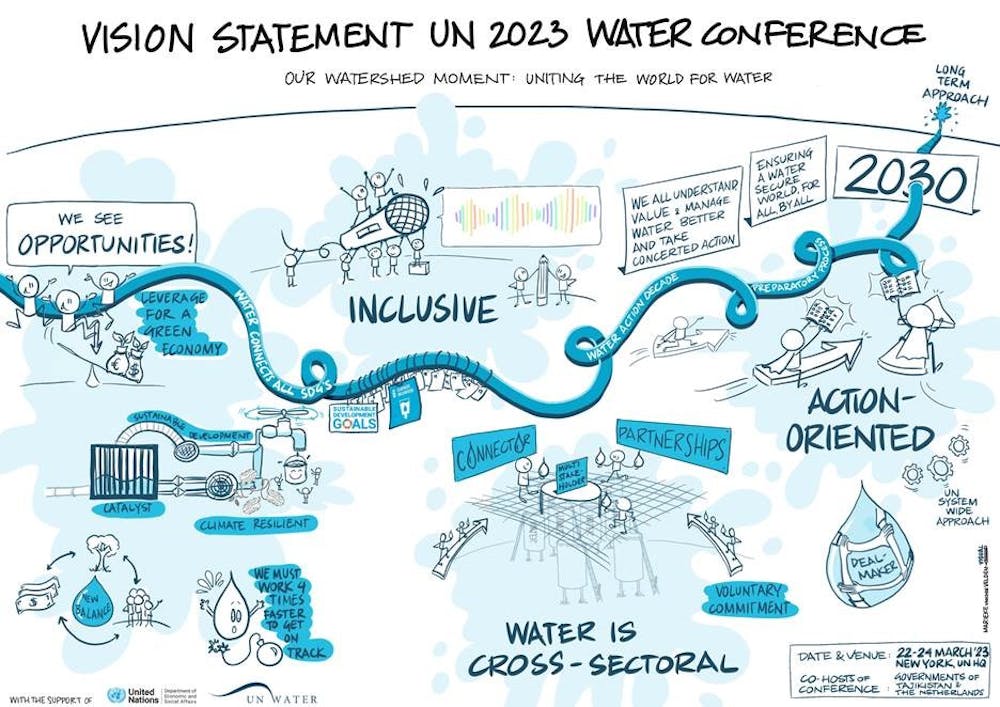
Earlier this year, for the first time in almost half a century, the United Nations held a conference squarely focused on water. Thousands of water experts gathered in New York for three days in March, to chart a way forward.
We were among the delegates. Since then, we have discussed and debated ideas that surfaced at this international meeting. Some were worthwhile, but others were wrong. In particular, we challenge the concept of a global “social cost of water”.
Read more: We're ignoring the value of water – and that means we're devaluing it
What is a global social cost of water?
One of the big ideas that came up at the conference was the need for a “new economics of water as a common good”, which includes the “social cost of water”.
Elaborating on his idea in the journal Nature, Swedish scientist Johan Rockström and colleagues wrote:
[Researchers] must assess the ‘social cost of water’, akin to the ‘social cost of carbon’, which considers the costs to society of loss and damage caused by water extremes and not meeting the basic provision of water for human needs.
The social cost of carbon is an estimate, in dollars, of the economic damages that would result from emitting one additional tonne of carbon dioxide into the atmosphere. It’s a decision-making tool used by governments, especially in the United States, for cost-benefit analysis of climate policy.
The social cost of water concept proposes valuing all types of water, including water vapour in the atmosphere that later falls as rain. This means attempting to put a dollar value on moisture flowing across borders, and implicitly creating world water markets. According to this logic, if most of Nigeria’s rain comes from forests in central Africa, then Nigeria should be prepared to pay central African nations to maintain the source of this moisture generation.
But we believe the concept of a global social cost of water is fundamentally flawed, as we explained in our correspondence in Nature in May, alongside others who also questioned its logic and purpose. Further correspondence in June also described calls to govern water on a global scale as “unrealistic” and distracting from sustainable and equitable access.
It’s unclear how a global social cost of water would work in practice. Writing as economists who have studied local water markets for decades, we see many problems with the concept, such as:
how water moisture volumes would be estimated reliably and regularly
how a dollar value could be reliably associated with water moisture flows across borders
how payments would be enforced between countries, and by what institutions
whether the money paid between countries would actually improve water security
what would happen when moisture flows across borders lead to floods with loss of human lives – would the downwind country receive compensation for water disasters as well as droughts?
Australia has the most sophisticated water markets in the world, in the Murray-Darling Basin. But even here there are considerable differences in how markets work. Water values and costs are also very different.
Read more: What is the ‘social cost of carbon’? 2 energy experts explain
Australia’s Murray-Darling Basin: a case in point
The value of water in the Basin consists of benefits and costs. Some benefits include:
direct use of water to grow crops or irrigate pasture
recreational use such as boating and water sports
indirect use including the benefits to health and wellbeing from living alongside a natural water body
future use values, knowing there is sufficient water to sustain healthy ecosystems and rivers in years to come
future generational, existence and cultural values such as non-use values associated with the ancient Brewarrina fish traps.
Costs include harm to mental health associated with a lack of water during drought. At the other extreme, there’s the cost of too much water causing floods, property damage and loss of life, or salinity harming viticulture in the Riverland.
This shows the social value of water is incredibly difficult to measure even within one area such as the Basin, let alone trying to enforce a global water market.
What should instead happen next?
We think the best way to address the water crisis is to focus on local management and institutions, plan carefully and implement a wide range of policies. These include:
using economic methods and tools to assess and implement local water policies where feasible
removing subsidies that incentivise water exploitation
establishing sustainable extraction limits
strengthening water institutions to allow measurement, monitoring and enforcement of water use
This is a big task. Misdirection down blind alleys is a distraction that the world cannot afford.


