

Antibiotic-resistant bacteria in NZ's wild cockles and watercress put people at growing risk of serious illness
- Written by The Conversation
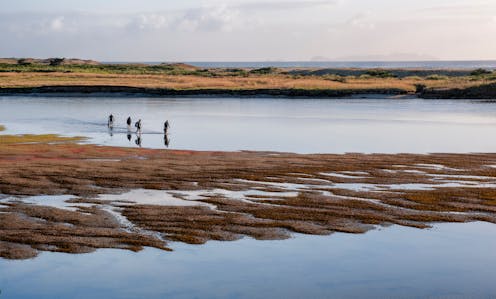
Traditional harvesting sites, or mahinga kai, continue to be used throughout New Zealand to provide food and to share skills and cultural practices between families and generations.
But our new research shows that wild foods concentrate antibiotic-resistant bacteria and could put people at risk.
While water is regularly tested at recreational sites for potential pathogens, wild-harvested foods are commonly overlooked as a source of exposure to antibiotic-resistant microbes.
Wild foods are important to all cultures in Aotearoa. Both aquatic and terrestrial mahinga kai sites provide opportunities for recreation and social bonding. Entire regions may come to rely more heavily on wild foods during disasters that disrupt supply chains.
But there are no guidelines for people who harvest wild foods to inform them about the risk of antibiotic resistance. This needs to change.
Antibiotic-resistant bacteria make gastrointestinal infections from eating wild foods or contact infections acquired during harvest or food preparation more difficult, even impossible, to treat.
The creeping pandemic of antibiotic resistance
Antibiotic resistance is one of the biggest threats to global health and food security, according to the World Health Organization.
It occurs when bacteria become less responsive to the antibiotics used to prevent or treat bacterial infections. Over time, populations within any species of bacteria emerge with one, then two or more resistances to antibiotics, until we get potentially untreatable super strains.
This process is happening in all bacteria, pathogenic or benign, leading to super strains that are resistant to multiple antibiotics.
Because of the way antibiotic resistance genes clump together, super strains are usually super spreaders of antibiotic resistance.
Read more: We know _why_ bacteria become resistant to antibiotics, but _how_ does this actually happen?
Bacteria are linked together in a horizontal gene-sharing network. Genes can transfer between members of the same and different species at high frequency. So no matter in which species the resistant gene first appears, it can potentially be transferred to a pathogen.
E. coli on watercress and in mussels and cockles
In conjunction with the local hapū Te Ngāi Tūāhuriri Rūnanga and Environment Canterbury, we monitored waterways used to harvest kai (food) such as watercress. We found both rural and urban streams have high levels of Escherichia coli, a bacterium found in human or animal faeces and commonly identified in freshwater and coastal environments in Aotearoa.
E. coli is used as an indicator for infection risk in water and food. In the sites we studied, concentrations of E. coli were consistently high over many years. These bacteria can cause diseases in their own right, but what makes them a good indicator is that they co-locate in the environment with other pathogenic bacteria and are easy to grow in the laboratory.
We identified E. coli on plants (watercress) and in animals (mussels and cockles) taken for kai. In some samples, up to 20% of the E. coli were resistant to the frontline antibiotic drug ampicillin.
This means infections by one in five E. coli might fail to respond to a frequently prescribed antibiotic, leading to more suffering or medical complications.
We also detected resistance to last-resort drugs such as ciprofloxacin. Ciprofloxacin is usually prescribed to treat bacterial infections when other antibiotics have already failed. Often, the bacteria we found were resistant to drug concentrations that exceeded what could be safely given to a patient.
Safe to touch does not equal safe to eat
Another observation we made was that mahinga kai, particularly shellfish, concentrate bacteria from the water they filter. Large cockles can filter three litres per hour and this concentrating effect was so powerful that we found antibiotic-resistant bacteria in the cockles even when we couldn’t detect them in water samples.
Bacteria extracted from cockles were “ingested” during high tide and showed us what the water was like over that time period. In contrast, water samples, such as those used to inform swimming guidelines, represent only the conditions at the time of sampling.
This is important, because rainfall and sewage overflow events transiently increase the number of bacteria in water and may not be picked up during routine monitoring.
Our calculations suggest that existing water safety guidance does not apply to the risk of contracting an antibiotic-resistant infection and could mislead those harvesting wild foods into taking greater risks.
The shellfish in our study were collected from popular sites in Waitaha/Canterbury. Local government monitors these sites and provides guidance on swimming safety. Our work shows that swimming guidance does not substitute for making decisions about whether or not to harvest wild kai.
Read more: Bacteria 'shuffle' their genetics around to develop antibiotic resistance on demand
We need improved guidelines for the safe harvesting and use of wild foods and more strenuous monitoring to protect those who rely on mahinga kai.
To maintain the benefits of harvesting wild foods, we should take a One Health approach that formalises the links between medicine and the environment. It helps to prevent the cause – rather than just the symptoms – of infectious disease and antibiotic resistance.
The problem of contaminated water doesn’t end with aquatic mahinga kai.
These same waters can be used for drinking or irrigation. The climate is warming and resulting floods gather more contamination from cities and farms into waterways.
Mahinga kai sites are not just lifeboats in time of need. They are the canary telling us that we must change our ways.


