

Drug resistance may make common infections like thrush untreatable
- Written by The Conversation
Antimicrobial resistance is one of the biggest global threats to health, food security and development. This month, The Conversation’s experts explore how we got here and the potential solutions.
We’ve all heard about antibiotic resistance. This happens when bacteria develop strategies to avoid being destroyed by an antibiotic.
The consequences of antibiotic resistance mean an antibiotic previously used to cure bacterial infections no longer works effectively because the bacteria have become resistant to the drug. This means it’s getting harder to cure the infections some bacteria cause.
But unfortunately, it’s only one part of the problem. The same phenomenon is also happening with other causes of infections in humans: fungi, viruses and parasites.
Read more: The rise and fall of antibiotics. What would a post-antibiotic world look like?
“Antimicrobial resistance” means the drugs used to treat diseases caused by microbes (bugs that cause infection) no longer work. This occurs with antibacterial agents used against bacteria, antifungal agents used against fungi, anti-parasitic agents used against parasites and antiviral agents used against viruses.
This means a wide range of previously controllable infections are becoming difficult to treat – and may become untreatable.
Fighting fungi
Fungi are responsible for a range of infections in humans. Tinea, ringworm and vulvovaginal candidiasis (thrush) are some of the more familiar and common superficial fungal infections.
There are also life-threatening fungal infections such as aspergillosis, cryptococcosis and invasive fungal bloodstream infections including those caused by Candida albicans and Candida auris.
Fungal resistance to antifungal agents is a problem for several reasons.
First, the range of antifungal agents available to treat fungal infections is limited, especially compared to the range of antibiotics available to treat bacterial infections. There are only four broad families of antifungal agents, with a small number of drugs in each category. Antifungal resistance further restricts already limited options.
Life-threatening fungal infections happen less frequently than life-threatening bacterial infections. But they’re rising in frequency, especially among people whose immune systems are compromised, including by organ transplants and chemotherapy or immunotherapy for cancer. The threat of getting a drug-resistant fungal infection makes all of these health interventions riskier.
Read more: How do _Candida auris_ and other fungi develop drug resistance? A microbiologist explains
The greatest burden of serious fungal disease occurs in places with limited health-care resources available for diagnosing and treating the infections. Even if infections are diagnosed and antifungal treatment is available, antifungal resistance reduces the treatment options that will work.
But even in Australia, common fungal infections are impacted by resistance to antifungal agents. Vulvovaginal candidiasis, known as thrush and caused by Candida species and some closely related fungi, is usually reliably treated by a topical antifungal cream, sometimes supplemented with an oral tablet. However, instances of drug-resistant thrush are increasing, and new treatments are needed.
Targeting viruses
Even fewer antivirals are available than antibacterial and antifungal agents.
Most antimicrobial treatments work by exploiting differences between the microbe causing the infection and the host (us) experiencing the infection. Since viruses use our cells to replicate and cause their infection, it’s difficult to find antiviral treatments that selectively target the virus without damaging us.
With so few antiviral drugs available, any resistance that develops to one of them significantly reduces the treatment options available.
Read more: Why are there so many drugs to kill bacteria, but so few to tackle viruses?
Take COVID, for example. Two antiviral medicines are in widespread use to treat this viral infection: Paxlovid (containing nirmatrelvir and ritonavir) and Lagevrio (molnupiravir). So far, SARS-CoV-2, the virus that causes COVID, has not developed significant resistance to either of these treatments.
But if SARS-CoV-2 develops resistance to either one of them, it halves the treatment options. Subsequently relying on one would likely lead to its increased use, which may heighten the risk that resistance to the second agent will develop, leaving us with no antiviral agents to treat COVID.
The threat of antimicrobial resistance makes our ability to treat serious COVID infections rather precarious.
Stopping parasites
Another group of microbes that cause infections in humans are single-celled microbes such as Plasmodium, Giardia, Leishmania, and Trypanosoma. These microbes are sometimes referred to as parasites, and they are becoming increasingly resistant to the very limited range of anti-parasitic agents used to treat the infections they cause.
Read more: Antibiotic resistance: microbiologists turn to new technologies in the hunt for solutions – podcast
Several Plasmodium species cause malaria and anti-parasitic drugs have been the cornerstone of malaria treatment for decades. But their usefulness has been significantly reduced by the development of resistance.
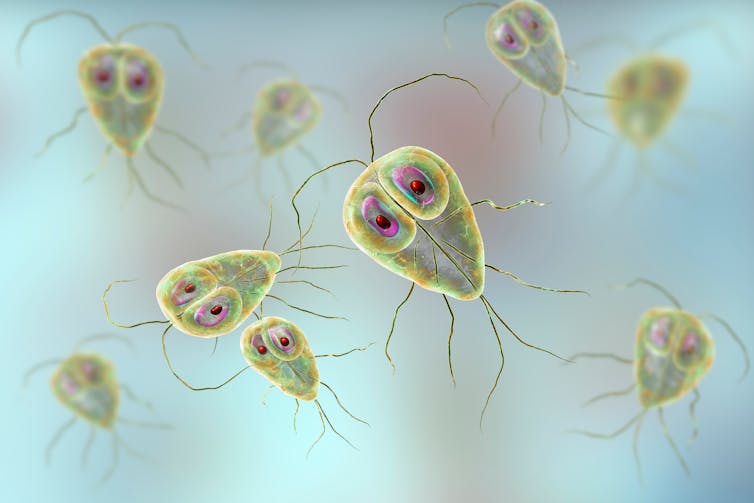
Giardia parasites cause an infection called giardiasis. This can resolve on its own, but it can also cause severe gastrointestinal symptoms such as diarrhea, nausea, and bloating. These microbes have developed resistance to the main treatments and patients infected with drug-resistant parasites can have protracted, unpleasant infections.
Resistance is a natural consequence
Treating infections influences microbes’ evolutionary processes. Exposure to drugs that stop or kill them pushes microbes to either evolve or die. The exposure to antimicrobial agents provokes the evolutionary process, selecting for microbes that are resistant and can survive the exposure.
The pressure to evolve, provoked by the antimicrobial treatment, is called “selection pressure”. While most microbes will die, a few will evolve in time to overcome the antimicrobial drugs used against them.
Read more: How do bacteria actually become resistant to antibiotics?
The evolutionary process that leads to the emergence of resistance is inevitable. But some things can be done to minimise this and the problems it brings.
Limiting the use of antimicrobial agents is one approach. This means reserving antimicrobial agents for when their use is known to be necessary, rather than using them “just in case”.
Antimicrobial agents are precious resources, holding at bay many infectious diseases that would otherwise sicken and kill millions. It is imperative we do all we can to preserve the effectiveness of those that remain, and give ourselves more options by working to discover and develop new ones.
Read the other articles in The Conversation’s series on the dangers of antibiotic resistance here.


