

Doing science in Antarctica has harmed an environment under great pressure. Here's how we can do better
- Written by The Conversation
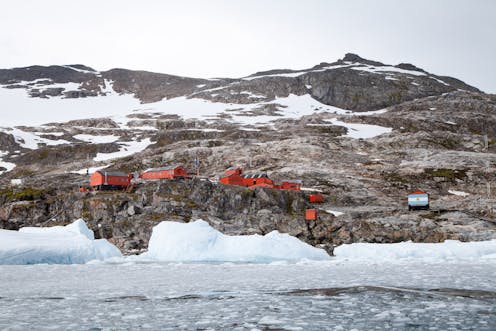
Scientific research in Antarctica has played a key role in many important discoveries of the past century. But it has also come at a considerable cost to the environment.
Science in Antarctica is typically based at one of the 77 research stations. While their role is to support science, their isolation means they need to provide the infrastructure of a town.
As well as the local impacts of these stations, the Antarctic environment is facing massive challenges from external pressures such as climate change. The loss of sea ice could mean some of the continent’s most iconic wildlife face extinction this century. For example, the early melting of sea ice recently led to complete breeding failure at several emperor penguin colonies.
So how can we keep doing research in Antarctica while minimising our impact on the environment? This question led to our new research published in the Journal of Environmental Management.
We found little evidence of conservation planning and few limits on permissible activities such as building new stations, despite Antarctica being declared a natural reserve. This has left plenty of room to improve planning, technology and research methods to reduce impacts on the fragile Antarctic environment.
Read more: Devastatingly low Antarctic sea ice may be the ‘new abnormal', study warns
What are the impacts of all these stations?
The majority of stations were built before the Protocol on Environmental Protection to the Antarctic Treaty took effect in the late 1990s. These older stations were established during an era when environmental protection was a lower priority.
As a result, some stations were located in the most rare and sensitive ice-free areas. They probably would not be built there today, but only a few have been removed. Most old stations continue to operate.
At the larger stations, in addition to living quarters and laboratories, facilities include sewage and power plants, bulk fuel tanks and handling, roads, workshops, helipads, runways, wharfs, quarries, fire stations and even one short-lived nuclear reactor.
Read more: Remembering Antarctica's nuclear past with 'Nukey Poo'
Adding to the impacts are ongoing demands to expand stations. This might be to provide new scientific apparatus to answer new questions, house more people, improve logistical capacity, or increase the safety of ageing infrastructure.
This background means research stations are often industrial-looking sites, with industrial-scale environmental impacts. It’s a stark contrast to the near-pristine natural reserve they are situated in.
The stations that support science to help understand Antarctica have created the most intense human impacts on the place. These impacts include:
Many stations have displaced some of the best areas of habitat for plants and animals.
Environmental management and impact assessments are now routine practice in Antarctica, and do curtail impacts. However, these practices do not stop the footprint of stations from continuing to spread.
In a case study of a long-established Antarctic station, Australia’s Casey, we found the area of heavy disturbance expanded by 18% and the area of medium disturbance by 42% over a 16-year period. This growth has encroached on one of the most important areas of vegetation in Antarctica.
Read more: For the first time, we can measure the human footprint on Antarctica
So what are the answers?
Using better technology is one option. This can include installing cleaner sewage treatment to reduce contamination of the marine environment. And using passive design and renewable energy can reduce fuel handling and storage.
Similarly, substituting harmful research practices with techniques that have fewer impacts is another option. Researchers have, for example, determined the prey species of penguins from poo, rather than handling the birds.
As well as better technology and different research methods, a systematic approach to conservation planning, which identifies the best ways to protect the environment, will help.
Our international team looked into best-practice conservation planning for reserves elsewhere in the world. We adapted these approaches to the unique characteristics of each region of Antarctica and to the various ways in which stations operate.
Read more: I've spent 40 years studying Antarctica. The frozen continent has never needed our help more
We deliberately designed our conservation planning approach to support station operators to continue to provide new science capabilities. However, we did it in a way that minimises long-term environmental impacts.
For conservation planning to work properly, we need more environmental monitoring data. And data collection must be sustained over a long time.
In the absence of legal limits, we also encourage station operators to set their own self-imposed limits on their footprint and restore degraded areas no longer used. The less area we impact, the more room it gives Antarctic species to shift and adapt to a changing climate.


