

Our cities will need to harvest stormwater in an affordable and green way – here's how
- Written by The Conversation
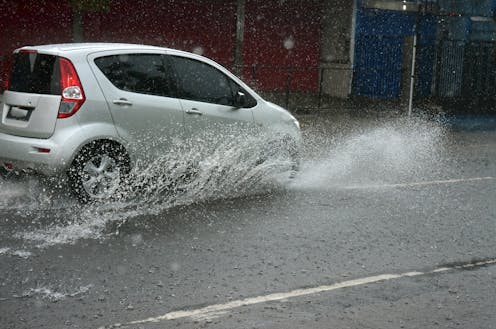
When it rains, stormwater runs down surfaces like streets and parking lots and into drains. Most of the time, we see it as a problem because it can cause floods. Recent storms across eastern Australia created huge amounts of stormwater and flooding.
At such times, stormwater is seen as a problem. But it’s also the last untapped source of water available for cities.
We all know how important it is to have enough water for our needs. But did you know our growing cities might struggle to get enough clean water in future?
Stormwater is a hidden treasure, and we’re not making the most of it.
Why do we need to tap stormwater?
More people are moving to cities in Australia and worldwide. They all need clean water. By 2050, 30 million of Australia’s population and 6.6 billion globally will live in urban areas.
But climate change and population growth are making it harder for cities to meet the demand for clean water.
In coming years, Australia’s weather will be a bit strange. We’ll have longer dry periods with brief periods of intense rainfall. It’s like the weather is playing a game of “now you see it, now you don’t” – and it will test our capacity to supply enough clean water for everyone.
To make matters worse, current solutions such as desalination and treating wastewater are very expensive, energy-intensive and are not the greenest options.
Researchers have found a way to collect and clean stormwater without damaging our natural environment or our wallets. They call it “nature-based solutions”. It’s like giving stormwater a makeover.
This approach can not only give us more clean water but also helps stop pollution and flooding. It’s a win for everyone.
A lot of water and money at stake
Back in 2015, an Australian Senate report said we should do more research to manage stormwater better.
One reason is that water clean-up is expensive. Australia spends around A$9 billion a year on water and wastewater treatment.
Another reason is the waste of water. We let 3,000 billion litres – that’s a lot of water – of urban stormwater go into rivers and seas without cleaning it. This not only damages our water ecosystems but is throwing away a potentially precious resource.
Read more: When water is scarce, we can't afford to neglect the alternatives to desalination
Learning from nature
Nature-based solutions are nature-inspired, engineered systems for tackling water issues in cities.
Natural wetlands, for instance, can hold huge amounts of water, release it slowly, prevent flooding and even make the water cleaner as it works its way through soil and plants. Now cities like Melbourne in Australia, Auckland in New Zealand and so-called “sponge cities” in China have adopted this idea by constructing wetlands in urban areas.
Diving further into how these nature-based solutions can solve stormwater problems, we’re also talking about green walls, bioswales (fancy ditches with plants), green roofs and permeable pavements.
And there’s a star among them – biofiltration systems. Biofilters clean polluted waters by passing it through soil, with plants and microorganisms helping to remove pollutants.
These systems are like water-treatment wizards. They can handle polluted waters in different situations, from regular stormwater to intermittent stormwater and wastewater, even when big storms produce a challenging mix of sewage and stormwater.
Nature-based systems can be designed to clean stormwater and meet various water quality standards. This means we can treat stormwater to meet the strictest standards, like those needed for drinking water (though more work is needed to reach that ambitious goal). Or we can treat it to meet lower standards suitable for other uses such as watering lawns and sports grounds.
In any case, treated stormwater can be safely released into receiving waters without significant risks to aquatic environments.
Read more: Creating ‘sponge cities’ to cope with more rainfall needn't cost billions – but NZ has to start now
What challenges remain?
There are still some challenges to overcome.
One big challenge involves figuring out how polluted stormwater is. We’re getting better with sensors that can check water depth and electrical conductivity in stormwater. These help us understand the amount of stormwater we have and get a rough idea of the pollution level.
However, we need to make these sensors even better to detect and measure toxic pollutants such as heavy metals and hydrocarbons, which are commonly found in stormwater. This will help us design treatment systems that really work.
Cleaning stormwater using nature-based methods is good, but some specific pollutants aren’t removed fully. We can make these methods better by changing how we design them. For example, we can improve how we filter pollutants and find better plants and microbes that can absorb and remove more toxic substances from the water.
Besides the usual pollutant removal methods, there are some promising ideas like the Anammox process – short for anaerobic ammonium oxidation – which relies on bacteria to help get rid of nitrogen. We need to figure out how to use these bacteria in nature-based stormwater treatment systems.
Read more: Stormwater innovations mean cities don't just flush rainwater down the drain
We also need to know more about how pollution works. The existing tools (mathematical models) aren’t perfect. Modelling tools must be developed so they can consider all the different sources of pollution, estimate how bad it is, and deal with its unpredictability. This will help us use stormwater better, especially with cities growing fast and weird weather happening.
Finally, and perhaps most importantly, governments and people need to understand that providing clean water for everyone is essential. But progress is slow, and one reason is we’re not putting enough effort into using stormwater as a solution. Governments need to invest in research and convince the public it’s a smart move.


