

'We don't know what tomorrow will bring': how climate change is affecting Fijians’ mental health
- Written by The Conversation
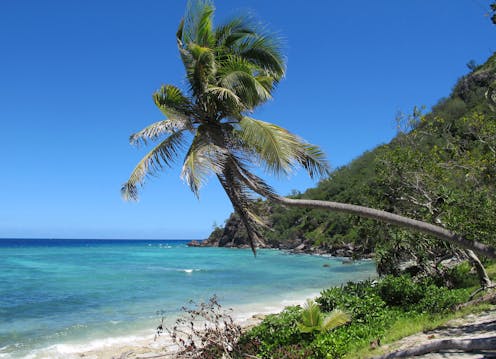
It’s unlikely any region of the world will escape the effects of climate change. These include increasing temperatures, more frequent and intense extreme weather events such as bushfires and floods, rising sea levels, and more.
But some areas, like the Pacific Islands, are likely to experience disproportionate effects from advancing climate change. Pacific island nations are uniquely vulnerable to sea level rise, coastal erosion and cyclones of escalating intensity.
Increasing temperatures and increasingly unpredictable weather patterns present additional risks to populations largely reliant on traditional fishing and farming practices for both food sources and trade.
The consequences of climate change also pose significant risks to the mental health and wellbeing of the people living in these countries, as we observed in a recent study with rural Fijians.
Read more: Could the law of the sea be used to protect small island states from climate change?
Shifts in the environment
We interviewed more than 70 Indigenous and other traditional Fijians living in rural villages in coastal, coastal hinterland and river delta regions of the country.
Interviewees from each village described environmental changes they had observed, ranging from shifts in seasons and rainfall, to warmer temperatures, to sea level rise resulting in more frequent flooding of the villages, particularly during “king tides”. As one participant said:
Now it is like we are having the hot season throughout. Now we are experiencing the abnormal changes in the weather like never before.
Another commented:
Sea level is not where it used to be since it is moving into the village, especially when it is high tides. We are really worried and concerned.
A strong theme of loss of traditional culture ran through our interviews, with many participants describing the ways these environmental changes were contributing to the loss of traditional ways of life and their broader cultural practices.
One participant talked about yatule, a fish customarily found in seas of the Nadroga-Navosa province, traditionally fished using only nets:
No longer is it [yatule] seen [here]. Fishing for the yatule here […] is done traditionally […] the traditional method is slowly fading.
These observed losses were having an effect on mental wellbeing. In particular, participants routinely expressed concerns and grief about what would be left for future generations.
Due to the climate change we are very concerned about our future generation. At least now we can still eat fish, we don’t know what tomorrow will bring.
Read more: Their fate isn’t sealed: Pacific nations can survive climate change – if locals take the lead
The idea of relocation fuelled further distress
All interviewees were aware of a potential need in the future to migrate (indeed, a couple of the villages we visited are already in the process of relocating to higher grounds). But this prospect was met with both reluctance and substantial anticipated loss. As one participant said:
[The villagers] will not follow suit since they have strong ties with this place.
Another said:
This is our only land where we have lived in all our lives.
Given the strong connections Pacific island peoples traditionally have to their ancestral lands, there is no question any forced relocation would have significant negative effects on their mental health and wellbeing.
Eco-grief
Our interviews highlight the substantial distress associated with the rapidly changing environment of Fiji.
In many ways, these themes mirror those observed in the Indigenous Inuit peoples of the Circumpolar North, found in Alaska, northern Canada and Greenland. In these locations, rapidly declining sea ice is having a major impact on traditional cultural practices (such as fishing and travel), also resulting in grief, worry and mental ill-health.
Across the globe, it’s clear people and cultures with strong place-based attachments are especially vulnerable to the mental health effects of climate change, sometimes called “eco-grief”.
Read more: The rise of 'eco-anxiety': climate change affects our mental health, too
More research is urgently needed to better understand mental ill-health in Pacific peoples related to the effects of climate change, and to develop culturally informed supports. There’s also a need to strengthen mental health systems in Pacific island nations.
Finally, concerted climate change mitigation efforts are crucial to protect these unique Pacific cultures, which will aid in protecting their mental health and wellbeing.
The authors would like to thank Patrick Nunn, Roselyn Kumar, Cassandra Sundaraja, Mereoni Camailekeba, Samisoni (“Samson”) Baivucago and Sala Tabaka for their contribution to the research that informed this article.


