

A new government inquiry will examine women’s pain and treatment. How and why is it different?
- Written by The Conversation
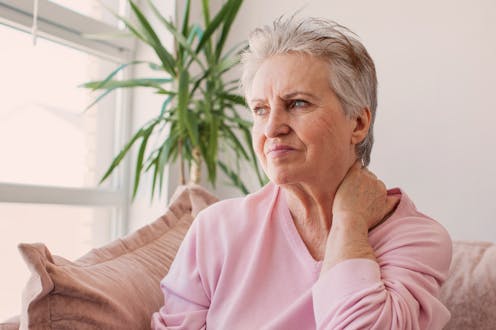
The Victorian government has announced an inquiry into women’s pain. Given women are disproportionately affected by pain, such a thorough investigation is long overdue.
The inquiry, the first of its kind in Australia and the first we’re aware of internationally, is expected to take a year. It aims to improve care and services for Victorian girls and women experiencing pain in the future.
Read more: There is overwhelming gender bias in the NDIS – and the review doesn't address it
The gender pain gap
Globally, more women report chronic pain than men do. A survey of over 1,750 Victorian women found 40% are living with chronic pain.
Approximately half of chronic pain conditions have a higher prevalence in women compared to men, including low back pain and osteoarthritis. And female-specific pain conditions, such as endometriosis, are much more common than male-specific pain conditions such as chronic prostatitis/chronic pelvic pain syndrome.
These statistics are seen across the lifespan, with higher rates of chronic pain being reported in females as young as two years old. This discrepancy increases with age, with 28% of Australian women aged over 85 experiencing chronic pain compared to 18% of men.
It feels worse
Women also experience pain differently to men. There is some evidence to suggest that when diagnosed with the same condition, women are more likely to report higher pain scores than men.
Similarly, there is some evidence to suggest women are also more likely to report higher pain scores during experimental trials where the same painful pressure stimulus is applied to both women and men.
Pain is also more burdensome for women. Depression is twice as prevalent in women with chronic pain than men with chronic pain. Women are also more likely to report more health care use and be hospitalised due to their pain than men.

Read more: What's a TENS machine? Can it help my period pain or endometriosis?
Medical misogyny
Women in pain are viewed and treated differently to men. Women are more likely to be told their pain is psychological and dismissed as not being real or “all in their head”.
Hollywood actor Selma Blair recently shared her experience of having her symptoms repeatedly dismissed by doctors and put down to “menstrual issues”, before being diagnosed with multiple sclerosis in 2018.
It’s an experience familiar to many women in Australia, where medical misogyny still runs deep. Our research has repeatedly shown Australian women with pelvic pain are similarly dismissed, leading to lengthy diagnostic delays and serious impacts on their quality of life.
Misogyny exists in research too
Historically, misogyny has also run deep in medical research, including pain research. Women have been viewed as smaller bodied men with different reproductive functions. As a result, most pre-clinical pain research has used male rodents as the default research subject. Some researchers say the menstrual cycle in female rodents adds additional variability and therefore uncertainty to experiments. And while variability due to the menstrual cycle may be true, it may be no greater than male-specific sources of variability (such as within-cage aggression and dominance) that can also influence research findings.
The exclusion of female subjects in pre-clinical studies has hindered our understanding of sex differences in pain and of response to treatment. Only recently have we begun to understand various genetic, neurochemical, and neuroimmune factors contribute to sex differences in pain prevalence and sensitivity. And sex differences exist in pain processing itself. For instance, in the spinal cord, male and female rodents process potentially painful stimuli through entirely different immune cells.
These differences have relevance for how pain should be treated in women, yet many of the existing pharmacological treatments for pain, including opioids, are largely or solely based upon research completed on male rodents.
When women seek care, their pain is also treated differently. Studies show women receive less pain medication after surgery compared to men. In fact, one study found while men were prescribed opioids after joint surgery, women were more likely to be prescribed antidepressants. In another study, women were more likely to receive sedatives for pain relief following surgery, while men were more likely to receive pain medication.
So, women are disproportionately affected by pain in terms of how common it is and sensitivity, but also in how their pain is viewed, treated, and even researched. Women continue to be excluded, dismissed, and receive sub-optimal care, and the recently announced inquiry aims to improve this.
What will the inquiry involve?
Consumers, health-care professionals and health-care organisations will be invited to share their experiences of treatment services for women’s pain in Victoria as part of the year-long inquiry. These experiences will be used to describe the current service delivery system available to Victorian women with pain, and to plan more appropriate services to be delivered in the future.
Inquiry submissions are now open until March 12 2024. If you are a Victorian woman living with pain, or provide care to Victorian women with pain, we encourage you to submit.
The state has an excellent track record of improving women’s health in many areas, including heart, sexual, and reproductive health, but clearly, we have a way to go with women’s pain. We wait with bated breath to see the results of this much-needed investigation, and encourage other states and territories to take note of the findings.


