

What is micellar water and how does it work?
- Written by The Conversation
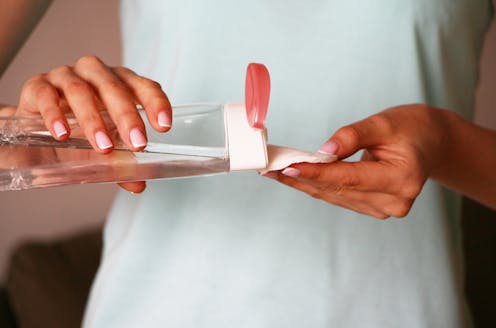
Micellar water, a product found in supermarkets, chemists and bathroom cabinets around the world, is commonly used to remove make-up. It’s a very effective cleanser and many people swear by it as part of their skincare routine.
So, what is micellar water and why is it so good at getting makeup and sunscreen off? Here’s the science.
Read more: How should I add sunscreen to my skincare routine now it's getting hotter?
What are micelles?
Oil and water generally don’t mix, which is why you’ll struggle to remove makeup and sunscreen (which both contain oils) with just plain water.
But micellar water products contain something called micelles – clusters of molecules that are very effective at removing oily substances. To understand why, you need to first know two chemistry terms: hydrophilic and hydrophobic.
A hydrophilic substance “loves” water and mixes easily with it. Salt and sugar are examples.
A hydrophobic substance “hates” water and generally refuses to mix with it. Examples include oil and wax.
Hydrophilic materials will happily mix with other hydrophilic materials. The same goes for hydrophobic substances. But if you try to combine hydrophilic and hydrophobic materials, they won’t mix.
How are micelles formed? It’s all about surfactants
The micelles in micellar water are formed by special molecules known as surfactants.
Surfactant stands for surface active agent. These molecules looked at their hydrophilic and hydrophobic brethren and said, why not both? They are typically comprised of two ends: a head group that is hydrophilic and a tail that is hydrophobic.
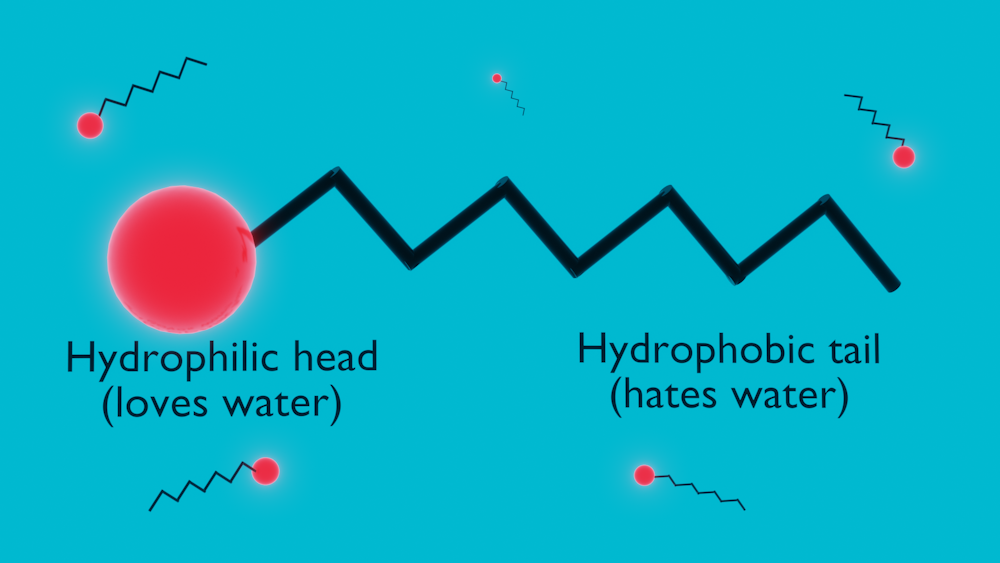
When a small amount of surfactant is added to water, the two ends of the molecule have competing interests. The hydrophilic head wants to be in the water, but the hydrophobic tail can’t stand water.
Add enough surfactant and, eventually, we will pass a critical micelle concentration and the surfactants will self-assemble into clusters of approximately 20 to 100 surfactant molecules.
All the hydrophilic heads will be pointing outwards, while the hydrophobic tails remain “hidden” at the centre. These clusters are micelles.
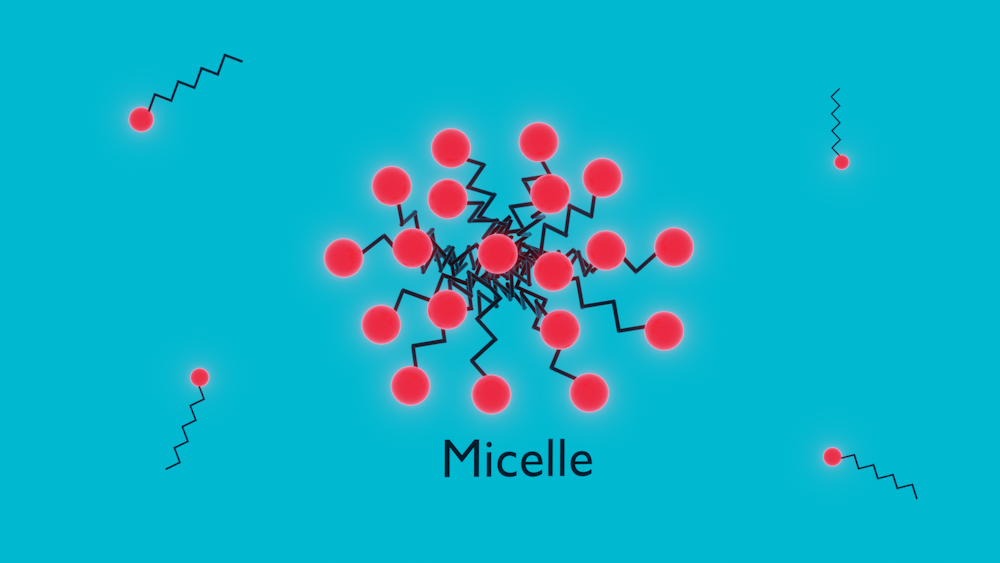 Surfactant molecules arrange themselves into a micelle, with the hydrophilic heads pointing outwards and the hydrophobic tails pointing inwards.
Daniel Eldridge
Surfactant molecules arrange themselves into a micelle, with the hydrophilic heads pointing outwards and the hydrophobic tails pointing inwards.
Daniel Eldridge
These micelles have a hydrophilic exterior, meaning that they are very happy to remain mixed throughout water. However, in the centre remains a hydrophobic pocket that’s very good at attracting oils.
This is very handy, and helps explain why adding some detergent (a surfactant) to water will allow you to wash an oily saucepan. The surfactant first helps lift of the oil, and then the oil can remained mixed into the water, finding a new home in the hydrophobic centre of the micelle.
Micellar water in action
Surfactants are in your dishwashing detergent, your body wash, your shampoo, your toothpaste and even many foods. In all of these cases, they are there to help the water interact with the dirt and oils, and micellar water is no different.
When you apply some micellar water to a cotton pad, another convenient interaction occurs. The wet cotton is hydrophilic (loves water). Consequently, some of the micelles will unravel, with the hydrophilic heads being attracted to the wet cotton pad.
Now, sticking out from the surface will be a layer of hydrophobic tail groups. These hydrophobic tails cannot wait to attract themselves to makeup, sunscreen, oils, dirt, grease and other contaminants on your face.
As you sweep the cotton pad across your skin, these contaminants bind to the hydrophobic tails and are removed from the skin.
Some contaminants will also find themselves encapsulated in the hydrophobic centres of the micelle.
Either way, a cleaner surface is left behind.
Look at how a cotton wipe soaked in micellar water cleans up a small oil spill, in comparison to water alone.
So why shouldn’t I just use dishwashing detergent to wash my face?
Technically, that would work as detergent does indeed contain lots of micelle-forming surfactants.
But these particular surfactants would probably cause a lot of skin and eye irritation, while also damaging and drying out your skin. Not nice.
The surfactants in micellar water are chosen to be mild and well tolerated by most people’s skin. But micellar water isn’t the only skincare product to contain micelles. There are many other face-cleaning products that also make great use of surfactant molecules and work very well too.
Now, it’s not perfect. While it is effective at removing a wide range of contaminants, thick or heavy makeup might not come off easily with micellar water (you might need to do a more vigorous clean).
Some products say there is “zero residue”, although the fine print clearly states this refers to visible residue.
Many products also state there is no rinse off required. Surfactants will remain on your skin after product use, but for many people they don’t cause irritation. If your skin is feeling irritated after using a micellar water product, you can try rinsing afterwards or discontinuing use.
And as is the case with many cosmetic products, you should test it first on a small patch of skin before using it all over your face.
Read more: What is a paraben and why are so many products advertised as 'paraben-free'?
Read more https://theconversation.com/what-is-micellar-water-and-how-does-it-work-219492


