

Ancient DNA reveals children with Down syndrome in past societies. What can their burials tell us about their lives?
- Written by The Conversation
After analysing DNA from almost 10,000 people from ancient and pre-modern societies, our international team of researchers have discovered six cases of Down syndrome in past human populations.
Our results, published today in Nature Communications, show people with Down syndrome lived in ancient populations. Although these individuals were very young when they died, they were all buried with care, indicating they were appreciated as members of their communities.
Down syndrome in humans
The DNA in our cells (our genome) is separated into 23 chromosomes, much like a book is separated into chapters. Most people carry two “versions” of the first 22 chromosomes, one from each of their parents. In some cases, people can have a third, extra copy of chromosome 21 (this condition is called trisomy 21).
This extra copy of chromosome 21 changes how the body and brain develop. People with trisomy 21 will have some level of intellectual disability and some characteristic physical features (such as almond-shaped eyes or a shorter height). The physical features that can result from trisomy 21 are called Down syndrome.
However, not every person with Down syndrome has the same physical features, and many of these features are not visible in the skeleton. This has made diagnosing Down syndrome from archaeological remains, which are often damaged and incomplete skeletons, very difficult.
However, we can detect trisomy 21 from even very small amounts of ancient DNA. This is because an additional chromosome 21 will lead to noticeably more DNA from chromosome 21 being present among the DNA that can be extracted from old bones and teeth.
Discovered across different times and places
After screening nearly 10,000 DNA samples, we identified six individuals with Down syndrome.
In our research, we screened nearly 10,000 DNA samples from across the world, dating as far back as when humans were hunter-gatherers. The six individuals we identified with Down syndrome were all from Europe, likely because this is where most of our ancient DNA samples were from.
One individual was buried in the 17th or 18th century in a church graveyard in Helsinki, Finland, under what is now a popular tourist attraction, the Helsinki Senate Square.
Another individual was discovered on the Greek island of Aegina, the closest Mediterranean island to Athens. This individual lived approximately 3,300 years ago, and was buried next to a house, with a rare and intricate bead necklace.
A third individual was discovered at the Bronze Age Bulgarian tell site (a settlement on a man-made hill) of Yunatsite, dating to around 4,800 years ago. This infant was buried under the floor of the home in a so-called “urn burial”.
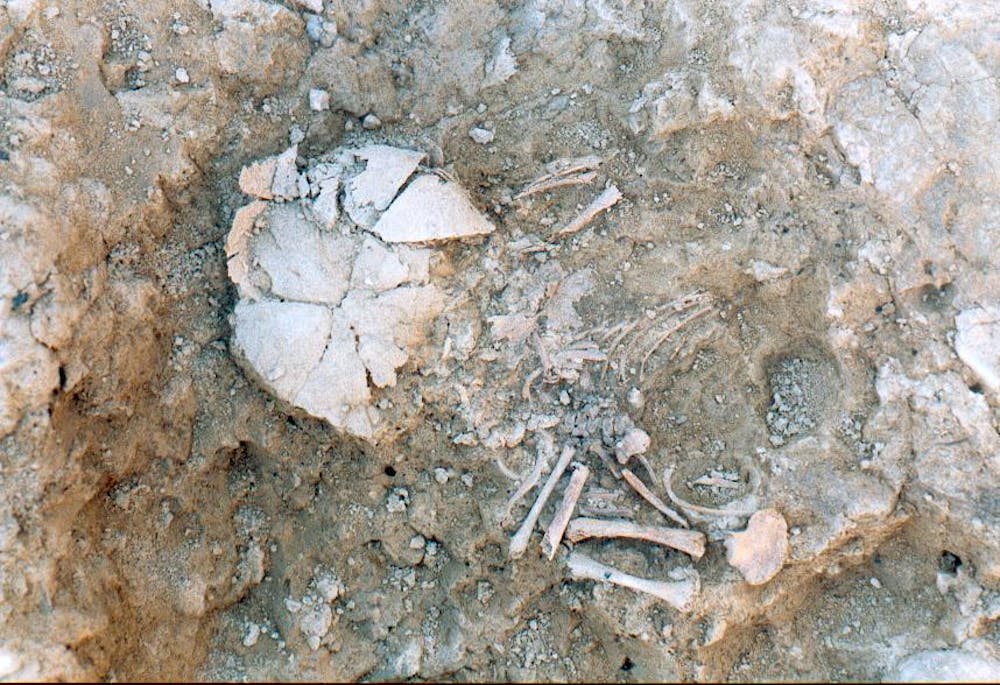
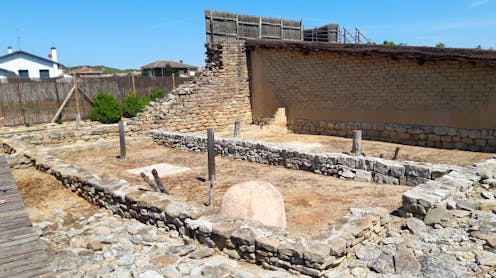
The remaining three individuals were found in two Iron Age sites in Spain, Alto de la Cruz and Las Eretas, dating to approximately 2,500 years ago. According to the estimates of their age at death, these babies likely did not survive to birth.
However, they were buried with care within homes or within special buildings reserved for rituals. These burials were remarkable, as most people of the region during these times were cremated instead of buried.
We also compared the skeletons of the individuals with Down syndrome to identify common skeletal differences, such as irregular bone growth, or porosity of the skull bones.
“Learning from this work may help to identify future cases of Down syndrome from skeletons when ancient DNA can’t be recovered,” says our co-author Patxuka de-Miguel-Ibáñez of the University of Alicante, the lead osteologist for the Spanish sites in the study.
An unexpected discovery
At one of the same Iron Age Spanish sites, we also identified an infant that carried an extra copy of chromosome 18. This condition, called Edwards syndrome, causes much more severe physical differences, which could be observed in the skeletal remains. This baby likely only survived to 40 weeks’ gestation, but was also given a special burial.
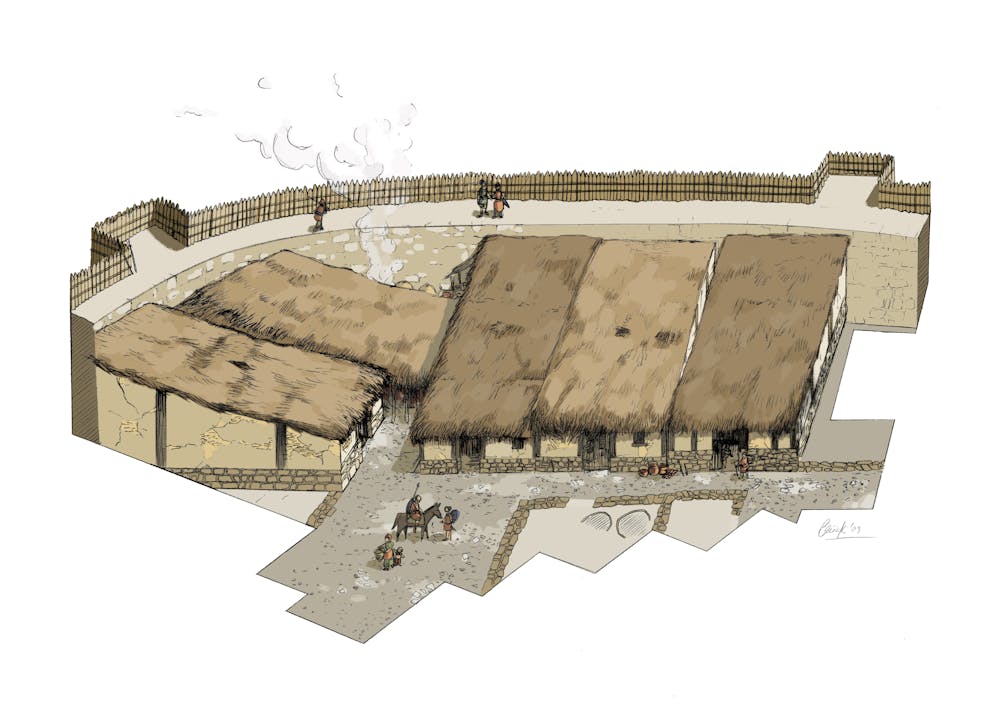 A reconstruction of the Early Iron Age settlement of Las Eretas, Navarra.
Iñaki Diéguez / Javier Armendáriz, Museo Las Eretas, Navarra, CC BY-NC
A reconstruction of the Early Iron Age settlement of Las Eretas, Navarra.
Iñaki Diéguez / Javier Armendáriz, Museo Las Eretas, Navarra, CC BY-NC
The fact that three cases of Down syndrome and the one case of Edwards syndrome were found in just two contemporaneous and nearby settlements was a surprise to us.
“We don’t know why this happened,” says our co-author Roberto Risch, an archaeologist from The Autonomous University of Barcelona. “But it appears as if these people were purposefully choosing these infants for special burials.”
A view of our past
Today, individuals with Down syndrome live full and happy lives as valued members of our communities. Notably, our research found no adult individuals with Down syndrome. However, this study shows the perinates and infants that were found were clearly buried with care. In the case where a newborn survived, they were cared for until death.
As we discover and analyse more of these sorts of cases, we will be able to investigate the questions of how our near and distant ancestors viewed rare and uncommon genetic syndromes and how they cared for one another in these cases.


