

Why Egypt refuses to open its border to Palestinians forcibly displaced from Gaza
- Written by The Conversation
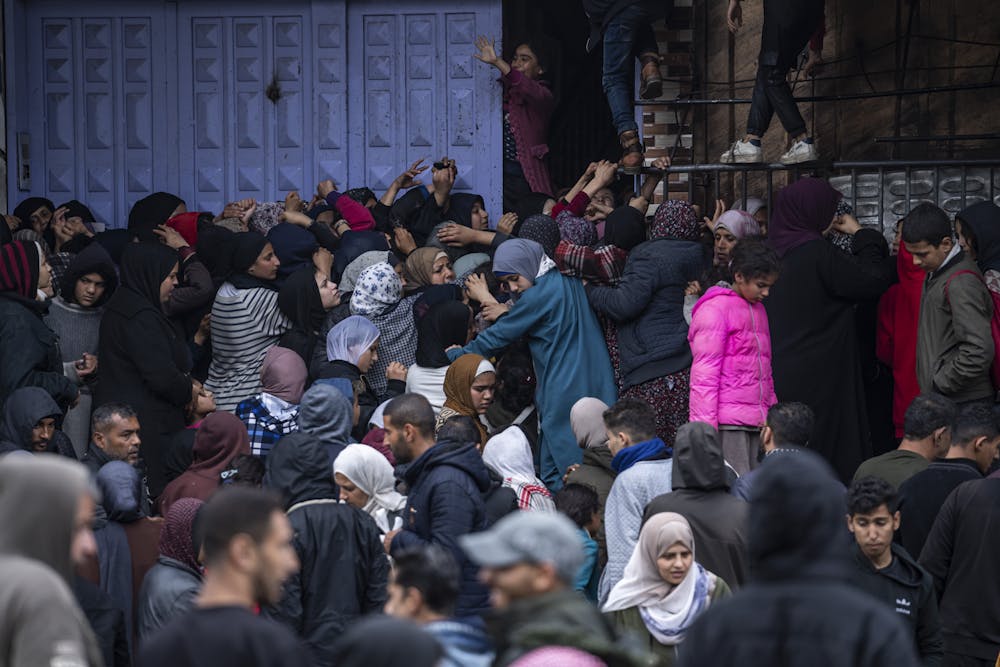
Around 1.5 million Palestinian civilians are currently squeezed into the southern Gaza city of Rafah after repeatedly being forced by Israeli bombardment and ground assaults to evacuate further and further south.
The town, which originally had a population of 250,000, is now host to more than half of Gaza’s entire population. They are sheltering in conditions the UN’s top aid official has called “abysmal”, with disease spreading and famine looming.
In a military onslaught the International Court of Justice has ruled a plausible case of genocide, Israel has so far killed over 29,000 Palestinians in the Gaza Strip. Now there are increasing fears Israel’s expected ground assault on Rafah could push civilians across the border into Egypt’s Sinai Peninsula.
Originally designated as a “safe zone”, Rafah is now being targeted by Israeli airstrikes, as well. Those fleeing the violence have nowhere safe to go.
However, Egypt, the only country aside from Israel that has a border with Gaza, has rebuffed pressure to accept Palestinian refugees displaced by Israel.
Reports have indicated that Israeli officials have tried to lobby international support to compel Egypt to accept refugees from Gaza.
Egyptian President Abdel Fattah Al-Sisi, however, has been adamant in refusing to allow humanitarian corridors or the entry of large numbers of Palestinians into Sinai. He has called it a “red line” that, if crossed, would “liquidate the Palestinian cause”.
In recent days, the UN’s High Commissioner for Refugees, Filippo Grandi, has validated Egypt’s position. Grandi said displacing Gazans to Egypt would be “catastrophic” for both Egypt and the Palestinians, who, he indicated, would likely not be allowed to return.
Why Egypt is opposed to the idea
There are a few reasons for Egypt’s opposition.
The first is that Egypt does not want to be seen to be facilitating ethnic cleansing through the permanent resettlement of Palestinians outside of Gaza.
In October, a leaked document from Israel’s Intelligence Ministry included recommendations to forcibly transfer of Gaza’s population of 2.3 million out of the territory and into tent cities in Egypt’s Sinai Desert.
Government ministers Bezalel Smotrich and Itamar Ben-Gvir have also both openly advocated the expulsion of Palestinians from Gaza to make way for their replacement by Israeli settlers.
Further, in January, a conference in Israel calling for this very plan was attended by 11 members of Prime Minister Benjamin Netanyahu’s cabinet and 15 additional members of parliament.
While Netanyahu last month said Israel has “no intention of permanently occupying Gaza”, he hasn’t shut down talk from his ministers about it. When asked about the conference in January, for example, he said everyone was “entitled to their opinions”.
Sisi is also conscious of the strong surge of sympathy the Egyptian public has demonstrated for the Palestinians and the support they have shown for his opposition to any displacement of people across the border. This is due to feelings of solidarity with the Palestinian struggle, as well as an awareness of the lessons of history.
Recalling 1947-49, when an estimated 750,000 were either expelled or forced to flee their homes by Zionist forces during the war surrounding the creation of the state of Israel, Egypt doesn’t want to be seen to be enabling another Nakba, or “catastrophe”.
The total number of refugees created by the Nakba now stands at around 6 million. According to the UN, about a third live in refugee camps, Israel having denied their right to return to their homeland.
Significantly, in November, Israel’s minister for agriculture, Avi Dichter, declared: “We are now rolling out the Gaza Nakba,” adding, “Gaza Nakba 2023. That’s how it’ll end.”
Egypt’s complicated relationship with Hamas
Another key concern for Egypt is its security. If Palestinians were resettled in Sinai, it could make the Egyptian territory a new base from which to launch resistance operations. This could drag Egypt into a military conflict with Israel.
In addition, Sisi has only just managed to clamp down on Islamist insurgents in North Sinai in recent years and is presumably concerned that an influx of refugees could be destabilising.
Finally, Sisi likely believes Hamas could mount opposition to his regime.
After overthrowing President Mohamed Morsi in a military coup in 2013, the Sisi regime cracked down on the Muslim Brotherhood and repressed all dissent. This extended to a demonisation of Hamas, which grew out of the Muslim Brotherhood’s Palestinian branch.
Between 2014 and 2016, the Egyptian military bombed and flooded tunnels linking Gaza with Egypt, at the same time as accusing Hamas of colluding with the Muslim Brotherhood against the state. It has also enforced Israel’s blockade of the Gaza Strip.
Having said that, the relationship is not straightforwardly antagonistic. Hamas and Egypt have co-operated on counterinsurgency operations against the Islamic State in Sinai. Egypt has also played a role in mediating current and past ceasefire negotiations between Hamas and Israel.
However, the latest rounds of negotiations have gone nowhere, leaving Egypt to nervously ramp up its warnings around any Israeli moves on the border.
Egypt and Israel have had a peace treaty since 1979, and their relationship has become stronger with Sisi in power. However, Egypt has threatened to suspend the peace treaty if Rafah is invaded.
Read more: Israel-Egypt peace treaty has stood the test of time over 45 years: expert explains its significance
Where does this leave the people of Gaza?
Netanyahu has vowed to push ahead with a ground incursion of Rafah in the coming weeks.
Concurrently, Egypt has moved to fortify its border and, according to reports and satellite images, begun building a walled buffer zone of about 21 square kilometres in the Sinai. This suggests Egypt is preparing for a potential removal or exodus of Palestinians.
While it isn’t entirely clear whether this is being done in co-ordination with Israel or as a “contingency” measure, the zone would condemn Gazans to yet another densely packed open-air prison with dire human rights implications.
As much as states like Egypt and Jordan have strengthened their rhetorical opposition to Israel in the past few months, neighbouring Arab countries have done little to seriously pressure Israel to halt its military operations or significantly improve aid access to the Gaza Strip.
In fact, Egypt’s intermittent closures of the Rafah crossing have delayed the entry of desperately needed aid into Gaza. There are also reports Egyptian authorities are demanding thousands of dollars in bribes from those desperate to leave via Rafah, deepening a sense of cynicism, despair and, ultimately, abandonment.


