

The Three-Body Problem: Liu Cixin’s extraterrestrial novel is a heady blend of politics, ethics, physics and Chinese history
- Written by The Conversation
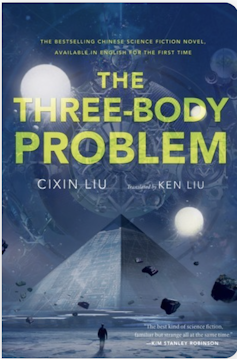
Liu Cixin’s The Three-Body Problem – the first of a popular trilogy titled Remembrance of Earth’s Past – has entertained and challenged readers since first appearing in Chinese in 2006.
The 2014 English translation, by acclaimed American science-fiction author Ken Liu, became the first work by an Asian author to win the Hugo Award for best sci-fi novel.
The book is among the most widely-read works of modern Chinese fiction in English, and Liu’s critical reputation and fan base (which includes Barack Obama and Mark Zuckerberg) continues to grow. A 30-episode Chinese adaptation of the The Three-Body Problem aired in 2023; Netflix will release a condensed, eight-episode version later in March.
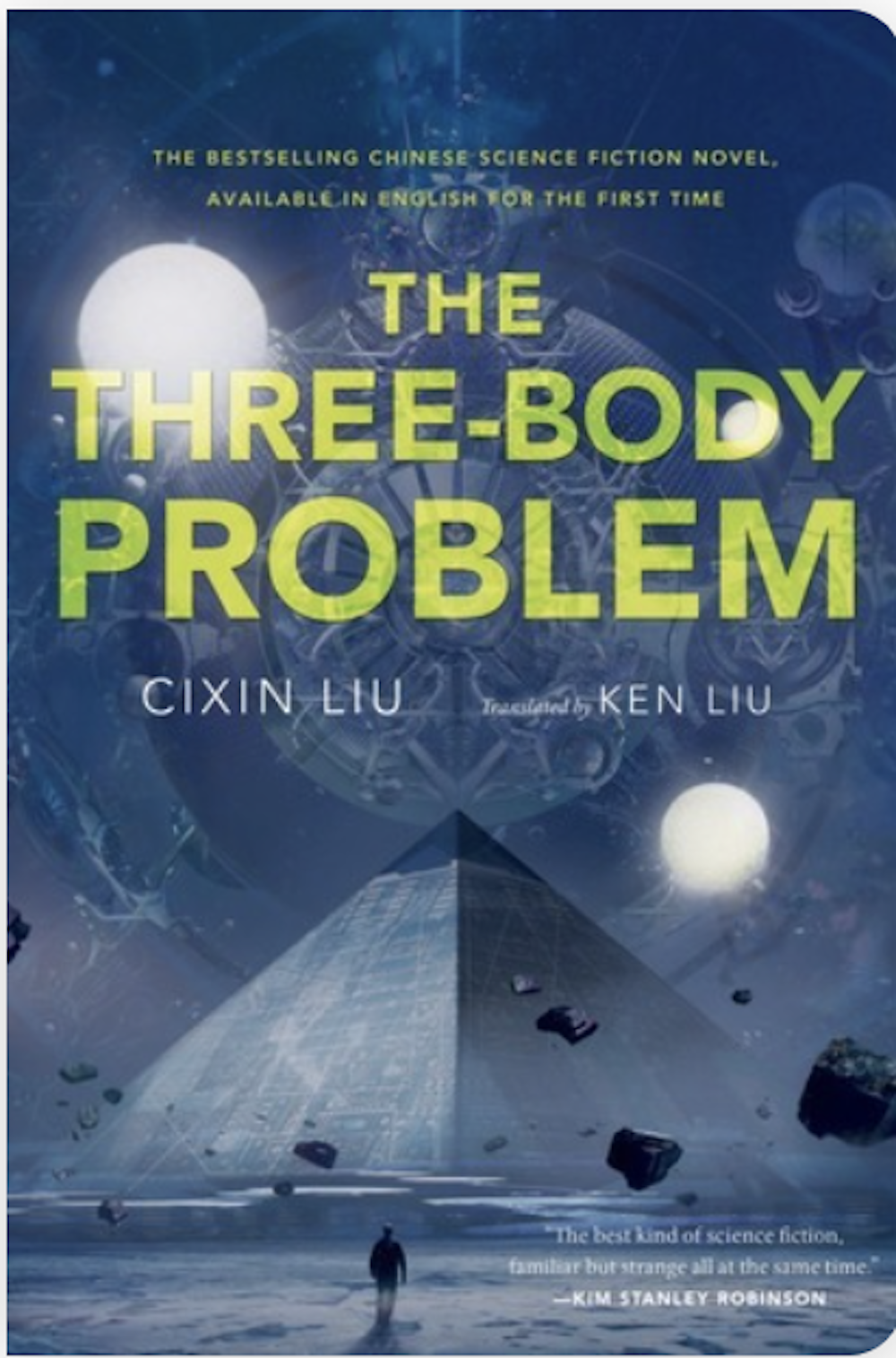
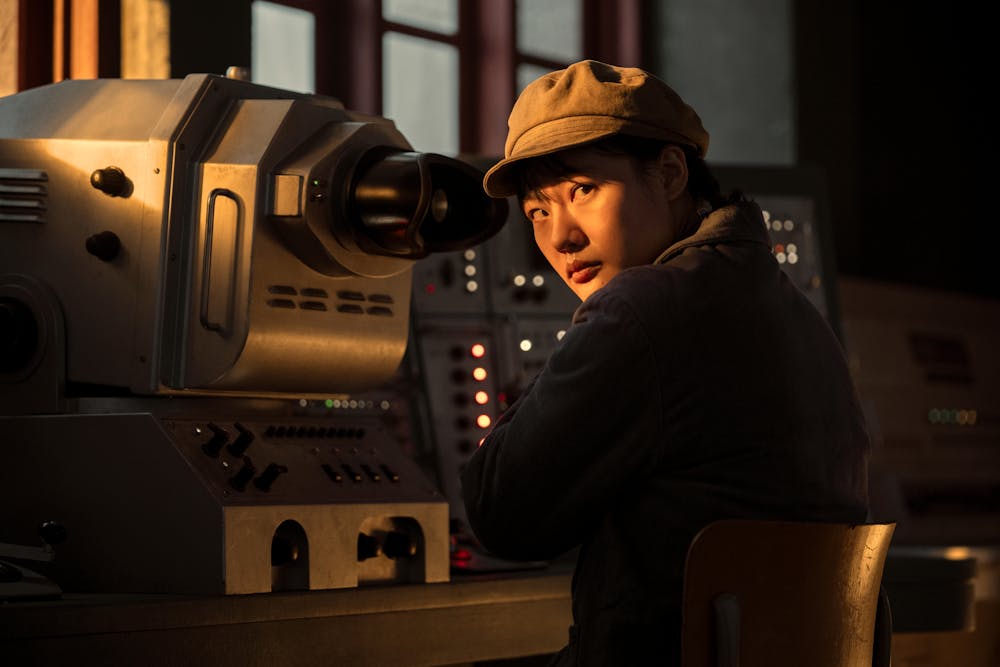 Zine Tseng as young Ye Wenjie in the forthcoming Netflix series.
Ed Miller/Netflix
A promising scientist herself, Wenjie’s loyalty to her father seems to doom her to jail or death, but instead she is mysteriously and unexpectedly moved to a lowly technical role on a secret base.
The rest of the novel takes place in Beijing “forty-plus years later” – that is, in the 2000s. Authorities and intellectuals are shaken by a sudden spate of suicides among top physicists, apparently because they have begun to question the very premises of their science. One writes in her suicide note: “Physics has never existed, and will never exist.”
Meanwhile, the authorities are monitoring a group enthralled by something called the three-body game. Our guide into the labyrinthine plot, with its admixture of spy thriller and The Matrix, is a nanoscientist called Wang Miao.
When Wang visits the game’s website and dons a virtual reality suit, he finds himself thrust into key moments of the history of a planet called Trisolaris. His sessions place him at moments when the planet’s civilisation is about to disintegrate due to either too many, or too few, suns. The suns’ unpredictable movements are caused by the three-body problem, a quandary of Newtonian physics for which there is still no general solution.
Read more:
Digital alchemy: Sir Isaac Newton's papers now online
Wang – often accompanied on his excursions by a roughhouse, brawny, trash-talking policeman partner called Da Shi – is convinced there is a link between the suicides and the game. He encounters the mother of one of the dead physicists, none other than Ye Wenjie.
As she explains to Wang what she knows about the deaths, recounting her past, (and we read some supplementary declassified documents), we learn the base where she worked had focused on making contact with alien life forms.
Zine Tseng as young Ye Wenjie in the forthcoming Netflix series.
Ed Miller/Netflix
A promising scientist herself, Wenjie’s loyalty to her father seems to doom her to jail or death, but instead she is mysteriously and unexpectedly moved to a lowly technical role on a secret base.
The rest of the novel takes place in Beijing “forty-plus years later” – that is, in the 2000s. Authorities and intellectuals are shaken by a sudden spate of suicides among top physicists, apparently because they have begun to question the very premises of their science. One writes in her suicide note: “Physics has never existed, and will never exist.”
Meanwhile, the authorities are monitoring a group enthralled by something called the three-body game. Our guide into the labyrinthine plot, with its admixture of spy thriller and The Matrix, is a nanoscientist called Wang Miao.
When Wang visits the game’s website and dons a virtual reality suit, he finds himself thrust into key moments of the history of a planet called Trisolaris. His sessions place him at moments when the planet’s civilisation is about to disintegrate due to either too many, or too few, suns. The suns’ unpredictable movements are caused by the three-body problem, a quandary of Newtonian physics for which there is still no general solution.
Read more:
Digital alchemy: Sir Isaac Newton's papers now online
Wang – often accompanied on his excursions by a roughhouse, brawny, trash-talking policeman partner called Da Shi – is convinced there is a link between the suicides and the game. He encounters the mother of one of the dead physicists, none other than Ye Wenjie.
As she explains to Wang what she knows about the deaths, recounting her past, (and we read some supplementary declassified documents), we learn the base where she worked had focused on making contact with alien life forms.
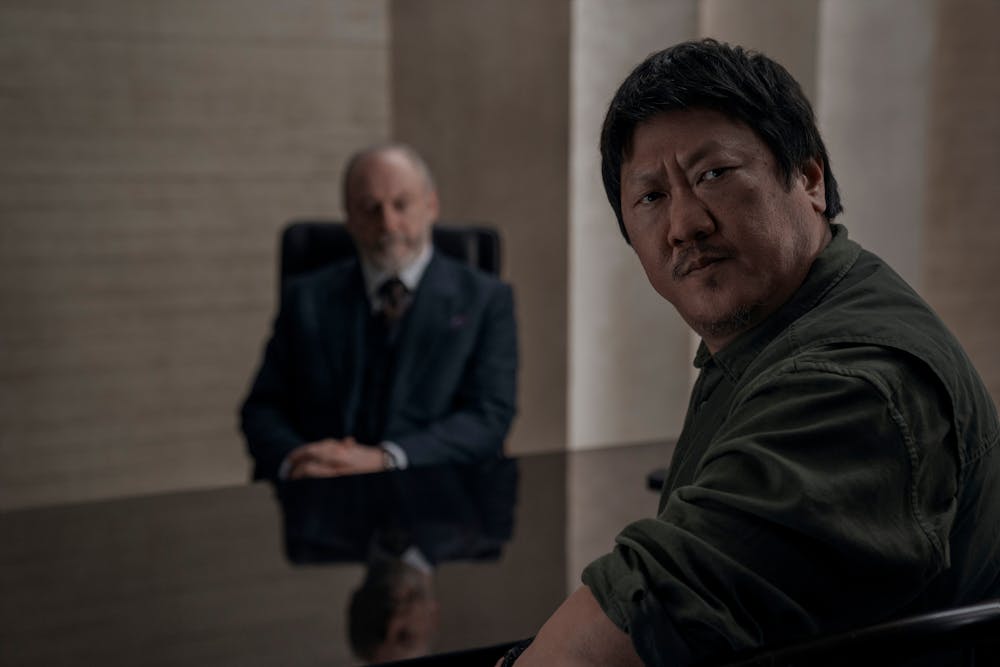 Benedict Wong as Da Shi in the forthcoming series.
Ed Miller/Netflix
Meanwhile, the laws of physics seem to be unravelling. A countdown, in hours, appears – at first on Wang’s camera, then imprinted on his vision – almost as though someone were trying to send him a message, or drive him to insanity. The countdown will hit zero in some 50 days.
The numbers of this countdown disappear only when he shuts down his research project. Soon after, the cosmic background radiation of the universe (measured from an observatory) fluctuates at an announced time, seemingly to awe Wang. Evidently, great powers are attempting to stop his investigation.
Big questions
As the novel unspools, it becomes evident someone on Earth has attempted contact with extraterrestrials, and a response has been received. Indeed, Trisolarans, inhabitants of this distant planet, are on their way to earth – it’s a lot more promising than the sun-plagued planet where they live.
Trisolaris’ three suns have made the planet chronically unstable and existentially precarious. The vast distances in play mean that contact will not take place for hundreds of years – but what form will it take? And will the threat of alien invasion inspire Earth’s unification, or will it be the cause of further divisions?
Furthermore, it seems Trisolarans can act from afar. How might they act to destabilise humanity in the intervening years? The reader, however, will have to wait for first contact to occur later in the trilogy. For the moment, the question is whether humanity can, or even should, prepare to defend itself.
Read more:
At least we're not being exterminated by alien attack-robots: watching War of the Worlds in a pandemic
Linguistically, the novel’s style is workaday, the plot crammed with little implausibilities and outrageous conveniences, the structure a miracle of convolution. Nevertheless, this is an important and thought-provoking read. Little by little, the novel’s fundamental ethical, metaphysical, and epistemological concerns come to the fore.
Is the threat of alien invasion any more destructive than the menace we present to our own environment? Where are the limits of our technical advances, and will they tend to the betterment or the destruction of human civilisation?
What is the value of human civilisation? Is what we have worth defending? Given the messes of humanity’s own making, might a shot into the interplanetary dark offer something better?
Such infinite scale and high stakes are not unprecedented in science fiction, where myth-making, geopolitical resonances and apocalypses are stock in trade. (Star Wars, for instance, had deep roots in Greek and Nordic myth, and was invoked by the Reagan administration for its Strategic Defense Initiative.) But this novel brings the philosophical and historical resources of Chinese civilisation to the fore.
Benedict Wong as Da Shi in the forthcoming series.
Ed Miller/Netflix
Meanwhile, the laws of physics seem to be unravelling. A countdown, in hours, appears – at first on Wang’s camera, then imprinted on his vision – almost as though someone were trying to send him a message, or drive him to insanity. The countdown will hit zero in some 50 days.
The numbers of this countdown disappear only when he shuts down his research project. Soon after, the cosmic background radiation of the universe (measured from an observatory) fluctuates at an announced time, seemingly to awe Wang. Evidently, great powers are attempting to stop his investigation.
Big questions
As the novel unspools, it becomes evident someone on Earth has attempted contact with extraterrestrials, and a response has been received. Indeed, Trisolarans, inhabitants of this distant planet, are on their way to earth – it’s a lot more promising than the sun-plagued planet where they live.
Trisolaris’ three suns have made the planet chronically unstable and existentially precarious. The vast distances in play mean that contact will not take place for hundreds of years – but what form will it take? And will the threat of alien invasion inspire Earth’s unification, or will it be the cause of further divisions?
Furthermore, it seems Trisolarans can act from afar. How might they act to destabilise humanity in the intervening years? The reader, however, will have to wait for first contact to occur later in the trilogy. For the moment, the question is whether humanity can, or even should, prepare to defend itself.
Read more:
At least we're not being exterminated by alien attack-robots: watching War of the Worlds in a pandemic
Linguistically, the novel’s style is workaday, the plot crammed with little implausibilities and outrageous conveniences, the structure a miracle of convolution. Nevertheless, this is an important and thought-provoking read. Little by little, the novel’s fundamental ethical, metaphysical, and epistemological concerns come to the fore.
Is the threat of alien invasion any more destructive than the menace we present to our own environment? Where are the limits of our technical advances, and will they tend to the betterment or the destruction of human civilisation?
What is the value of human civilisation? Is what we have worth defending? Given the messes of humanity’s own making, might a shot into the interplanetary dark offer something better?
Such infinite scale and high stakes are not unprecedented in science fiction, where myth-making, geopolitical resonances and apocalypses are stock in trade. (Star Wars, for instance, had deep roots in Greek and Nordic myth, and was invoked by the Reagan administration for its Strategic Defense Initiative.) But this novel brings the philosophical and historical resources of Chinese civilisation to the fore.
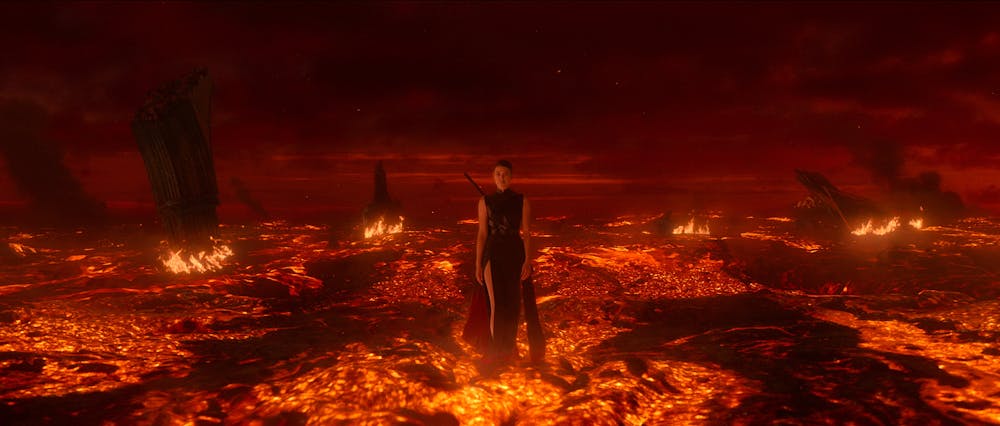 Myth-making, geopolitical resonances and apocalypses are sci-fi’s stock in trade.
Netflix
Hope or an apologia?
Liu Cixin’s vision not only brings a whole civilisational history along with it, but can be read as a story of hope or an apologia for Chinese striving in the face of Western dominance.
The acclaim for his work is doubtless partly due to its novelty for the Anglophone reader, beginning, as it does, with modern Chinese history. The ravages of the Red Guards and the calculations made to survive the political traps of Maoist China predispose some characters to believe the worst when it comes to human nature.
The history of Trisolaris, transmitted to earthling (or at least Beijing) cognoscenti by means of the immersive game, draws evenly on both Chinese and Western analogies to explain what is drawing the aliens to make this pilgrimage across space. Perhaps the unromantic approach to extraterrestrial contact – in which it plays out as an imperial threat – also has its sources in Chinese thought.
Where the Western tradition of science fiction seems preoccupied with dramas arising from the conflict between good and evil, or questions of salvation and atonement, Liu’s vision is almost geopolitical.
Chinese political history tends to presuppose that periods of chaos and peace will exist in alternation, and that political power is fundamentally self-interested. At times the book seems drawn to the brutal logic of the classical political philosophy of Legalism as the best course for political stability in a volatile environment.
Such readings have lead some scholars to conclude that Liu’s image of potential conflict between the worlds falls on the side of statism or even a defence of totalitarianism. Others have seen his work as an anti-colonial and/or environmentalist narrative, or a call for swifter technological advancement and greater collaboration among the nations of the earth.
A masterful elaboration on the extraterrestrial “what-if”, it is gratifying that a novel so steeped in Chinese thought and history is encountering such a wide audience.
3 Body Problem is released on Netflix on March 21.
Myth-making, geopolitical resonances and apocalypses are sci-fi’s stock in trade.
Netflix
Hope or an apologia?
Liu Cixin’s vision not only brings a whole civilisational history along with it, but can be read as a story of hope or an apologia for Chinese striving in the face of Western dominance.
The acclaim for his work is doubtless partly due to its novelty for the Anglophone reader, beginning, as it does, with modern Chinese history. The ravages of the Red Guards and the calculations made to survive the political traps of Maoist China predispose some characters to believe the worst when it comes to human nature.
The history of Trisolaris, transmitted to earthling (or at least Beijing) cognoscenti by means of the immersive game, draws evenly on both Chinese and Western analogies to explain what is drawing the aliens to make this pilgrimage across space. Perhaps the unromantic approach to extraterrestrial contact – in which it plays out as an imperial threat – also has its sources in Chinese thought.
Where the Western tradition of science fiction seems preoccupied with dramas arising from the conflict between good and evil, or questions of salvation and atonement, Liu’s vision is almost geopolitical.
Chinese political history tends to presuppose that periods of chaos and peace will exist in alternation, and that political power is fundamentally self-interested. At times the book seems drawn to the brutal logic of the classical political philosophy of Legalism as the best course for political stability in a volatile environment.
Such readings have lead some scholars to conclude that Liu’s image of potential conflict between the worlds falls on the side of statism or even a defence of totalitarianism. Others have seen his work as an anti-colonial and/or environmentalist narrative, or a call for swifter technological advancement and greater collaboration among the nations of the earth.
A masterful elaboration on the extraterrestrial “what-if”, it is gratifying that a novel so steeped in Chinese thought and history is encountering such a wide audience.
3 Body Problem is released on Netflix on March 21.


