

Will New Zealand’s school phone ban work? Let’s see what it does for students’ curiosity
- Written by The Conversation
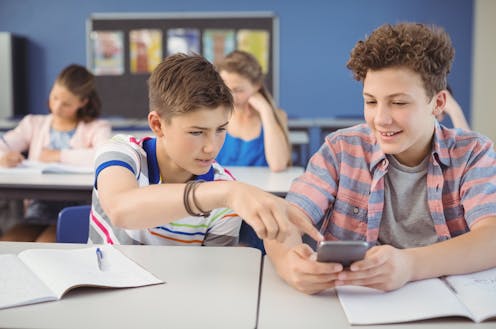
With the coalition government’s ban of student mobile phones in New Zealand schools coming into effect this week, reaction has ranged from the sceptical (kids will just get sneakier) to the optimistic (most kids seem okay with it).
In a world where nearly everyone has a smartphone, it’s to be expected nearly everyone will have an opinion. The trick is to sort the valid from the kneejerk, and not rush to judgement.
Anecdotally, schools that implemented the ban ahead of the deadline have reported positive changes in attention and learning. The head girl of Hornby High School in Christchurch said the grounds are now “almost louder during intervals and lunches”. Her principal said, “I wish we had done the phone ban five years ago.”
On the other hand, hard evidence in favour of banning phones in schools has been found to be “weak and inconclusive”. But the policy’s aim to create a “positive environment where young New Zealanders can focus on what matters most” is not without merit.
Above all, the policy raises a crucial question: is an outright ban the most effective approach to addressing the problem of digital distraction and its impact on education?
Connection and distraction
Since Monday, students have had to store their phones in bags or lockers during school hours. As in the pre-digital era, parents can now only contact their children through the school office.
The aim, according to the National Party’s original election promise, is to “eliminate unnecessary disturbances or distractions” and improve student achievement, which by various measures has declined over the past three decades.
While avoiding generalised assumptions, we know many young people can’t put their devices down, as both a recent Education Review Office report and a 2021 OECD survey concluded.
Read more: We looked at all the recent evidence on mobile phone bans in schools – this is what we found
In one US survey in 2022, approximately one-third of teachers asked students to put away their phones five to ten times per class, while nearly 15% asked more than 20 times.
So, it’s hard to argue phones aren’t a distraction, or that social media-fuelled bullying and isolation don’t warrant critical examination of digital habits. At the same time, phones have their constructive uses, from organising schedules for the neurodivergent, to facilitating social interactions and learning.
No phone ban advocate is arguing that limiting phone use in schools is a silver bullet for related issues around cyberbullying, mental health and behavioural challenges. But the personal device’s capacity to distract remains a legitimate concern.
Meaningful digital engagement
The heart of the debate lies in education’s evolving landscape. The push to ban phones does not extend to digital devices in general, after all. Their utility in learning environments is well recognised.
But as we embrace artificial intelligence and other technological advances in education, we must also ask: at what point does reliance on these digital tools begin to erode critical thinking skills?
The future job market, filled with roles that do not yet exist, will undoubtedly require those skills. Therefore, distinguishing between meaningful digital engagement and detrimental distraction is crucial.
Perhaps the better question is: would fewer distractions create the opportunity for young people to be more curious about their learning?
Read more: Do smartphones belong in classrooms? Four scholars weigh in
Curiosity: the engine of critical thinking
Curiosity is essential for educational success, citizenship and media literacy in the digital age. But curiosity is stifled by distractions.
Education research is heading towards treating curiosity as a “provocation” – meaning we should, in effect, “dare” young people to be more curious. This involves encouraging mistakes, exploration – even daydreaming or being creatively bored.
All of this is challenging with the current level of distractions in the classroom. On top of that, many young people struggle to cultivate curiosity when digital media can provide instant answers.
Read more: How smartphones weaken attention spans in children and adults
Consider the distinction between two types of curiosity: “interest curiosity” and what has been termed “deprivation curiosity”.
Interest curiosity is a mindful process that tolerates ambiguity and takes the learner on their own journey. It’s a major characteristic of critical thinking, particularly vital in a world where AI systems are competing for jobs.
Deprivation curiosity, by contrast, is characterised by impulsivity and seeking immediate answers. Misinformation and confusion fuelled by AI and digital media only exacerbate the problem.
Making room for real life
Where does this leave the phone ban in New Zealand schools? There are some promising signs from students themselves, including in the OECD’s 2022 report on global educational performance:
On average across OECD countries, students were less likely to report getting distracted using digital devices when the use of cell phones on school premises is banned.
These early indications suggest phone bans boost the less quantifiable “soft” skills and vital developmental habits of young people — social interactions, experimentation, making mistakes and laughing. These all enhance the learning environment.
Read more: Banning cellphones in classrooms is not a quick fix for student well-being
Real life experiences, with their inherent trials and errors, are irreplaceable avenues for applying critical thinking. Digital experiences, while valuable, cannot fully replicate the depth of human interaction and learning.
Finding the balance is the current challenge. As a 2023 UNESCO report advised, “some technology can support some learning in some contexts, but not when it is over-used”.
In the meantime, we should all remain curious about the potential positive impacts of the phone ban policy, and allow time for educators and students to respond properly. The real tragedy would be to miss the learning opportunities afforded by a less distracted student population.


