

Many new mums struggle, but NZ’s postnatal services often fail to address maternal mental health – new study
- Written by The Conversation
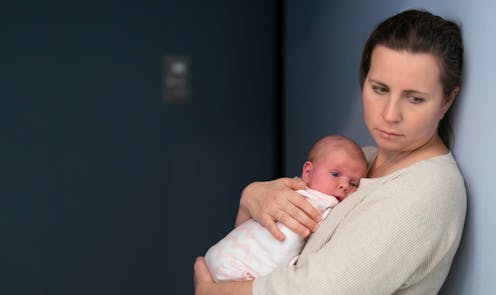
Becoming a mother is a significant identity shift, and many new mums struggle. Up to 18% of New Zealand mothers experience depression and anxiety after giving birth.
The first thousand days, from conception to a child’s second birthday, are critical for a baby’s development. A mother’s mental health during this time can have a profound impact on the child’s lifelong wellbeing.
Well Child Tamariki Ora, a free postnatal service developed from New Zealand’s iconic Plunket health services but now overseen by the government, provides vital support at a vulnerable time.
However, our research shows these services may be missing critical opportunities to address maternal mental health.
Our Wāhi Kōrero study allows the anonymous sharing of health-related stories to help improve health outcomes. We collected 420 stories about families’ experiences with the Well Child service – and they reveal a pattern of unmet needs.
Barriers to seeking help
Many mothers feared being judged as inadequate or unfit if they admitted struggling. One mother explained:
I was scared that if I opened up about how I was feeling, that people would think I was incompetent or neglectful or a danger to my baby, so whenever my Well Child nurse visited, I would just say things were good […] I wish I could’ve told her how much I was struggling.
Others felt it was hard to articulate their distress:
I wish my Plunket nurse had asked if I was ok. I was not coping at all, having terrible anxiety attacks, crying all the time, very highly strung. But both my babies were big chubby happy babies so I just got showered with praise while inside, I was cringing, thinking how wrong she was. I just needed a chance to say how I was feeling, then maybe I would’ve got the help I needed when I needed it.
Mothers wanted to connect with the nurses but struggled to build a relationship. Talking about mental health is deeply personal and can be uncomfortable. Such conversations require trust and many mothers did not feel safe to share.
Instead, many felt appointments were too rushed, and impersonal checklists left little room for authentic connection. One mother explained she felt pressure to give the “correct” answers to the nurse’s questions.
Rather than inviting confidences, the questions felt like an interrogation:
Then came the checklist. It felt like a barrage of questions, rather than a conversation to develop a relationship. “Are you depressed?” while I’m cowering on the couch, quietly crying. I was too ashamed to admit it, and that was that. That visit and every subsequent visit left me feeling even less supported than I did beforehand.
Importance of listening and trust building
When nurses did take the time to listen, ask open-ended questions and go beyond the standard script, it made a world of difference. Mothers felt more comfortable sharing when they felt genuine care and interest.
But mothers were aware the main priority of the visits was checking their baby’s physical growth. One mother said:
I wish my nurse made me feel like I had someone I could talk to, not just about the weight and size of our growing pēpi but about me, māmā.
Many mothers spoke of suffering in silence. This points to a need for significant changes in how we approach postpartum care. We need to build a service that nurtures the whole family rather than just monitoring the baby’s growth and ticking boxes.
The postpartum period is a time of profound change and Māori, Pasifika and Asian mothers face higher risks of mental health problems.
A recent review of the Well Child service found Māori, Pacific peoples and whānau living in poverty are consistently underserved by the programme. This contributes to the unfair differences we see in Māori and Pacific maternal mental health.
Well Child services could focus on building trust and meaningful relationships to better support maternal mental health.
This means moving beyond narrow checklists and focusing on the mother as well as the baby. It means taking time for honest conversation, not just rote questioning. It means care from nurses equipped to discuss mental health sensitively.
New mothers’ needs are complex, but they deserve comprehensive, culturally responsive maternal mental health support.
The Well Child service has had a vital role in supporting mothers since its beginnings. This includes recognising that helping mothers is the route to better outcomes for children.
By listening to mothers’ voices and reorienting services, we can provide the care mothers urgently need. Their wellbeing is critical for them and the next generation.


