

Threatened species have declined 2% a year since 2000. Nature positive? Far from it.
- Written by The Conversation
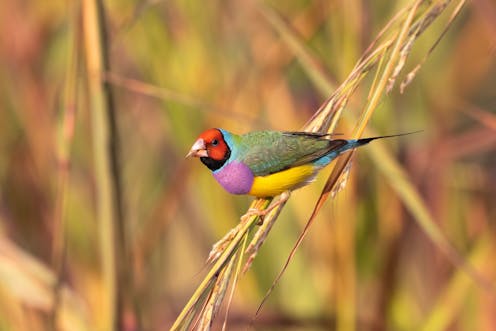
Our government has great aspirations. It has committed to end extinctions and expand our protected areas to cover 30% of every Australian ecosystem by 2030. This is part of its Nature Positive Plan, aligned with the 2022 Kunming-Montreal global biodiversity pact. The goal is not just to conserve nature but to restore what is being lost.
But how can these goals be reconciled with a budget that allocated more public money to carbon capture and storage than biodiversity?
This week’s federal budget was a new low point for investment in nature. Environmental groups roundly criticised the “bad budget for nature”, which delivered next-to-no money to protect and recover Australia’s unique and threatened biodiversity.
Research has shown Australians want at least 2% of the federal budget spent on nature. Instead, less than 0.1% of the budget spend will support biodiversity in some way. Over the past decade, biodiversity funding has gone down 25% relative to GDP.
Let’s say the government decided it was finally time to roll up the sleeves and do something. How would they go about it? What would it take to actually reverse the decline, as the government says it wants to in its Nature Positive approach?
Our threatened species populations have been declining by about 2-3% a year over the past 20 years. The first step is to stop the fall. Then the challenge is to restore dwindling species and ecosystems.

The Dow Jones for threatened species goes down, down, down
Australia now has a Threatened Species Index. Think of it like the Dow Jones for wildlife. It uses trend data from bird, mammal and plant species collected from over 10,000 sites to measure progress for nature in Australia.
Last year, Treasurer Jim Chalmers talked up the index as part of the first national “wellbeing budget”, which aimed to measure Australia’s progress across a range of social, health and sustainability indicators.
What does the index tell us? You can see for yourself. The health of our threatened species has fallen by about 2-3% a year since the turn of the century.
If, as is likely, the trend continues, it will lead to the extinction of many more of our unique native animals and plant species. It will signal the failure of the government’s Nature Positive policy and a global biodiversity tragedy.
Given we have had decades of successive decline, what would be needed to reach the goal of nature positive?
Nature positive actually has a very specific meaning. It would:
halt and reverse nature loss measured from a baseline of 2020, through increasing the health, abundance, diversity and resilience of species, populations and ecosystems so that by 2030 nature is visibly and measurably on the path of recovery.
This definition gives us a clear, measurable timeline for action, often described as nature’s answer to net zero.
To reach nature positive means halting biodiversity loss by 2030 so that in the future there is much more biodiversity, relative to a 2020 baseline.
What would that look like using the Threatened Species Index? To get on track with nature positive, we would have to stop the index declining, stabilise, and then increase from 2030 onwards.
Of course, strong environmental laws and aligned policies are needed to effectively prevent further loss of habitat.
But we also need to invest in restoring what has been lost. Scientists think this is possible with $2 billion a year to recover our most threatened native plants and animals, and another $2 billion annually to drive ecosystem restoration across Australia.
The budget is not nature positive
In the budget papers, the government uses the Threatened Species Index as a performance measure for its nature positive goal. It expects the trajectory of the index to be “maintained or improved” out to 2027-28.
But given our species and ecosystems are steadily declining, year after year, to maintain a trajectory is simply to embrace the decline. It’s not nature positive at all. The government could make minor improvements, slowing the collapse, and claim it was improving the lot of nature.
Imagine if our GDP growth was negative and the government’s goal was merely to slow its decline over the next five years – there would be national uproar.
If the government is serious about nature positive – which is an excellent goal – it would be setting more ambitious targets. For instance, the goal could be for the index to climb back up to 2020 levels by the end of the decade.
Instead, Labor is planning for biodiversity decline to continue, while describing it as “nature positive”.
Watching over the steady decline of our species and calling it nature positive makes about as much sense as opening up new gas fields and calling it net zero.
Greenwashing Nature Positive
Unfortunately, this is not the first time the government has engaged in nature positive greenwash.
In coming weeks, the government will introduce bills to parliament to establish two new agencies, Environment Information Australia and Environmental Protection Australia. But there will be one bill missing – the reformed federal environment laws, intended to give teeth to the nature positive push.
The laws were pushed back indefinitely, to the shock of scientists and environmental groups.
But let’s be generous and say these laws finally make it to parliament after the next election. Would they be enough to stop our species losses and put the Threatened Species Index onto a nature positive trajectory?
 Australia’s reformed environmental laws are described as Nature Positive. Are they?
Department of Climate Change, Energy, the Environment and Water, CC BY-NC-ND
Australia’s reformed environmental laws are described as Nature Positive. Are they?
Department of Climate Change, Energy, the Environment and Water, CC BY-NC-ND
It’s unlikely.
The consultation documents show the government is aiming to deliver “net positive outcomes”, whereby development impacts to threatened species and ecosystems are more than compensated for.
But we don’t know the detail. How much improvement is the government aiming for? In the draft laws, this figure is listed simply as “at least X%”.
Time to aim higher
It is hard not to feel dispirited over the government’s backtracking on its promise to:
not shy away from difficult problems or accept environmental decline and extinction as inevitable.
But we cannot give up. As the plight of nature worsens, even iconic species such as the koala and platypus are now at risk. As ecosystems collapse, our food security, health and wellbeing, communities and businesses will suffer.
Perhaps one day we will have a government able to grasp the nettle and actually tackle the nature crisis – for the sake of all of us.


