

Curious Kids: why can some plastics be recycled but others can’t?
- Written by The Conversation
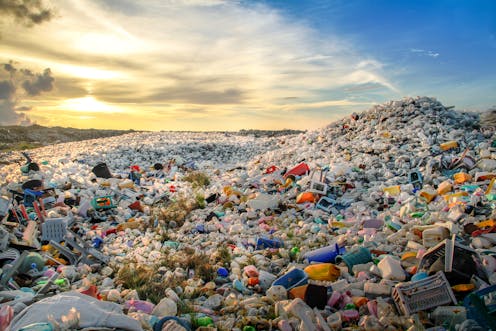
Why can some plastics be recycled but others can’t?
– Jessica, age ten, Sydney
Great question Jessica! We use lots of plastic in Australia and it’s frustrating to find out how little is recycled.
I work at a university with a team trying to find new ways for people to use less plastic, recycle more and not waste anything. So this is a question I think about a lot.
Basically, some plastics can be recycled because they are easy to melt down and make into other products. Others can’t be, or they contain extra ingredients that make them hard to recycle, such as dyes or chemicals that stop them catching fire.
But even if you could recycle the plastic, then you have a whole new problem: you have to find someone who will buy the recycled material to make new products.
Why is it so hard to recycle plastic? (BBC World Service)There are many different types of plastic
Have you ever wondered why the plastic used to make soft drink bottles looks and feels so different to the plastic used for other types of containers – such as yoghurt tubs, lunch boxes or even plastic bags?
It turns out there’s more than one type of plastic. We classify plastic into seven main types. But there are many more when you consider all the mixtures and new or unusual varieties.
The raw material is almost always fossil fuels (oil or gas). Although these days, people can also make plastic from plants such as corn.
Either way, plastic is “synthetic”, which means it’s not natural. Long chains of molecules are stitched together to make “polymers” (from the Greek “poly”, meaning many, and “mer”, meaning parts). Different polymers make different types of plastic.
Some polymers are easier to recycle because they can be melted down and reshaped into new products. This includes number one on our list of seven main types: “polyethylene terephthalate”, found in soft drink bottles.
It also includes type number two, the “high-density polyethylene” in some milk bottles, and number five, “polypropylene”, which makes things like yoghurt containers.
Other plastics such as type number three, “polyvinyl chloride”, found in plumbing pipes, and number six, “polystyrene” such as Styrofoam, are much harder to recycle. That’s mainly because they tend to contain lots of extra ingredients, which makes melting and recycling difficult.
These extra ingredients can include dyes to make the plastic brightly coloured, or chemicals to stop the plastic catching fire. But these extra ingredients can make it harder for the plastic to be recycled.
Plastic recycling in Australia (War On Waste | ABC TV)Did you know almost 300 billion plastic coffee cups have made their way to rubbish dumps around the world? These cups were not recycled, because they were made from a mixture of paper lined with plastic.
It’s hard to separate the plastic from the other materials. This makes it difficult to recycle them. But we can choose to use reusable or compostable coffee cups instead.
Plastic can also be too dirty to recycle. That’s why you should always rinse plastics before putting them in the recycling bin.
Here’s a little tip. Check the label on plastic bottles, containers and packaging for the symbol that looks like a triangle made of arrows, with a number in the middle. Read the table below to see what the numbers mean and whether it’s worth putting that plastic in your recycling bin or not.
Just because there’s a logo on it doesn’t mean it can be recycled. It depends on the recycling services that are available near where you live.
Look up your local council’s website to see what facilities they have for plastic recycling. If it’s not clear, you could ask your council to explain what they can and can’t recycle.
Will anyone use the recycled plastic and will they pay for it?
But if no one wants to use recycled plastic, then it’s hard to find someone willing to recycle it in the first place.
We need to make it easier for people to sell the plastic they have collected to someone who wants to buy it and turn it into something else.
To make this work, we need:
people to put used plastic in the recycling bin properly
someone willing to collect it
a business that can recycle that type of plastic, and
other businesses that will buy the recycled material.
In Australia, many people are willing to recycle their plastic and we have good recycling facilities, but there aren’t enough people willing to buy stuff made from all the recycled plastic.
One idea is for governments to make businesses and local councils buy products made from recycled plastic. Then people who make products from recycled plastic will be able to sell them.
Hello, curious kids! Do you have a question you’d like an expert to answer? Ask an adult to send your question to curiouskids@theconversation.edu.au
Read more https://theconversation.com/curious-kids-why-can-some-plastics-be-recycled-but-others-cant-229270


