

Can the courts measure mana? How Māori tikanga is challenging the justice system
- Written by The Conversation
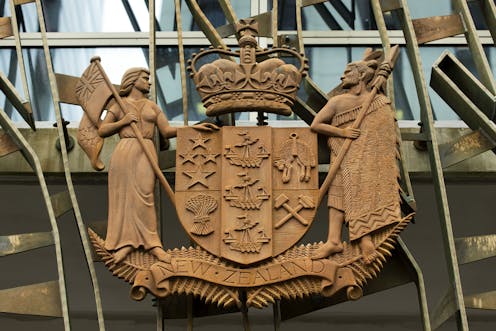
When the Supreme Court used the idea of damage to a person’s mana to posthumously overturn Peter Ellis’ historic convictions for child sexual abuse, it created a remarkable precedent.
However, two more recent cases show the courts are still grappling with the concept of mana. They also raise important questions about its use as a defence, and about the place of Māori tikanga (custom) in the law and how it is taught.
The Ellis case was one of the longest-running and most controversial in New Zealand legal history, with multiple appeals leading up to the eventual Supreme Court ruling in 2022.
As well as overturning the convictions, the court was unanimous that tikanga has been, and will continue to be, recognised in the development of the common law of Aotearoa New Zealand in cases where it is relevant.
However, the Supreme Court did not explain how tikanga will be approached in the common law. This has left it up to lower courts to develop that body of law, known as “jurisprudence”. The difficulty of this is now becoming more apparent.
For starters, the concept of mana is not easily translated into English. As te reo Māori expert Mary Boyce writes:
the word mana is used throughout Polynesia to signify a core cultural force, which is rendered in English variously as power, authority, prestige and effectiveness.
Author, scholar and pūkenga (expert) Tā Hirini Moko Mead explains there is a high value placed on mana, and that every person is born with it. This can increase or decrease throughout life, affected by an individual’s deeds and how these are regarded in the community.
This shifting nature can make mana a difficult concept for non-Māori to understand. And it adds to the complexity of incorporating concepts of mana and tikanga in courts still largely derived from the British legal system.
Weighing up mana
In the case of Green v Police earlier this year, Joshua Green was able to obtain a discharge without conviction because a conviction would have significantly affected his mana.
A discharge without conviction application involves a judge weighing up whether the consequences of the conviction outweigh the seriousness of the offending. In this case, Green had been charged with obstructing a constable.
He owned a logging company and one of his truck drivers had crashed. Green went to the scene to assist his driver and take photos despite being instructed not to by police.
Green was a kaumatua and respected leader. The High Court found the negative effect of a conviction on his mana would outweigh the seriousness of the offending.
While a discharge seemed appropriate on the facts, adding mana into a balancing exercise like this is not without complication. In weighing up someone’s mana as part of this exercise, a judge must consider how much mana someone actually has.
As Hirini Moko Mead has explained, Māori society understands that mana is not equal across everyone. Asking a common law judge to weigh up a person’s mana comes with some pressure. Also, a leader perceived to have greater mana may be entitled to a discharge without conviction when an ordinary person may not be.
Limits of tikanga
In the case of Sweeney v Prison Manager of Spring Hill Corrections Facility from May this year, Paul Sweeney sought the creation of a new cause of action based on damage to his mana.
His visitor status as an addiction counsellor had been revoked at Spring Hill due to concerns arising from his social media posting that he may be associated with the Mongrel Mob. Sweeney requested the High Court recognise a novel tort (cause of action) based on damage to his mana and hauora (health).
He wanted NZ$325,000 for the damage he said happened to his mana, and a court order that he be given a marae-based apology. These claims were dismissed. The High Court looked at how tikanga works and held that the tort being sought could not be recognised by common law.
Sweeney’s claim was twofold. On one hand, he sought to have tikanga rights recognised, on the other he sought a monetary penalty that is more like that seen in common law.
This perhaps signals a problem with integrating some aspects of tikanga into common law without much direction from the superior courts. There is at least a potential risk of claims using aspects of tikanga where it is convenient.
Risks to tikanga
Some Māori commentators have warned that the common law could corrupt elements of tikanga by subsuming it inappropriately. If a claim combining the two were successful, that might happen. However, it appears a “mana calculator” won’t be necessary in the immediate future.
But the issues raised by both cases discussed here highlight the need for education about tikanga in our law degrees. Lawyers need to understand where, when and how tikanga is relevant in order to properly advise their clients.
The courts can only build good, authoritative jurisprudence where the arguments presented by lawyers are good and authoritative. There is a risk of damage to tikanga concepts if lawyers do not have that knowledge and do not respect the authenticity of tikanga.


