

Banning social media for under-16s won’t help – teaching digital media literacy will
- Written by The Conversation
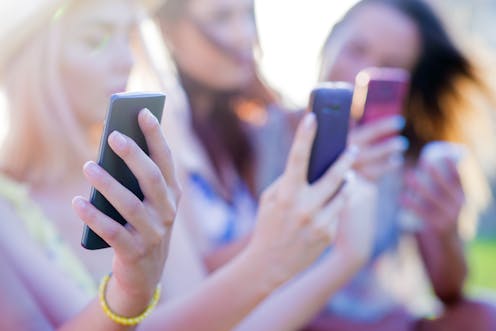
The astounding rise in social media use in the past few years is seeing policy responses come to a head, both internationally and in Aotearoa New Zealand.
Some estimates put the number using social media globally above five billion, with an annualised growth rate of more than 5%.
Accelerated concerns about smartphone addiction, cyberbullying, misinformation and extremist content have often seen digital devices and social media blamed for declines in mental and social wellbeing, in young people in particular.
The American social psychologist Jonathan Haidt calls them “the anxious generation”, and politicians and policymakers are scrambling to respond.
This year, US Surgeon General Vivek Murthy asked Congress to put warning labels on social media, similar to health labels on cigarettes.
Along with New Zealand, governments in Australia, Canada, the United Kingdom, Italy, China and parts of the US have proposed or enforced restrictions on phone use in schools
Now, an Australian petition to increase the minimum age of social media account users from 13 to 16 is building traction, with more than 100,000 signatures. Such a move is backed by the Australian and UK prime ministers. And in New Zealand, Labour MP Priyanca Radhakrishnan and ACT Party leader David Seymour have supported exploring the option.
But the research into protecting young people by restricting social media use is largely inconclusive. What we do know, however, is that these measures don’t equip young people with the skills they already need to build healthy relationships with smartphones and social media.
Education as empowerment
In all the proposed official solutions, one has been seriously overlooked – teaching media literacy.
According to the US National Association for Media Literacy Education (NAMLE), this would provide the skills to “access, analyse, evaluate, create and act using all forms of communication”.
By making media literacy “highly valued and widely practised as an essential life skill”, it aims to enable young people to shift from being passive media consumers to critical media users. It also helps them understand how they use – and are used by – media platforms.
Essentially, teaching media literacy is about shifting power and agency back to media users by educating them about how the media works.
Unfortunately, media studies (along with other subjects) was dropped from New Zealand’s NCEA level one curriculum from 2023.
So far, it remains at levels two and three, but the move signalled a devaluing of what should be a core subject in the digital age. This is especially relevant, given how digital media technology is being incorporated within classes themselves.
The more pervasive devices are in our everyday lives, the more essential media studies education becomes.
Accentuate the positive
Teaching social media literacy provides young people with the tools to engage with their smartphones and social media feeds in healthy, productive and meaningful ways. It also helps them navigate the darker, uglier sides of the online world.
By understanding the history, mechanics, ownership and funding models of social media, students can analyse its role and influence in their lives, and ask questions such as:
How does my behaviour on social media train the algorithms that dictate what content is in my feed, and what content I don’t see?
How does a social media app make money, and what does it need from its users to make that money?
What techniques do social media apps use to gain my attention and keep me on the app?
How can social media help me find and belong to a community?
What stories do the content I post online tell other people about who I am and what I value?
As media literacy advocate Renee Hobbs of the US Media Education Lab has said, “there is a reciprocal relationship between protection and empowerment”.
In other words, conversations about social media shouldn’t be restricted to potential risk and harm. Social media also provides opportunities for people to be creative, to find communities and a sense of belonging, and to engage in learning, discussion and debate.
Social media as ‘virtual playground’
British social psychologist Sonia Livingstone suggests debates about the limits on screen time should focus on quality rather than quantity: it matters how screens are being used more than for how long.
US scholar Ethan Bresnick has described the online world as a “virtual playground”. There are risks, you can get hurt, but there is also joy, connections, play, creativity and laughter.
As with any playground, there need to be health and safety measures. But we must also support young people to assess and handle risk so they can thrive and have fun.
Above all, it is important not to forget that young people are social media experts.
Parenting and educating children experiencing childhoods so different from previous generations can be scary. Social media is complex and multifaceted – as should be our approach to learning how to navigate and understand it.


