

Young Australians feel they are ‘missing out’ on being young: new research
- Written by The Conversation
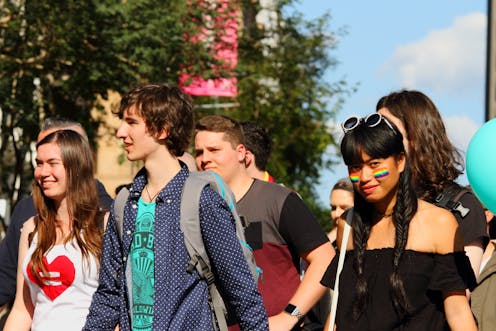
While most adults have nostalgic memories of being young, and the freedom, exploration and learning that entails, this will be less likely for the current generation of youth. Newly published research into and by young Australians presents disturbing findings that a high proportion of Australians feel as though they are missing out on being young.
Each year, The Monash Centre for Youth Policy and Education Practice (CYPEP) surveys a nationally representative over sample of 500 young people aged 18-24. Data collected for this Australian Youth Barometer was analysed by members of CYPEP’s Youth Reference Group to provide deeper insights into what it means to be young, and why young people feel they are missing out.
While the Youth Reference Group asked to examine the raw data from 2022, the figures have remained relatively stable across subsequent years.
In 2022, 45% of 505 Australians aged 18 to 24 said they felt they were missing out on being young. These feelings were associated with pressures in young people’s lives around finances, work, education, housing, and long-term planning. For example,
- 69% often worried about not having enough to eat
- 60% often experienced financial difficulties
- 51% were unemployed.
Insufficient support was also associated with feelings of missing out. Our study found
- 56% said there was insufficient government support for mental health
- 55% reported there was insufficient government support for education
- 51% believed there was insufficient government support for employment.
Should Australians have a right to be young?
Recently, The Conversation published promising news about establishing a long overdue Human Rights Act in Australia. The Parliamentary Joint Committee on Human Rights delivered its report to parliament, which included the introduction of legislation to establish a Human Rights Act.
The report includes a model Human Rights Act for use by the government as a draft bill. The model includes important fundamental rights, many of which are relevant to children and young people who are not well protected in Australia. Those include:
- protection of children
- right to education
- right to health
- right to adequate standard of living
- right to a healthy environment.
What young people told us
While enshrining these rights is important, developing rights targeting young people is challenging, given differing perspectives of what it means to be young.
Andrew from our Youth Reference Group says that being young is “discovering the world and continually building and refining a sense of identity as more experiences are collected”.
Rebecca associates being young with “learning and unlearning – perhaps viewing how your world differs from your educational environment and social structures for the first time”.
Mark said it can “mean making mistakes while being supported to learn from them”.
The Youth Reference Group members also identified real challenges.
Steven wrote how young people can be “pressured to achieve things by a certain age”.
“Being independent is an important step for young people but the cost for moving out makes it less achievable,” observed Candice, proposing that the “government should take some intervention to control the house price and provide financial support for renting among young people”.
This points to the complexity in defining what it means to be young from research and legislative perspectives.
Defining what it means to be young is tricky
Some define it as a life stage during which psychological and physical changes occur, generally from the ages of 13 to 24. It is also considered a life stage between childhood and adulthood. The United Nations, UN Habitat, UNICEF, WHO and the African Youth Charter all use different age brackets.
A biological view sees adolescence as a time of hormonal, physical, reproductive, and sexual changes during psychosocial development, including the development of identity and self direction.
Being young is also understood as a social process that can change according to time and place, class, ethnicity, religion, disability status, or other social variables. For example, in some parts of Africa, transition into adulthood is based on achieving financial independence or marriage, rather than reaching a certain age.
And as norms continue to change, young people today are arguably expected to achieve different goals, such as decision-making in education, training and employment.
Consequently, defining a right to be young would have to account for complex biological, social and cultural nuances.
But as researchers Paula Gerber and Melissa Castan argue, while
Having a national Human Rights Act will not fix every human rights problem […] it will create a more rights-respecting culture, in government decision-making and in the community broadly, which will contribute to a stronger society. Having a Human Rights Act will make government more attuned to respecting human rights and more accountable for the consequences if it acts contrary to human rights.
This includes those of young Australians.
We acknowledge the intellectual input of our Youth Reference Group: Andrew Leap, Candice Chuning Zheng, Mark Yin, Rebecca Walters and Steven Banh.


