

‘Alien invasion’: researchers identify which exotic animals may soon hitchhike into Australia
- Written by The Conversation
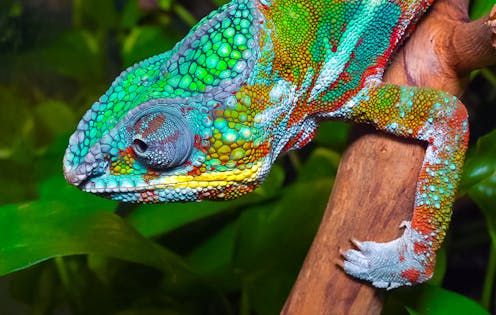
Australia is renowned for its native flora and fauna, but did you know the continent is also home to about 3,000 “alien” species of animals, plants, fungi and microbes?
Alien species are those brought by humans to areas they do not naturally occur in. These intruders are Australia’s leading cause of biodiversity loss and species extinction. They also cost the Australian economy some A$24.5 billion a year.
Invasive alien species become much harder and more expensive to manage as they establish and spread through the landscape. So preventing their arrival is vital.
But which species will arrive next? Our study published today helps identify the animals Australia should be looking out for.
An ounce of prevention is worth a pound of cure
To help manage the invasive species threat, national authorities compile official warning lists that identify species not yet within a country’s borders, but which may become a big problem if they do arrive.
The most important criteria for adding a species to the list is whether they have already invaded other parts of the world.
Authorities also consider if a species could feasibly be brought into the country by humans either deliberately, such as on the case of exotic pets, or accidentally, for example if they hitchhike on fresh produce, luggage or vehicles.
Authorities also consider if a species can survive and reproduce in the country (which precludes, say, a polar bear being added to the warning list in a tropical area).
These warning lists can be effective. For example, the United Kingdom’s list was published in 2013; within two years, seven of their top-listed alien species had arrived in the country, including the notoriously invasive quagga mussel.
However, the lists are not foolproof. Most crucially, the emphasis on whether a species has invaded other parts of the world will not identify species that have not yet become invasive anywhere, but might in future.
In fact, a study in 2020 predicted the number of new alien species globally will increase by 36% by 2050.
Our research set out to address this blind spot in warning list systems.
Who’s arriving next?
The tool we developed assesses a species’ invasion risk based on whether humans are likely to accidentally bring the species to a certain country, and if the species will become invasive beyond their natural range.
First, we collected data on attributes of species worldwide, such as their size, number of offspring, lifestyle, diet, preferred habitats, natural range, how often they are encountered, and their tolerance to humans.
Second, we programmed our tool to analyse patterns in the attributes of species that have become invasive in different parts of the world. This means the tool identifies species that haven’t yet invaded new areas globally, but share attributes with species that have become invasive.
Those attributes include:
a tendency to climb as opposed to staying on the ground, which means they are more likely to hitchhike into a country on produce and in luggage and vehicles
being commonly encountered in a wide range of habitats, especially where humans live.
We then tested our tool on about 16,000 (or 76%) of all known amphibians and reptiles worldwide, with no invasion history. Of these, we identified 160 species that might pose an invasion risk to Australia and other countries.
What Australia should watch out for
The species our tool identified as a possible invasion concern to Australia, and which border officials should be monitoring for, included:
- Common European viper (Vivipera berus), a venomous snake widespread in Europe and northern Asia. It grows to a maximum length of about 85 centimetres. Other venomous snake species are native to Australia, but no viper species are currently known to exist here. Viper venom affects blood clotting and destroys tissues.
- Graceful chameleon (Chamaeleo gracilis), a lizard common in sub-Saharan Africa. While the species is commonly exploited by the pet trade, our tool indicates it can also be accidentally brought to Australia by humans. Chameleons can change their colour to either camouflage themselves and evade predators, or to intimidate them.
- American toad (Anaxyrus americanus), from eastern North America. They have a wart-like gland behind each eye. The toad is poisonous like the cane toad, which is already a problem in northern Australia. However, the American toad can live in temperate climates and could threaten southern Australia’s wildlife.
Next steps
Around the time we finished developing our tool last year, one of the predicted invaders – the Caspian Bent-toed Gecko (Tenuidactylus caspius) – began invading the Eastern European nation of Georgia.
This demonstrates our tool’s potential to identify future invaders and improve current warning systems.
But further work is needed before including the species we identified on national warning lists. For example, research is needed to determine where each species can survive and reproduce.
And so far, we have applied our tool only to amphibians and reptiles, particularly those that can be accidentally transported by humans. In future, we hope our tool will be applied to other animal groups and plants to identify invaders looming on our horizons.


