

Food for thought: how NZ’s school lunch programme can add learning and local economies to the menu
- Written by The Conversation
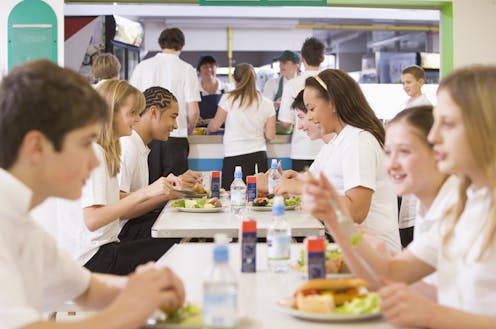
The government’s changes to the Ka Ora, Ka Ako-Healthy School Lunches Programme – designed to save NZ$107 million a year – have understandably aroused passions in those closest to the issue.
Associate Education Minister David Seymour argues a “smarter” approach will still feed children in need, but at a lower cost per child “by embracing innovation and commercial expertise”.
Critics have focused on the new lunches probably being less nutritious by relying more on packaged and processed foods, and hot meals being off the menu from next year.
What also appears to have slipped off the table is any deeper exploration of how an expanded food programme – one that takes a “whole school” approach and responds to Aotearoa New Zealand’s now diverse food cultures – could make a real difference to schools and their communities.
Like ripples in a pond
In the current political climate, expanding the school lunch programme might seem idealistic. But research last year showed strong support for doubling the number of schools covered by Ka Ora, Ka Ako.
The links between good nutrition and better educational outcomes are also well established. So, extending a lunch programme to include the entire school population – students, teachers and principal – also makes sense.
This removes any stigma attached to participation. There is no shame when the school sits together to enjoy the lunch provided. It helps forge strong social bonds and encourages a culture of healthy eating and gratitude towards those preparing the meals.
Beyond the school gates, this can build connections with whanau and family, and with local growers and food suppliers. As professor of population nutrition Boyd Swinburn puts it:
It’s like dropping a rock in the pond and getting all these ripples that go out from the child to their family, to the school to the community and the local food system.
Learning on the menu
There are already working examples of this approach. Ross Intermediate School in Palmerston North prepares hot meals for pupils in an on-site kitchen. Tailoring supply to the numbers present on the day significantly reduces food waste.
Any excess food is redirected to families in need or picked up by community food rescue organisations. Leftovers are composted and used to enrich the school gardens. It’s a tidy, end-to-end, zero-waste food loop in action.
Similarly, at Dannevirke High, the wharekai (kitchen and dining area) has become the heart of the school and a source of whanaungatanga (sense of connection) between the school and its community.
The national Kura Kai initiative aims to build on such models, raising funds to donate chest freezers to supported high schools. Volunteers stock the freezers with nutritious meals, which the schools then distribute to food-insecure families.
In some cases, students help prepare the meals and identify where they are needed. Interventions like this extend beyond feeding the hungry. They build social connections, and tap into the leadership potential of young people.
Developing Ka Ora, Ka Ako further in these directions would integrate lunch preparation with classroom teaching and learning. The menu would become part of the curriculum at appropriate levels, and include teaching opportunities around:
preparation of hot meals
developing school gardens to supply the kitchen, along the lines of the existing Enviroschools programme
earning food technology credits at intermediate and high school level through involvement in meal preparation
menu planning and barista training that would support hospitality careers.
Building a better system
Currently, Ka Ora, Ka Ako offers a range of delivery models based on supplier partnerships and on-site meal preparation. But our examination of sustainable food production and consumption suggests the system could better coordinate local food producers and caterers as spokes of a local food economy.
A recent evaluation of iwi and hapū as suppliers highlighted the importance of fostering partnerships that build local capabilities. And an earlier project that followed small growers in Taranaki showed the importance of short supply chains in community food systems.
Combined with our review of international scholarship on school food programmes, these local studies indicate the right policies can enable schools to become hubs that build and sustain local economies.
If Ka Ora, Ka Ako realised its full potential, it would support experiential learning, build practical skills, strengthen communities and nurture local food production.
As Boyd Swinburne has also said, Ka Ora, Ka Ako is the “largest nutrition intervention in Aotearoa New Zealand in decades”. It deserves to grow.


