

Think you’re immune to crypto scams? You might be more at risk than you realise
- Written by The Conversation
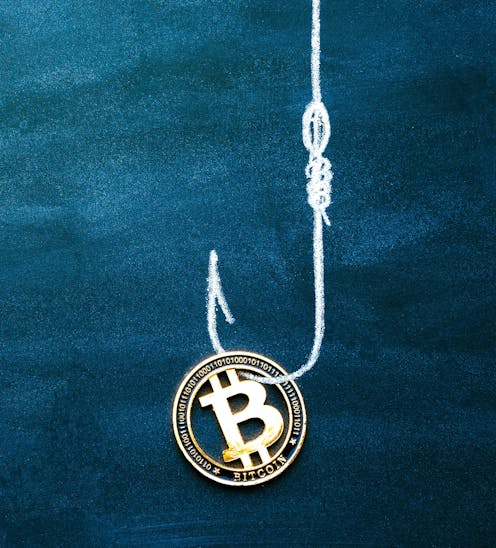
Cryptocurrencies and other digital assets have enjoyed an astonishing rise into mainstream consciousness in recent years. Despite all the hype – perhaps partly because of it – investing in them can still expose us to serious risks.
Last year, Australians lost A$2.74 billion to scams. Investment scams topped the list of ways we were fleeced, costing us $1.3 billion in total.
Within this category, cryptocurrency investment scams are a significant problem. And losses from other types of scam are often processed through cryptocurrency exchanges to make them difficult to trace.
Many Australians still don’t know how to safely purchase cryptocurrencies and non-fungible tokens (NFTs), let alone how to store them securely. This has presented a huge opportunity for scammers.
By engaging with Australian crypto investors themselves, our recently published research sought to investigate who is vulnerable to such scams, and what vulnerabilities exist across the sector more broadly.
We identified two very different groups that are most at risk, and we suggest that targeted education may be needed to reduce these dangers.
Crypto has a diverse range of customers
We surveyed 745 Australian adults who had purchased cryptocurrencies or NFTs. We recruited participants of various ages (18 and above) and from a wide range of socioeconomic, educational and ethnic backgrounds.
Though our survey sample had more female participants, we found no significant gender difference in who was investing in cryptocurrencies.
But when it came to NFTs, we found participants from three groups were more likely to purchase the digital assets: non-Indigenous Australians, university-educated Australians, and the full-time employed.
Read more: What are NFTs and why are people paying millions for them?
Our survey asked 40 questions, three of which focused specifically on the participants’ crypto literacy – regarding how to calculate interest, the tax treatment of selling cryptocurrencies, and the importance of private keys in storing blockchain assets.
Two groups at risk
Our findings revealed that two very different groups were most vulnerable to cryptocurrency investment scams.
The first of these groups possessed some features of socioeconomic disadvantage. This included being female, identifying as Indigenous, having only high-school education or lower, working part-time or casual hours, or speaking a language other than English at home.
This group was vulnerable because participants were influenced by social media hype surrounding such investments but often lacked sufficient financial or IT literacy to properly navigate the space.
There was some other notable findings within this group.
Indigenous Australians were the group most vulnerable to losing their cryptocurrency or NFT investments.
Alarmingly, female participants were found to be more susceptible to media hype around these investments, but tended not to answer any of the crypto literacy questions correctly.
And participants who spoke English as a second language had poorer knowledge about the security of their digital assets and how to calculate interest.
Overconfidence is dangerous
Perhaps surprisingly, the other most vulnerable group we identified came from an advantaged socioeconomic background.
Participants who fell into this group were non-Indigenous, university-educated, employed full-time or owned their home with a mortgage. These participants also had sufficient financial literacy and IT literacy.
So why was this group also so prone to scams? It’s likely overconfidence played a role.
Many members of this group may assume they are too savvy to fall victim to crypto investment scams, when in fact such ambition and overconfidence can actually expose them to greater risks.
In financial literacy literature, overconfidence has been previously shown to put an individual at greater risk of harm.
What needs to be done?
More generally, we found some of the biggest vulnerabilities for Australians were insufficient financial and technological literacy, security concerns, and the provision of unsolicited advice.
But there was also a serious lack of reliable educational resources. Social media was the number-one place where participants learned about cryptocurrencies and NFTs. Schools were the last place.
The growing popularity of these investments calls on the education system to engage with the topic and teach basic skills.
We recommend students are exposed to what financial literacy researcher Dr Carly Sawatzki refers to as “financial dilemmas” in high schools, TAFE and universities settings. This will help them learn and critically unpack what they are hearing and watching about cryptocurrencies and NFTs via social media.
Australians need access to better education on storing their crypto and NFTs safely, understanding the tax implications of buying and selling crypto investments, calculating interest for investment decision-making purposes, and the importance of seeking independent professional advice.


