

Some New Zealand homes are becoming uninsurable because of natural disasters – but all may not be lost
- Written by The Conversation
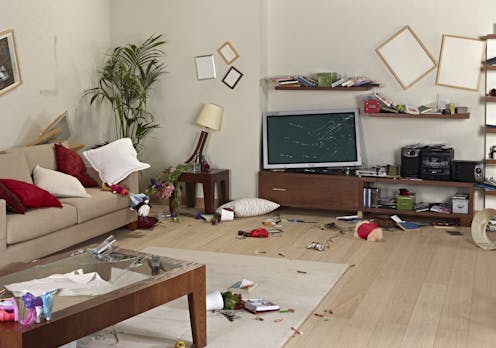
After a series of natural disasters – from the Canterbury earthquakes to Cyclone Gabrielle – real doubt hangs over the insurance options available to some New Zealand homeowners.
Increasingly, homes in certain areas are becoming uninsurable – or difficult to insure, at least. Insurers have decided the risk is too high to make covering it financially viable, leaving affected homeowners vulnerable.
The question of how insurers can continue to offer policies – all the while managing the growing risk from natural disasters – is becoming hard to ignore.
Insurers will have to explore alternative models and innovate if New Zealand is to adapt to future change.
Cautious insurers
There’s no general requirement in New Zealand that insurers cover anyone’s home, or that anyone’s home actually be insured.
Body-corporate groups are one exception. They must insure the units they manage. Mortgage lenders can also require borrowers to take out home insurance as part of their lending conditions.
When homeowners do get insurance, the risk of certain losses from natural disasters is automatically covered by the Natural Hazards Commission (previously known as the Earthquake Commission).
Even if a home insurance policy were to contain wording that, on the face of it, excluded this public natural-disaster cover, the law would treat the cover as included. At the same time, payouts are only managed by insurers, not financed by them.
The Canterbury earthquakes cost insurers NZ$21 billion and the Natural Hazards Commission $10 billion. And the risk of natural disasters more generally may be making insurers too cautious. They’re increasingly pulling out of areas they consider “high risk”.
That said, there are changes on the horizon. From mid-2025, insurers will have a general duty to “treat consumers fairly”. The Financial Markets Authority – the body responsible for enforcing financial-markets law – may potentially regard refusing home insurance to any consumer as a breach of the duty.
In other words, the Financial Markets Authority may end up forcing insurers to cover most of the country’s homes.
New insurance options
Future-proofing home insurance options will depend on the public and private sectors working together.
Many of the potential solutions are specific to how insurers take risk on. An insurer may decrease your premiums as an incentive for you to “disaster-proof” your home. If you don’t, the insurer may increase your premiums and limit its payouts to you, with individualised excesses or caps.
The insurer may even offer “parametric” insurance, which pays out less than traditional insurance, but faster.
For example, imagine a home insurance policy that covers any earthquake having its epicentre within 500 kilometres of your home, and measuring magnitude six or higher.
A traditional policy would pay out based on how much loss was caused (according to a loss adjuster). A parametric policy would simply pay out a small, pre‑agreed sum, based on the fact the earthquake occurred at all.
A parametric policy wouldn’t require you to prove any actual “loss” – beyond the inconvenience of having your home in the disaster zone.
While parametric insurance is relatively new worldwide, it’s an efficient solution for managing the risk of natural-disaster damage.
Reinsurance, co-insurance and ‘cat bonds’
An insurer may also transfer risk to one or more other insurance businesses – such as a “reinsurer”. If the insurer has to make a payout to you for a claim, the reinsurer then has to make a payout to the insurer for a portion of it.
The insurer may even “co‑insure” the risk. Co‑insurance is where two or more insurers cover different portions of the same risk. So, if you have your home co‑insured, you will have two or more insurers, each responsible for a portion of any claim.
Then there is the potential to transfer insured risk to entities that aren’t even insurance businesses. In some countries (such as Bermuda, the Cayman Islands and Ireland), the insurer can turn the risk into a “catastrophe bond” (also known as a “cat bond”).
Under a cat bond, the insurer arranges for expert investors to lend it capital in return for interest on the loans. The insurer eventually repays the capital, unless there is a specific natural disaster. In that case, the insurer keeps the capital, enabling it to pay out to the affected customers.
The insurer may even use the cat bond to create a “virtuous cycle”. More specifically, the insurer may reinvest the capital in “a project that reduces or prevents loss from the insured climate-related risk” (such as flooding).
Disaster-proofing the insurance industry
Key to improving the situation will be the public and private sectors working together to make climate-related disasters less frequent – and less serious when they occur.
The United Nations’ Intergovernmental Panel on Climate Change has advised on how the sectors could minimise climate-related risk. But they also have similar progress to make to minimise the risk of natural-disaster damage more generally, particularly from earthquakes.
It is important to build homes that are better disaster-proofed. And it is also important to address a major problem that many people don’t necessarily view as related to insurance – the cost of housing.
If New Zealanders wishing to own their homes didn’t have to invest as much of their money in housing as they do, the risk of damage to housing might be of less concern. Natural disaster wouldn’t have to mean financial disaster as much as it does today.
In the meantime, innovative insurance options will become more and more necessary.


