

Global population growth is now slowing rapidly. Will a falling population be better for the environment?
- Written by The Conversation
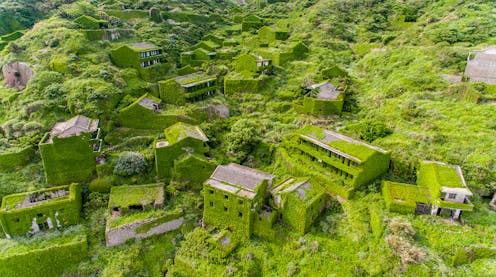
Right now, human population growth is doing something long thought impossible – it’s wavering. It’s now possible global population could peak much earlier than expected, topping 10 billion in the 2060s. Then, it would begin to fall.
In wealthier countries, it’s already happening. Japan’s population is falling sharply, with a net loss of 100 people every hour. In Europe, America and East Asia, fertility rates have fallen sharply. Many middle or lower income countries are about to drop too.
This is an extraordinary change. It was only ten years ago demographers were forecasting our numbers could reach as high as 12.3 billion, up from around 8 billion today.
For 50 years, some environmentalists have tried to save the environment by cutting global population growth. In 1968, The Population Bomb forecast massive famines and called for large-scale birth control.
Now we face a very different reality – population growth is slowing without population control, and wealthy country populations are falling, triggering frantic but largely ineffective efforts to encourage more children. What might a falling global population mean for the environment?
Depopulation is already happening
For much of Europe, North America, and some of Northern Asia, depopulation has been underway for decades. Fertility rates have fallen steadily over the past 70 years and have stayed low, while longer life expectancies mean numbers of very old people (over 80) will double in these regions within 25 years.
China was until recently the world’s most populous nation, accounting for a sixth of the global population. But China, too, is now declining, with the fall expected to rapidly accelerate.
By the end of the century, China is projected to have two-thirds fewer people than today’s 1.4 billion. The sudden drop is due to the long tail of the One Child Policy, which ended in 2016, too late to avert the fall. Japan was once the world’s 11th most populated country, but is expected to halve before the end of the century.

What’s going on is known as demographic transition. As countries move from being largely rural and agrarian to industrial and service-based economies, fertility drops sharply. When low birth rates and low death rates combine, populations begin to fall.
Why? A major factor is choice for women. Women are increasingly having children later in life and having fewer children on average, due to improved choices and freedoms in relation to education and careers.
Why are we suddenly focused on depopulation, given birth rates in rich countries have been falling for decades? When the COVID pandemic hit in 2020, birth rates went into free fall for most countries before recovering a little, while death rates increased. That combination bought forward the onset of population decline more broadly.
A falling population poses real challenges economically. There are fewer workers available and more very old people needing support.
Countries in rapid decline may start to limit emigration to make sure they keep scarce workers at home and prevent further ageing and decline. The competition for skilled workers will intensify globally. Of course, migration doesn’t change how many people there are – just where they are located.
Are these just rich country problems? No. Population growth in Brazil, a large middle-income country, is now the slowest on record.
By 2100, the world is expected to have just six countries where births outweigh deaths – Samoa, Somalia, Tonga, Niger, Chad, and Tajikistan. The other 97% of nations are projected to have fertility rates below replacement levels (2.1 children per woman).
Bad for the economy – good for the environment?
Fewer of us means a reprieve for nature – right? No. It’s not that simple.
For instance, the per capita amount of energy we use peaks between ages 35 and 55, falls, and then rises again from age 70 onwards, as older people are more likely to stay indoors longer and live alone in larger homes. This century’s extraordinary growth in older populations could offset declines from falling populations.
Then there’s the huge disparity in resource use. If you live in the United States or Australia, your carbon footprint is nearly double that of a counterpart in China, the largest overall emitter.
Richer countries consume more. So as more countries get wealthier and healthier but with fewer children, it’s likely more of the global population will become higher emitters. Unless, of course, we decouple economic growth from more emissions and other environmental costs, as many countries are attempting – but very slowly.
Expect to see more liberal migration policies to boost the numbers of working-aged people. We’re already seeing this – migration has now passed projections for 2050.
When people migrate to a developed country, it can be economically advantageous to them and the adopted country. Environmentally, it can increase per capita emissions and environmental impact, given the link between income and emissions is very clear.
 As populations fall, countries will compete for skilled migrants.
PeopleImages.com - Yuri A/Shutterstock
As populations fall, countries will compete for skilled migrants.
PeopleImages.com - Yuri A/Shutterstock
Then there’s the looming upheaval of climate change. As the world heats up, forced migration – where people have to leave home to escape drought, war or other climate-influenced disaster – is projected to soar to 216 million people within a quarter century. Forced migration may change emissions patterns, depending on where people find sanctuary.
These factors aside, it’s possible a falling global population could cut overall consumption and reduce pressure on the natural environment.
Environmentalists worried about overpopulation have long hoped for global population to fall. They may soon get their wish. Not through enforced birth control policies but largely through the choices of educated, wealthier women opting for smaller families.
It’s very much an open question whether falling populations will reduce pressure on the natural world. Unless we also cut emissions and change consumption patterns in developed countries, this is by no means guaranteed.


