

How can you help your child tidy up their room (without having a massive fight every time)?
- Written by The Conversation
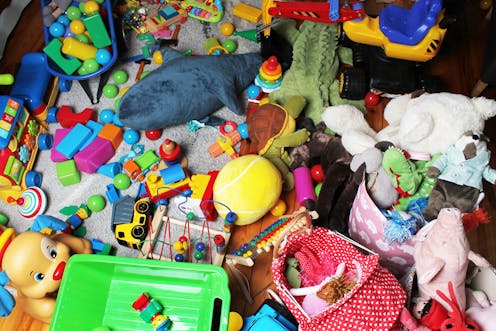
If you’ve ever opened the door to your child’s room only to be greeted by a sea of clothes, toys and who knows what else, you’re not alone.
Among countless reminders, pleading and threats, parents often find themselves in battle with their children when it comes to tidying up. For so many of us, it is an endless cycle of “try and let it go” and then “triggered and explode”. The ongoing conflict this creates can be stressful for everyone.
But you are not doomed to live with piles of Lego, collected sticks and stones – or rooms full of old food and unwashed dishes until your children leave home. There is a different way to approach this.
Why are children and teens messy?
There are developmental reasons for children being messy.
Children and teens don’t fully develop the part of their brain needed for high-level organisation until adulthood, and can be easily overwhelmed by a tidying job.
This should not get them off the hook, though. Practising organisation skills is great for the brain. Research shows helping with tidying up from as early as 18 months is associated with improved prosocial skills (the ability to work with others).
It can also be hard to keep a room tidy if children have too many toys in their room. This means they have to riffle through things or tip out toy baskets to find a toy. Too much choice can also lead children to quickly move from one toy or activity to the next.
Why you shouldn’t just clear it up yourself
As a parent we can get caught in a cycle of feeling overwhelmed and frustrated and become disconnected from our child’s perspective. For younger children, play is work – much of their learning happens as they play.
When we interrupt their play and tidy up their masterpiece, or throw out a special object, it can break trust and feel devastating for them.
For teenagers (and even younger children), having personal space is important to develop a healthy identity and sense of control in their world.
So when parents barge into their room and move their things, this can feel like a violation.
How can make tidying up easier?
Make time to talk to your child about tidying up at a calm moment (when you’re not asking them to clean anything). Don’t make it a lecture – acknowledge how hard it is to keep their room tidy, ask for their ideas on what might help and decide together on a regular routine (perhaps they always give their room a quick tidy before TV, or it’s a job on a certain day). Discuss what could get in the way and how you will work together.
Have fewer toys in your child’s room and a special place for these. This can make the room more appealing and organised, inspire play and creativity, and make tidying up easier.
Notice moments when your children are doing any kind of cleaning up and acknowledge their efforts. Children love to feel noticed – we all do!
Break the task down into smaller parts for older kids. For example, you could suggest, “what about packing all the Lego into that box” rather than just saying “clean up your room”.
Be playful with younger children. Cleaning up can be a time for connection. Get them to find all the red toys first, then see how fast they can bring you any socks that need washing.
Notice the emotions your child feels when you are asking them to tidy up. See these emotions as an opportunity for connection and guidance. For example, “It’s hard to clean up this amazing fort, you worked so hard on this. I love how cosy it is”. And name emotions as you go. For example, “It’s overwhelming when there is so much to clean. Are you worried about where to start?” Or problem solve together: “What could we clean up first?”
With teenagers, use single word reminders, starting with just one thing that needs cleaning (for example, “washing?” Or “plates?”). Single word reminders allow a teen to save face and prevent battles. Watch your tone of voice and body language – try to stay warm, firm and kind.


