

MSG is back. Is the idea it’s bad for us just a myth or food science?
- Written by The Conversation
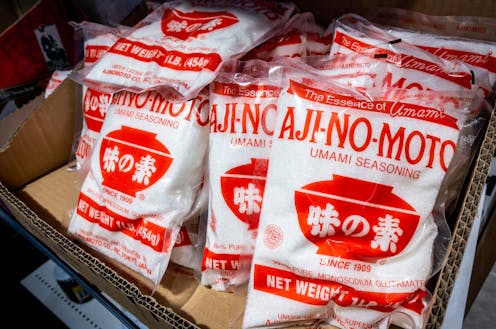
MSG is making a comeback. The internet’s favourite cucumber salad recipe includes fish sauce, cucumber, garlic and – as the video’s creator Logan tells us with a generous sprinkle from the bag – “MSG, obviously”.
But for many of us, it’s not obvious. Do you have a vague sense MSG is unhealthy but you’re not sure why? Here is the science behind monosodium glutamate, how it got a bad rap, and whether you should add it to your cooking.
What is MSG?
Monosodium glutamate (MSG) is a sodium salt of glutamic acid, one of the amino acids that make up proteins.
It occurs naturally in foods such as mature cheeses, fish, beef, mushrooms, tomatoes, onion and garlic. It provides their savoury and “meaty” flavour, known as umami.
MSG has been used to season food for more than 100 years. Traditionally it was extracted from seaweed broth, but now it’s made by fermenting starch in sugar beets, sugar cane and molasses.
Today it’s widely used as a flavour enhancer in many dishes and pre-packaged goods, including soups, condiments and processed meats.
There is no chemical difference between the MSG found in food and the additive.
Is it safe?
For most people, yes. MSG is a safe and authorised additive, according to the Australian agency that regulates food. This corresponds with food standards in the United States, European Union and United Kingdom.
Two major safety reviews have been conducted: one in 1987 by a United Nations expert committee and another 1995 by the Federation of American Societies for Experimental Biology. Both concluded MSG was safe for the general population.
In 2017 the European Food Safety Authority updated its stance and set a recommended limit based on body weight, aimed to prevent headaches and increased blood pressure.
That limit is still higher than most people consume. The authority says an 80kg person should not have more than 2.4g of added MSG per day. For reference, Europeans average less than a gram per day (0.3-1 gram), while in Asia intake is somewhere between 1.2-1.7 grams a day.
Food Standards Australia New Zealand says the European update does not raise any new safety concerns not already assessed.
Isn’t it bad for me?
Despite the evidence, the idea MSG is dangerous persists.
Its notorious reputation can be traced back to a hoax letter published in the New England Journal of Medicine in 1968. A doctor claiming to have experienced palpitations, numbness and fatigue after eating at a Chinese restaurant suggested MSG could be to blame.
With a follow-up article in the New York Times, the idea of “Chinese Restaurant Syndrome” took off. Eating MSG was associated with a range of symptoms, including headache, hives, throat swelling, itching and belly pain.
However an early randomised control trial showed no difference in these symptoms between people who were given MSG versus a placebo. This has since been confirmed in a review of many studies.
Can MSG cause reactions?
A very small percentage of people may have hypersensitivities to MSG. The reported reaction is now known as MSG symptom complex, rather than so-called Chinese restaurant syndrome, with its problematic racial connotations. Symptoms are usually mild, short-term and don’t need treatment.
One study study looked at 100 people with asthma, 30 of whom believed they had hypersentivities to MSG. However when participants were blinded to whether they were consuming MSG, not one reported a reaction.
If you believe you do react to added MSG, it’s relatively easy to avoid. In Australia, it is listed in ingredients as either monosodium glutamate or flavour enhancer 621.
Is it better than table salt?
Using MSG instead of regular salt may help reduce your overall sodium intake, as MSG contains about one third the amount of sodium.
One study found people who ate soup seasoned with MSG rather than salt actually liked it more. They still found it salty to taste, but their sodium intake was reduced by 18%.
MSG still contains sodium, so high use is associated with increased blood pressure. If you’re using MSG as a substitute and you have high blood pressure, you should closely monitor it (just as you would with other salt products).
Should I use MSG in my cooking?
If you want to – yes. Unless you are one of the rare people with hypersensitivities, enhancing the flavour of your dish with a sprinkle of MSG will not cause any health problems. It could even help reduce how much salt you use.
If you’re vegetarian or vegan, cooking with MSG could help add the umami flavour you may miss from animal products such as meat, fish sauce and cheese.
But buying foods with added MSG? Be aware, many of them will also be ultra-processed and it’s that – not the MSG – that’s associated with poor physical and mental health outcomes.


