

Morrison says his anti-trolling bill is a top priority if he's re-elected – this is why it won't work
- Written by The Conversation
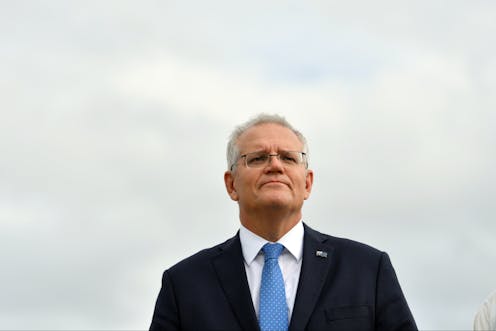
Prime Minister Scott Morrison says one of his “great missions” is to make social media a safer place for young people.
If the Coalition is re-elected, Morrison says one of the first pieces of legislation will be an anti-trolling bill, after it was introduced but not passed in the last parliament.
In March, Labor said the bill needed “significant amendments”.
To understand if this bill will be effective in targeting trolling, we need to understand why people troll. I have been researching the psychology of internet trolls for more than seven years – this is what I have found.
What does the bill propose?
Last September, the High Court ruled Australians with a social media page can be liable for defamatory posts others people make on their page – even if they are not aware of the posts.
In response, the anti-trolling bill was introduced. The bill aims to make it easier to obtain contact details of anonymous social media users and “unmask” them. However, the online safety comissioner has questioned whether the bill will actually target trolling. Lawyers have also warned the bill could increase legal costs and waste court time.
My research shows trolls have complex motivations for their behaviour, which are not addressed by the bill.
Who are the trolls?
Today, trolling is understood to be a malicious, antisocial act where the “troll” seeks to cause their target distress or harm. Commonly, it is a form of online harassment. In my research, I describe this as “malevolent trolling”.
In our Australian-first 2016 study, we found people who engage in more trolling behaviours, such as disrupting comment sections and upsetting people, were more likely to be callous, lack guilt and personal responsibility for their actions, and enjoy harming others. That is, they had higher scores on the personality traits of psychopathy and sadism. We also found trolls were more likely to feel rewarded when engaging in antisocial behaviour, and enjoyed being cruel to others and creating a sense of social mayhem.
Read more: 'Don't feed the trolls' really is good advice – here's the evidence
We have also shown that people who troll have lower affective empathy - the ability to share the emotions of others. We expected people who troll to also have low cognitive empathy - the ability to analytically understand the emotions of others.
However, we found people with high cognitive empathy combined with high psychopathy were more likely to troll. This paints a rather dangerous, malevolent portrait of the internet troll – they know what can hurt you but are less likely to experience guilt about their behaviour.
We have also found self-esteem is unrelated to trolling. Interestingly (and concerningly) we found self-esteem to interact with sadism - the higher an individual’s level of sadism and the higher their self-esteem, the more likely they are to troll. So, the more someone enjoys harming others and the greater their sense of self-worth, the more likely they are to troll.
Taken together, our findings suggest people who troll are callous, enjoy harming others, lack the ability to share the emotional pain they inflict on their targets, have a good understanding of what will hurt their targets and do not have low self-worth.
Based on these findings, we suggest “don’t feed the trolls” could be good advice, because letting trolls know they have caused harm likely reinforces their behaviour.
Why do people troll?
We can also understand trolling by applying theoretical frameworks.
According to General Strain Theory, when we experience something stressful we may have an aggressive response. So trolling could be seen as a response to experiencing stress. Indeed, during the 2020 COVID lockdowns in Australia there was a 300% increase in cyber abuse reports.
Read more: New research shows trolls don't just enjoy hurting others, they also feel good about themselves
The Broken Windows Theory is also helpful here. According to this theory, the more antisocial behaviour we see, the more likely we are to engage in the behaviour ourselves. Simply, the behaviour becomes normalised.
In combination, General Strain Theory and Broken Windows Theory suggest people who are stressed and who are exposed to more instances of trolling, are more likely to troll. This, in turn, normalises the behaviour, leading to even more trolling.
This effect can be seen in in an experiment by researchers from Stanford and Cornell universities. The researchers primed participants to be in a good or bad mood and then had them look at online discussions forms, some with primarily negative comments. Participants were then asked to post their own comment on the discussion forum. Those who were primed to be in a bad mood and who then viewed trolling were more likely to troll.
What does this mean for the bill?
The anti-trolling bill dangerously fails to address the complexity of the issue. Equating trolling with just defamation means the many other behaviours associated with trolling – harassment, disruption, intention to harm – would remain unlegislated.
But perhaps most concerning is the apparent ongoing lack of an evidence-based approach to targeting this harmful online behaviour.
Read more: The government's planned 'anti-troll' laws won't help most victims of online trolling
This includes more empathy training throughout schools, with a particular focus on digital empathy. Developing digital empathy includes increasing understanding of how the online environment can impair empathy and connection, and what strategies you can employ to overcome this. This knowledge and skill development could be embedded in all digital school curriculum.
Cyber abuse, such as trolling and cyberbullying, have remained unchecked for too long. There is an urgent need to address and manage these harmful behaviours in a meaningful way.


