

How do women with disability and LGBTQIA+ people experience menopause?
- Written by The Conversation
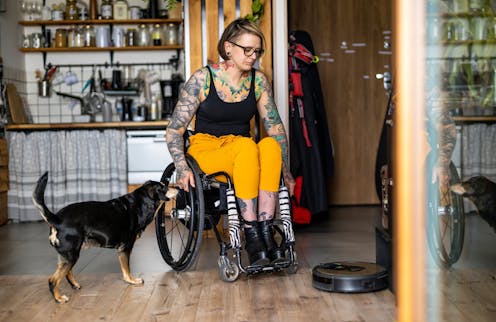
After hearing about the experiences of the diverse spectrum of people across Australia, the Senate inquiry into issues relating to menopause and perimenopause has released its final report with 25 recommendations.
The first recommendation is to establish a comprehensive evidence base to better understand the experiences of under-served groups, including LGBTQIA+ people and women with disability.
Gaps in knowledge of menopause can be significant barriers to diagnosis and treatment. More than 85% of people with distressing menopause symptoms do not receive appropriate care. These barriers can be compounded for people, women and those presumed female at birth who have a disability and/or are LGBTQIA+.
Here’s what we know so far about how people from diverse groups experience menopause and the health-care gaps they face.
Remind me, what is menopause?
Generally menopause is experienced across three phases.
Perimenopause (meaning around menopause) starts when hormones, particularly oestrogen, fluctuate.
Menopause occurs when a person has their final menstrual period. These stop because the person’s ovaries no longer release eggs. This definition reflects the different ways menopause can occur (natural menopause, premature ovarian insufficiency, surgery or cancer treatment).
Post-menopause is the stage after menopause marking the end of the reproductive stage.
We experience it differently
Everyone’s experience of menopause is different. People living with disability can experience unique symptoms and challenges.
Autistic people, for example, may describe the experience of menopause as turbulent or catastrophic. Symptoms for this group include intensified sensory stimuli and increased difficulty with:
- executive functioning (planning, concentrating and multitasking)
- recognising or regulating emotions and internal body cues
- communication
- socialising.
As one research participant explained:
[O]ur society doesn’t talk about, address, understand women our age (menopausal onset) in general very well. And so when you have the added dimension of autism […] there’s no resource […] to tell me how to handle that. And there’s no room in society for it either […] we don’t talk about menopause, let alone autistic menopause.
LGBTQIA+ experiences of menopause and ageing are diverse and are often absent in media, health care and research.
For some trans and gender diverse people, menopause can be positive and affirming. For others, the distress can be profound. As one research participant explained:
Personally I was fine (gender-identity-wise) with experiencing periods and pregnancy/childbirth, but I have found menopause much more conceptually difficult. I think in large part because the social narrative is so much about ‘menopausal women’ and also often denigratory or shame-laden.
Barriers to menopause diagnosis and care
LGBTQIA+ people and people with a disability can face assumptions about their gender, sexuality or anatomy which interfere with the care they require.
When people have had prior negative experiences of health care, and have experienced stigmatisation and pathologising of their disability, intersex variations, diverse gender or their sexuality, they may delay accessing care for menopause. Such a delay can result in poorer physical and mental health outcomes.
People with disability can experience earlier menopause with more profound symptoms. And as Women with Disabilities Australia highlighted, when there are pre-existing health concerns, impairments, or other support needs, as is the case with disability, menopause symptom management can be particularly complex.
Women living with a disability in Australia are far less likely to access health care due to stigma and lack of specialist care. They are not always screened for or routinely asked about their reproductive or menopausal health experiences.
Lack of clinician education and provider bias can result in a tendency to either ignore menopausal symptoms or attribute them to mental health concerns. This can lead to misdiagnosis, inappropriate treatment or a complete denial of care for cisgender women and people who live with disability, and LGBTQIA+ folk.
The absence of inclusive, accurate language in health promotion information that does not recognise the diversity of experiences of menopause for people who identify as LGBTQIA+ or live with disability can make them more vulnerable to misinformation and contribute to increased health-care disparities.
What can we do about it?
Policy responses to reducing health-care disparities must be led by those with lived experience, and focus on:
Inclusive and accurate language
Language around menopause should reflect the diverse populations who experience it. Terms such as women and those presumed female at birth can be used to acknowledge trans and gender diverse folk, however all identities should be listed where possible.
Education
Undergraduate and postgraduate university and clinical education on menopause and perimenopause is lacking and should include the lived experience of menopause among diverse groups. This may reduce provider bias and prevent assumptions that could result in missed care and poor health outcomes.
At the individual level, content on menopause should be included in sexual health education programs in schools. This education should reflect the diverse experiences of menopause and use age-appropriate language.
Affirming and specific care
Welcoming clinical environments for LGBTQIA+ people who may have had prior negative experiences can ease past concerns. Peer-led credentialed online support networks can provide alternative and complementary safe spaces to seek care.
For people living with disability specific information for support workers and family carers can help facilitate ongoing affirming care.


