

The common raupō once kept NZ’s wetlands and lakes thriving – now it could help restore them
- Written by The Conversation
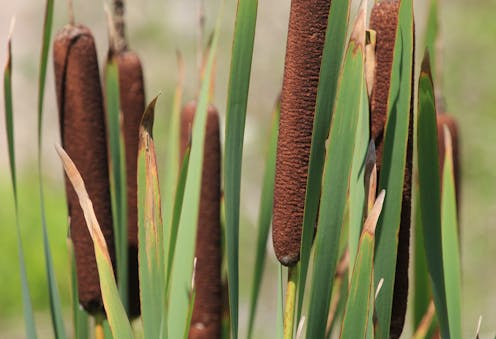
With about 90% of New Zealand’s natural wetlands drained or severely damaged during the past decades, we need to understand the role of native plants in the restoration of these important habitats.
Our new research details the history of raupō (bulrush) from the time before people arrived in Aotearoa. It shows this resilient, opportunistic plant – and taonga species – can play an important role restoring wetlands and freshwater quality.
An unexpected finding was that the decline of freshwater quality in many lakes did not really kick in until the mid-20th century with intensification of agriculture. Until then, lake water quality indicators generally showed these ecosystems remained healthy. The prolific expansion of raupō after Aotearoa was first settled may have helped.
Thriving on material washed from disturbed catchments, raupō acted as an ecological buffer, intercepting nutrients and sediments, and reducing potentially harmful effects on freshwater ecosystems.
From the mid-20th century, as water quality began to deteriorate, raupō populations – and any buffering effects – were generally in decline as wetlands and lake shallows were drained for grazing land and better access to water supply.
Lessons from this plant’s past can be put to good use today as we strive to bring back the mauri (life force) of our freshwater systems.
Survival strategies for hard times
Before settlement, when dense forest covered most of the country, raupō was surviving on the fringes. As a wetland plant, it likes its roots submerged, but needs light to grow.
Its preferred niche is the shallow margins of lakes, ponds and streams or nutrient-rich swamps. Before people, these places were much less common. Forests typically grew right up to the water’s edge and extended across some swamps.
Under these conditions, raupō evolved strategies for survival: aerated roots to cope with water logging; tiny, abundant seeds that spread far and wide on the wind; rhizomes (underground stems) that extend from the mother plant and store carbohydrates to keep the plant alive in lean times.
Raupō can even build floating root mats, from sediment trapped by its rhizomes, that extend out across open water and even detach from the shoreline to become mobile raupō islands.
With these survival strategies, raupō could wait for better times which, in Aotearoa’s dynamic environment, duly arrived.
Episodic agents of disruption – storms, floods, earthquakes, landslides, volcanic ashfall – created opportunities. Local forest damage allowed light to penetrate to ground level, and slips and floods brought nutrient-rich sediment from soils.
Raupō would seize these opportunities to expand. But they were typically short-lived as the inevitable process of forest succession returned the environment to stability – and raupō back to a state of patient hibernation.
Hitting the jackpot
Then people arrived, with fire and hungry mouths to feed. This time, the disturbances persisted. Forest clearances endured, sediments rich in nutrients flooded wetlands and lakes, and raupō, supremely equipped for just this scenario, spread across swamps and lake shores as wildfires spread on land.
Our tūpuna (ancestors) observed this behaviour, as well as what was happening around raupō. Insects and birds were feeding and nesting. Freshwater fish, crays, shellfish and eel spawned among its fertile beds.
This new-found abundance also offered a range of resource opportunities. Raupō’s flax-like leaves were woven into mats, rope and string. Leaves and stems were used like thatch to cloak the roofs and walls of whare.
Traditional poi were often made from raupō leaves. Some iwi, particularly in the south, used the stems to build lightweight boats for navigating rivers and lakes. Flower stalks, shoots and young leaves were eaten, and the rhizomes and roots, when cooked, provided edible carbohydrates. The most cherished raupō kai, however, were cakes baked using the copious raupō pollen.
Unsurprisingly, for many iwi raupō remains a taonga species today, treasured for this array of resources and for its ecological and even spiritual roles in maintaining the mauri of freshwater habitats, upon which so much depends.
For some iwi, raupō are seen as kaitiaki (guardians) watching over a lake or wetland, and signalling its health. In these ways, raupō also connects us with other Indigenous communities. Although raupō is native to this country, the same species is found in Australia and parts of East Asia, while relatives in the genus Typha (Greek for marsh) occur naturally on all continents, except Antarctica.
Similar practices occurred wherever raupō and its relatives are found. This connection between cultural and ecological roles is one of the fascinating findings from our research. We describe raupō as a “human-associated species”, not just because of its taonga status, but because its fate seems so closely linked to people.
More work needs to be done, but history tells us raupō has an important role in restoring the health of our freshwater ecosystems. Not only can it soak up nutrients and contaminants, but as both a native and taonga species it can assist remediation solutions that are ecologically and culturally supportive and sustainable.


