

How do heat protectants for hair work? A chemistry expert explains
- Written by The Conversation
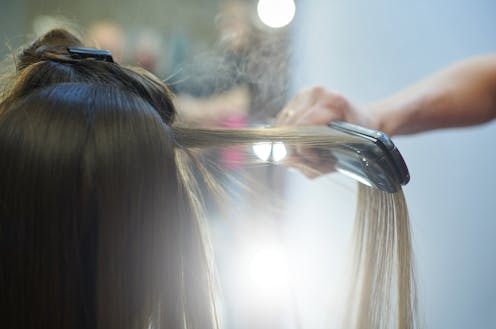
Heat can do amazing things to change your hairstyle. Whether you’re using a curling wand to get ringlets, a flat iron to straighten or a hair dryer to style, it’s primarily the heat from these tools that delivers results.
This comes with casualties. While your hair is surprisingly tolerant to heat compared with many other parts of your body, it can still only withstand so much. Heat treatment hair appliances frequently operate at over 150°C, with some reportedly reaching over 200°C. At these temperatures, your hair can end up fried.
Many people use heat protectants, often in the form of sprays, to minimise the damage. So how do these protectants work? To answer that, I first have to explain exactly what heat does to your tresses on the molecular level.

What heat does to your hair
A large proportion of your hair is made up of proteins. There are attractive forces between these proteins, known as hydrogen bonds. These bonds play a big role in dictating the shape of your locks.
When you heat up your hair, the total attraction of these hydrogen bonds become weaker, allowing you to more easily re-shape your hair. Then, when it cools back down, these attractions between the proteins are re-established, helping your hair hold its new look until the proteins rediscover their normal structure.
The cuticle – the outermost protective layer of your hair – contains overlapping layers of cells that lose integrity when they’re heated, damaging this outer protective layer.
Inside that outer layer is the cortex, which is rich in a protein called keratin.
Many proteins don’t hold up structurally after intense heating. Think of cooking an egg – the change you see is a result of the heat altering the proteins in that egg, unravelling them into different shapes and sizes.
It’s a similar story when it comes to heating your hair. The proteins in your hair are also susceptible to heat damage, reducing the overall strength and integrity of the hair.
Heat can also affect substances called melanin and tryptophan in your hair, resulting in a change in pigmentation. Heat-damaged hair is harder to brush.
The damage is even more devastating if you use heat styling tools such as curling irons or straighteners to heat wet hair, as at the high treatment temperatures, the water soaked up by the fibres can violently evaporate.
The result of this is succinctly described by science educator and cosmetic chemist Michelle Wong, also known as Lab Muffin. She notes if you heat wet hair this way, “steam will blast through your hair’s structure”.
This steam bubbling or bursting through the hair can cause substantial damage.
It’s worth noting hair dryers don’t concentrate heat in the same way as styling tools such as flat irons or curling wands, but you still need to move the hair dryer around constantly to avoid heat building up in one spot and causing damage.
Once heat damage is done, regardless of whether it is severe or mild, the best remaining options are symptom management or a haircut.
For all of these reasons, when you’re planning to heat treat your hair, protection is a good idea.
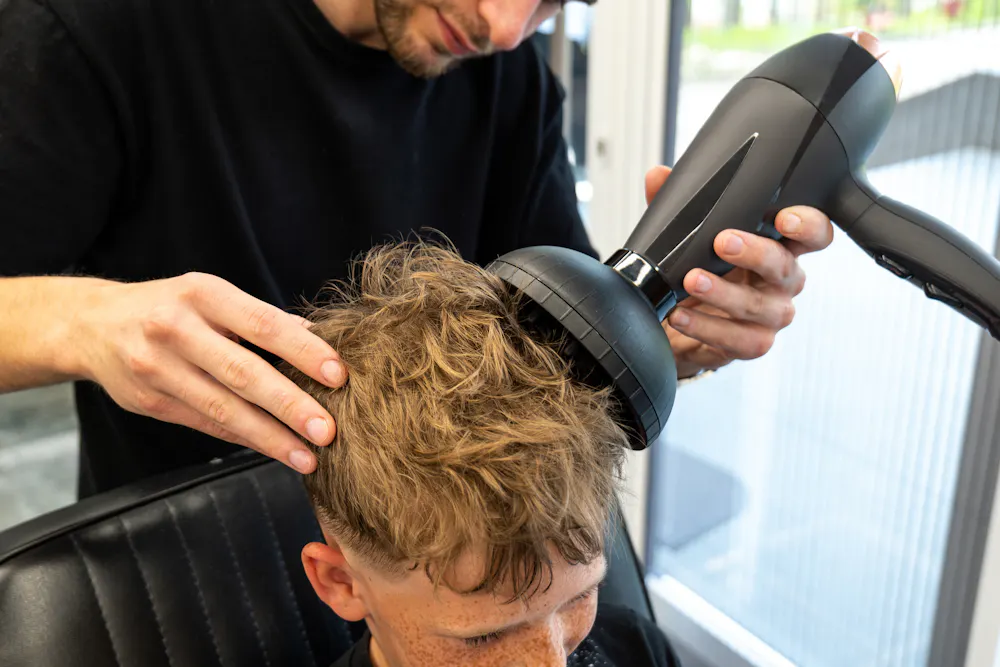 If you’re heating up hair, protection is a good idea.
Bucsa Nicolae/Shutterstock
How hair protectants work
When you spray on a hair protectant, many possible key ingredients can go to work.
They can have daunting-looking names like polyvinyl pyrrolidone, methacrylates, polyquaterniums, silicones and more.
These materials are chosen because they readily stick onto your hair, creating a coating, a bit like this:
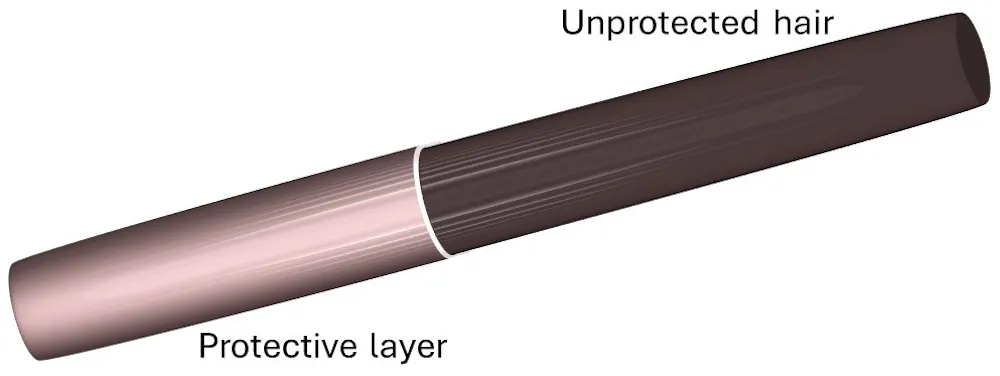 Hair protectant applies a coating to your hair.
Author provided
This coating is a protective layer; it’s like putting an oven mitt on your hands before you handle a hot tray from the oven.
To demonstrate, I created these by examining hair under a microscope before and after heat protectant was applied:
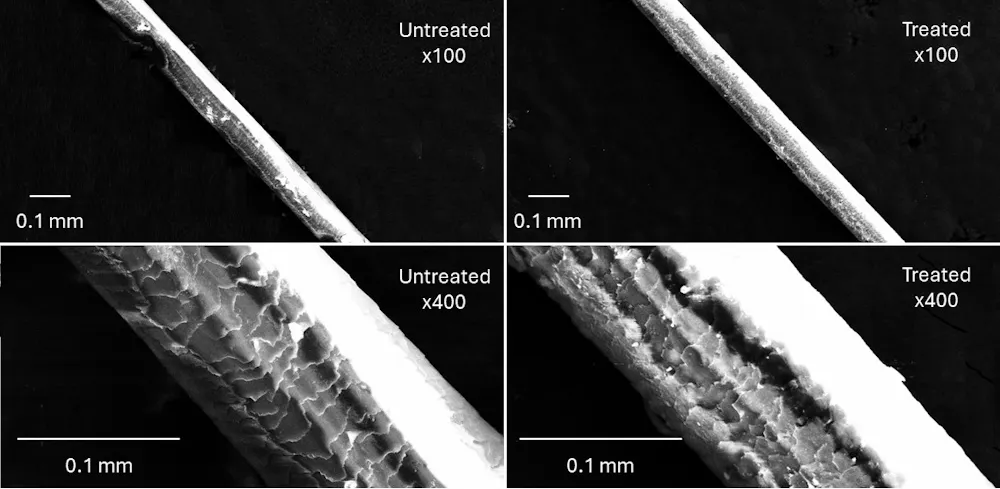 These high magnification images of untreated hair, and hair sprayed with a heat treatment spray, show how the product coats your hair strands.
Author provided
Just like an oven mitt, a hair protectant delays the heat penetration, results in less heat getting through, and helps spread out the effect of the heat, a bit like in this image:
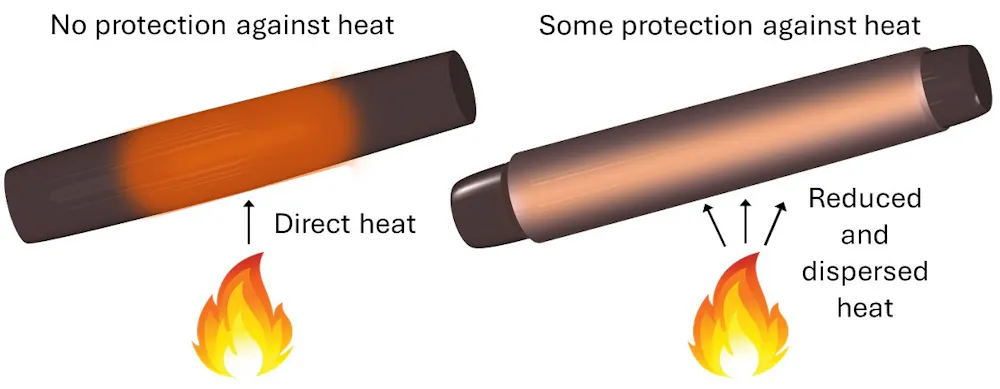 Hair protectant can help spread out the effects of the heat.
Author provided
This helps prevent moisture loss and damage to both the protective surface cell layer (the cuticle) and the protein structure of the hair cortex.
For these barriers to work at their best, these heat-protecting layers need to remain bound to your hair. In other words, they stick on really well.
For this reason, continued use can sometimes cause a buildup which can change the feel and weight of your hair.
This buildup is not permanent and can be removed with washing.
One final and important note: just like when you use a mitt for the oven, heat does still get through. The only way to prevent heat damage to your hair altogether is to not use heated styling tools.
Read more https://theconversation.com/how-do-heat-protectants-for-hair-work-a-chemistry-expert-explains-233206


