

Want genuine progress towards restoring nature? Follow these 4 steps
- Written by The Conversation
“Nature positive” is seemingly everywhere. Two weeks ago, Australia hosted the first Global Nature Positive Summit. This week, nations are meeting in Colombia for a global biodiversity summit to discuss progress on nature positive commitments.
Nature positive has a simple meaning: ensuring more nature in future than there is now. Making it a reality is the hard part.
It’s necessary because nature is in trouble. Once common species are becoming threatened and threatened species are going extinct. Humans, too, will be severely impacted. When ecosystems are healthy, they provide vital benefits. Insects pollinate crops, trees slow floodwaters, earthworms, fungi and soil critters make healthy soil and natural vistas improve our mental wellbeing.
While Australia’s government is working to embed nature positive ideas in environmental reform efforts, we may see lip service rather than real change. The government’s Nature Positive Plan faces opposition from businesses and politicians ahead of a looming election. And the plan itself doesn’t fully align with true nature positive outcomes.
In our article published today in Science, we lay out four vital steps to ensure nature positive policies are actually positive for nature.
Step 1: Ensure biodiversity increases are absolute
At present, Australia’s planned nature positive reforms would only require developers removing habitat to achieve a relative net gain for nature compared to business as usual.
We have argued this approach won’t work – it should be an absolute net gain.
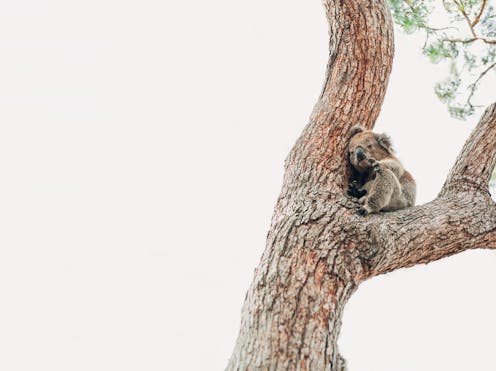
It might sound abstract – but it makes all the difference. For instance, consider a population of endangered koalas living on the site of a new mine. Any negative impact to koalas would have to be offset with a benefit to the species elsewhere, usually on a separate site.
If Australia had absolute net gain in effect, the company would have to ensure there are more koalas overall. If the mine site and an offset site had a combined population of 100 koalas before the development, this combined population would need to be more than 100 koalas after the development – even though some will be lost.
But let’s say these 100 koalas over two sites were expected to fall to 80, even if the mine didn’t happen. In this case, a relative net gain could be achieved if the mine and offset site had 90 koalas. The population fell, but less than it would have otherwise.
Most state and national conservation laws use relative net gain in their biodiversity offsets. It slows the biodiversity decline – but it’s still a decline.
By contrast, England brought in a net gain approach in February of this year, with developers now required to provide a 10% net gain in biodiversity.
Importantly, the vast majority of developments affecting threatened species habitat never require any offset at all. Plugging this major gap is also key.
Read more: Developers in England will be forced to create habitats for wildlife – here's how it works

Step 2: Avoid conservation payments in risky situations
The Australian government plans to introduce conservation payments, where developers can pay into a government-managed fund rather than providing direct offsets.
If developers were to cut down trees used by the critically endangered Leadbeater’s possum, for example, they could choose either to improve habitat elsewhere to offset the damage – or they could pay into the fund instead.
This is a risky plan. For one, it’s often almost impossible or extremely expensive to find suitable habitat for critically endangered species because they have very little habitat remaining.
 The tiny Leadbeater’s possum has a small range and little remaining habitat, as it lives in mountain ash and sub-alpine woodlands in Victoria.
Zoos Victoria
The tiny Leadbeater’s possum has a small range and little remaining habitat, as it lives in mountain ash and sub-alpine woodlands in Victoria.
Zoos Victoria
It’s far better to avoid all further habitat removal. For developers, this would mean avoiding damage to rare habitat in the first place.
Even where offsetting is possible, payments are often inadequate to cover the cost of purchasing and managing an offset site.
Read more: Developers aren't paying enough to offset impacts on koalas and other endangered species
Then there’s the time lag. The fund might take years to buy or restore habitat sites, adding to already-long delays between damage and any benefit. And worse, under the government’s proposal, the money could be used for different, potentially less threatened species.
Under Queensland’s scheme, most developers choose to pay into a fund rather than create their own offset sites. Very little of these offset funds have been spent.
Meanwhile, the latest independent assessment of the New South Wales biodiversity offset payment scheme recommended the fund be completely phased out.
Step 3: Go beyond compensation
Compensating for new damage is important. But it’s not nearly enough. Over the last century, we have done huge damage to the natural world. Australia’s southern seas were once ringed with oyster reefs, for instance, but these were nearly all fished out.
We need to begin to recover what was lost by restoring ecosystems, managing weeds and reducing risk of diseases.
Nature-positive laws should include funding and actions designed to produce absolute gains in biodiversity over and above any required compensation.
The world has long seriously underfunded conservation, including threatened species recovery, ecosystem restoration and protected area management. Australia alone needs a roughly 20-fold increase in funding to actually bring back threatened species.
While this sounds large, it’s off an extraordinarily low base – just A$122 million in 2019. By contrast, we spend over $100 billion on human health each year.
Two years ago, the government passed the first of its nature-positive reforms to create a nature repair market aimed at drawing more funds into nature restoration. But as the market will rely on voluntary private sector investment, we don’t know how much funding will flow or whether it will focus on threatened species recovery.
 Conservationists have been working to restore oyster reefs in South Australian seas by depositing limestone rocks for baby oysters to attach to.
Dominic McAfee, Author provided (no reuse)
Conservationists have been working to restore oyster reefs in South Australian seas by depositing limestone rocks for baby oysters to attach to.
Dominic McAfee, Author provided (no reuse)
Step 4: Effectively implement nature positive laws
Ensuring compliance with new nature-positive laws requires transparent and effective enforcement, such as through the independent national environment protection authority with extra powers proposed in Australia.
Its independence and powers may be less than required, due to proposed call-in powers allowing the minister to overrule decisions. True independence and adequate resources are crucial.
If governments do pass environmental reforms, we need to collect adequate and robust data on species to know if they are actually working to boost nature recovery. At present, many Australian threatened species remain unmonitored.
Is nature positive within reach?
It’s not easy to create a future with more nature than we have now. Australia’s current government took office vowing to embrace nature positive. To date, their reforms are not yet likely to make that a reality.
But the task will only get more urgent. Meaningful nature-positive policy means ensuring targets of absolute net gain for threatened species, ensuring strict compensation for any nature loss, independently resourcing and financing other recovery efforts and implementing these laws effectively.
With a course correction, Australia can still act as a leading example for other nations as they reform their own policies to meet nature-positive ambitions. Now is the time for real and decisive action.
We acknowledge our research coauthors, Brooke Williams (Queensland University of Technology), Martine Maron (University of Queensland), Jonathan Rhodes (Queensland University of Technology), Jeremy Simmonds (2rog), and Michelle Ward (Griffith University).


