

Wrongly convicted of a crime? Your ability to clear your name can come down to your postcode
- Written by The Conversation
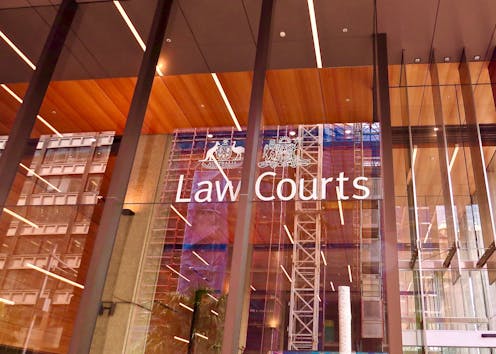
If you’re found guilty of a crime, it’s a basic principle of Australian law that you have a right to appeal.
But having a right and being able to exercise it are two different things, especially when it comes to fresh evidence casting doubt on your conviction.
In Australia, your ability to challenge a conviction with fresh evidence depends on where you live, because each state and territory has different rules. Too often, it also depends on the resources someone can access, including money and knowledge of the legal system.
Everyone should have the same opportunities to clear their name, so how can we make accessing appeals more equitable?
State by state
Direct pathways to appeal differ between the states and territories.
In all postcodes, it’s difficult to get appeal courts to consider fresh evidence in the first instance.
South Australia, Tasmania, Victoria, Western Australia, Queensland and the ACT allow multiple appeal applications if “fresh and compelling” evidence emerges after your first appeal. Since 2013, six convictions have been quashed this way, including Henry Keogh’s in SA after the state coroner recanted trial evidence.
Tasmania and WA allow subsequent appeals only for serious offences, while SA has no such restriction.
New South Wales and the Northern Territory don’t allow subsequent appeals, so people there have less direct access to the courts if wrongly convicted.
There are, however, indirect ways people can seek an appeal with fresh evidence.
In all states, you can ask the government to refer your case back to an appeal court. For example, the Victorian Attorney-General referred Faruk Orman’s case after evidence emerged about his lawyer’s misconduct. Referral decisions are made in secret and not reviewable.

In the ACT, you can ask the Supreme Court for a judicial inquiry into your conviction. If you get an inquiry, the inquiry officer can refer your case back to the appeal court if they find reasonable doubt. This led to David Eastman’s conviction being quashed.
These inquiries are only available if the issue can’t be properly addressed in an appeal, for example because the time for filing an appeal has lapsed. But, the ACT introduced subsequent appeals in 2024 which have no time limit, so it is unclear whether this pathway is still usable.
In NSW, you can ask the government for an inquiry, but decisions are made in secret and open to political and media influence. This pathway led to Kathleen Folbigg’s acquittal.
You can also ask the NSW Supreme Court for an inquiry or direct referral of your case back to the appeal court. This path is available for all offences and sentences and decisions are public. Since 2014, 59 conviction review applications to the NSW Supreme Court have resulted in one inquiry order and six referrals, with three successful appeals.
The inquiry (currently underway) involves the Croatian Six, convicted in 1981 for conspiracy to bomb sites in Sydney. After many failed attempts, they finally secured an inquiry with fresh evidence casting doubt on police and witnesses’ trial evidence.
These different pathways across the country create an uneven playing field, where some wrongfully convicted people may have more opportunities to clear their name than others.
The right resources
Access to appeals doesn’t just depend on location. It’s also about resources.
To succeed in getting an appeal via any of the above pathways, you need the power to obtain documents and the resources to gather other evidence. You also need the ability to prepare a strong case. That’s before you even get to court.
Judicial inquiries have investigatory powers and resources, but are expensive. For example, the Eastman inquiry cost the ACT government $12 million.
The United Kingdom and New Zealand have independent bodies called Criminal Cases Review Commissions. Scotland has its own version.
Read more: Kathleen Folbigg pardon shows Australia needs a dedicated body to investigate wrongful convictions
These commissions have the power to compel evidence and resources to investigate claims of wrongful conviction at no cost to applicants. They also have the power to refer cases back to the courts. While these commissions don’t refer many cases overall, about 70% of of cases referred in the UK are successful on appeal.
But, even for commissions, a strong initial application is important. In the UK, the Cardiff University Innocence Project engages law students to investigate claims of innocence and prepare applications for claims with merit.
Canada and the United States don’t have criminal case review commissions. Innocence Projects there review claims of innocence and help prepare applications for government or court review.
This is similar to the work of the few innocence clinics in Australia, such as those at RMIT and Griffith universities.
Innocence initiatives around the world work with limited investigatory resources and powers compared with those of a review commission. In the absence of a such a commission in Australia, second appeals are useful, but they are expensive to run, hard to access and don’t address the resource issue.
The free NSW Supreme Court pathway doesn’t address the resource issue either. But it can lead to an inquiry or referral, is open and accountable, and comes with guiding criteria and discretion to make short shrift of baseless applications.
My research suggests free pathways to appeal are important justice mechanisms for the wrongly convicted, but they work best when applicants have legal help to prepare a clear and concise application. Involving law students to help edit applications could make it easier for decision-makers to review cases and help applicants without lawyers get a fairer chance to be heard.


